

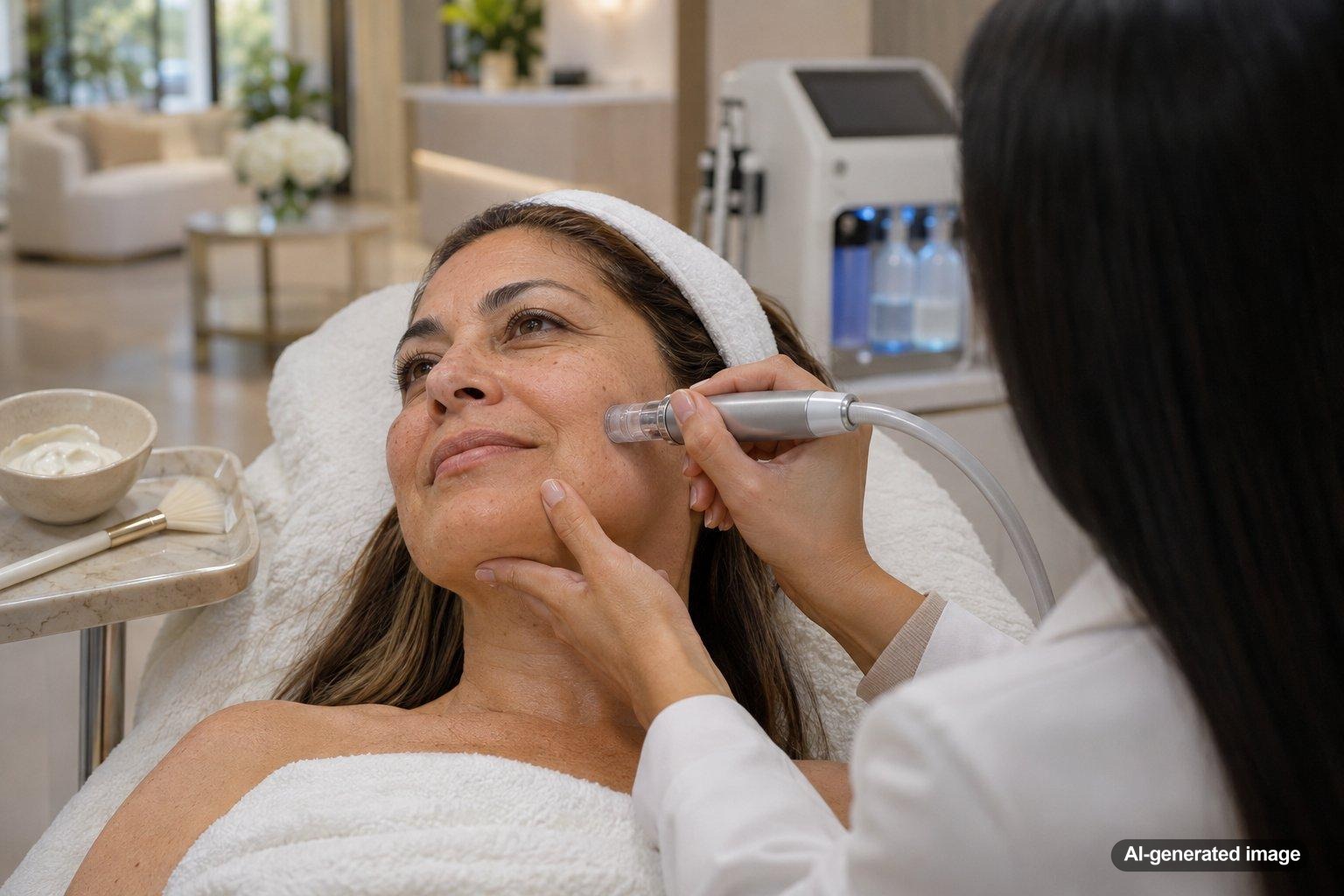
HydraFacial and traditional facials share a common goal: helping skin look and feel refreshed through professional cleansing, exfoliation, and hydration. However, they approach that goal differently. A HydraFacial follows a device-assisted treatment sequence using a specialized tip, suction, and topical solutions, while a traditional facial generally relies on hands-on techniques and products selected by an aesthetician.
Neither approach is automatically better for every person. Your skin’s sensitivity, current condition, treatment preferences, and desired experience can all influence which option makes sense. Understanding the differences can help you choose a facial based on what your skin actually needs rather than which treatment sounds more advanced.
Quick Answer: HydraFacial vs. Traditional Facial
- HydraFacial: Uses a specialized device to combine cleansing, exfoliation, suction-assisted extraction, and application of hydrating solutions.
- Traditional facial: Typically involves manual cleansing, exfoliation, optional extractions, masks, and moisturizers customized by the aesthetician.
- Treatment experience: HydraFacial follows a more standardized device-based sequence, while traditional facials can provide greater flexibility in hands-on techniques.
- Skin goals: Both may help improve the appearance of surface dryness, dullness, and temporary congestion, depending on the treatment selected.
- Best choice: The appropriate option depends on skin tolerance, individual goals, and professional assessment.
What Is a HydraFacial?
HydraFacial is a branded facial treatment performed with specialized equipment. Rather than relying entirely on manual application, the treatment uses a device with a specially designed tip to deliver a controlled sequence of surface cleansing, exfoliation, suction, and topical solution application.
A typical session involves several coordinated steps:
- Cleansing and exfoliation: The device helps remove surface debris and loosen dead skin cells.
- Solution-assisted exfoliation: Selected solutions may be used to support the removal of surface buildup.
- Suction-assisted extraction: The treatment tip helps lift loosened debris from pores without relying exclusively on manual pressure.
- Hydrating solution application: Topical formulations containing moisturizing ingredients are applied as part of the treatment sequence.
The exact solutions and treatment intensity may vary according to the available protocol and the individual’s skin. Although HydraFacial is often described as gentle, that does not mean every skin type will tolerate every step equally well.
What Is a Traditional Facial?
A traditional facial is a broad category of professional skincare treatments rather than one fixed procedure. The steps depend on the aesthetician’s approach, the products used, and the client’s skin concerns.
A traditional facial may include cleansing, skin assessment, exfoliation, steam when appropriate, manual extractions, facial massage, a treatment mask, moisturizer, and sunscreen. Not every facial includes every step.
One advantage of this flexible format is the ability to adjust individual components. For example, an aesthetician may minimize exfoliation for easily irritated skin, skip extractions when they aren’t appropriate, or focus primarily on moisturizing and soothing products.
Traditional facials also offer a more hands-on experience. Some clients particularly enjoy facial massage, masks, and the slower pace associated with a classic spa treatment.
Key Differences Between HydraFacial and Traditional Facials
| Feature | HydraFacial | Traditional Facial |
|---|---|---|
| Primary technique | Device-assisted treatment | Primarily hands-on techniques |
| Exfoliation | Specialized tip and topical solutions | Manual, enzyme, or other product-based methods |
| Extractions | Suction-assisted | Often manual, when appropriate |
| Hydration | Solutions applied during the device sequence | Masks, serums, and moisturizers |
| Customization | Adjustments within available protocols | Flexible selection of individual steps |
| Relaxation elements | Typically centered on the device procedure | May include extended massage and masks |
Which Facial Is Better for Different Skin Goals?
For Dullness and Uneven Surface Texture
Both approaches may help skin appear smoother by removing some accumulated surface cells. HydraFacial provides a structured exfoliation process, while a traditional facial allows the aesthetician to select a particular exfoliating product or technique. The appropriate intensity matters more than simply choosing the stronger treatment.
For Dry or Dehydrated Skin
HydraFacial incorporates moisturizing solutions as part of its sequence. A traditional facial can also emphasize hydration through gentle cleansing, moisturizing masks, and barrier-supportive products. Neither replaces the importance of consistent home skincare, especially when dryness is recurring.
For Congested Pores
HydraFacial uses suction-assisted extraction to address some surface debris. Traditional facials may include careful manual extractions. Both approaches have limitations, and neither should be considered a substitute for medical acne treatment when persistent or inflammatory breakouts are present.
For Sensitive or Easily Irritated Skin
The treatment name alone does not determine whether a facial is suitable for sensitive skin. Suction, exfoliating solutions, friction, fragrance, and even certain moisturizing ingredients may cause discomfort in susceptible individuals. A carefully modified traditional facial may be appropriate for some people, while others may tolerate an adjusted HydraFacial protocol. Professional assessment is important.
Does HydraFacial Have Less Downtime?
Many people choose HydraFacial because it is generally designed as a noninvasive treatment with limited interruption to their regular activities. However, temporary redness, tightness, sensitivity, or irritation can occur, particularly when exfoliation or extraction is involved.
Traditional facials vary considerably. A gentle hydrating facial may require little recovery, while a session involving more intensive exfoliation or multiple extractions may leave visible redness or tenderness.
For people preparing for a wedding, vacation, business event, or another occasion, it is sensible to discuss treatment timing in advance. Trying a new exfoliating procedure immediately before an important event may introduce unnecessary uncertainty.
What Should You Do Before and After Either Facial?
Thoughtful preparation and aftercare can help reduce avoidable irritation regardless of the treatment selected.
- Share your skincare routine: Tell your aesthetician about exfoliating acids, retinoids, acne products, and other active ingredients you use.
- Discuss previous reactions: Mention sensitivity to products, facial treatments, or extractions.
- Avoid unnecessary exfoliation: Don’t combine multiple aggressive exfoliating steps without professional guidance.
- Keep skincare simple afterward: A gentle cleanser and suitable moisturizer may be helpful while skin settles.
- Protect treated skin: Use broad-spectrum sunscreen with SPF 30 or higher and practice sensible sun protection.
- Follow individualized instructions: Your clinician may recommend temporary changes to certain skincare products depending on the treatment performed.
In Fort Lauderdale, frequent outdoor activities, beach visits, and strong sun exposure make thoughtful scheduling and sun protection particularly relevant.
When Is a Dermatologist’s Evaluation More Appropriate?
A facial primarily addresses cosmetic skincare goals. It isn’t intended to diagnose skin disease or replace individualized medical care.
If you’re experiencing persistent inflammation, painful breakouts, unexplained irritation, significant sensitivity, or a skin concern that continues despite routine care, a dermatologist can evaluate the underlying issue before you pursue additional cosmetic treatments.
It’s also worth discussing a facial in advance if your skin is currently irritated, sunburned, or recovering from another procedure. Sometimes postponing exfoliation is more appropriate than attempting to work around an active concern.
Frequently Asked Questions
Is HydraFacial better than a regular facial?
Not universally. HydraFacial offers a specific device-assisted combination of exfoliation, suction, and hydration. A traditional facial can provide more flexibility in individual techniques and relaxation elements. Your goals and skin tolerance should guide the choice.
Is HydraFacial more effective for blackheads?
Suction-assisted extraction may help remove some loosened pore debris, but outcomes vary. Traditional manual extractions may also be useful when performed appropriately. Recurring blackheads may require a consistent skincare strategy beyond occasional facial treatments.
Can I get a HydraFacial if I have sensitive skin?
Possibly, depending on the cause and degree of sensitivity, the treatment settings, and the products involved. Some people may need a modified protocol or a different approach. An aesthetician or dermatologist can help assess whether exfoliation is appropriate.
How often should I get a HydraFacial or traditional facial?
There is no universal schedule. Frequency depends on your skin’s response, the intensity of the procedure, your skincare routine, and your goals. More frequent treatment isn’t necessarily more beneficial, particularly when the skin barrier is easily irritated.
Can a traditional facial provide similar hydration?
Yes. Traditional facials can use moisturizing masks, serums, and creams to improve the temporary appearance and feel of dry skin. HydraFacial delivers hydrating solutions through a different application process, but lasting comfort also depends on everyday skincare habits.
Should I choose HydraFacial before a special event?
It may be an option, but individual skin reactions vary. If you’ve never had the treatment, consider discussing timing well before the event rather than assuming your skin will respond without redness or irritation.
Choosing the Right Facial for Your Skin
The main difference between HydraFacial and a traditional facial is how the treatment is delivered, not a simple distinction between effective and ineffective skincare. HydraFacial offers a structured, device-assisted approach, while traditional facials provide adaptable hands-on care.
At Waverly DermSpa, we offer HydraFacial and can help you understand whether it may be appropriate.
A thoughtful choice begins with your skin’s current condition, your personal preferences, and a realistic understanding of what each treatment can accomplish. The most suitable facial is one that respects your skin’s tolerance and supports your broader skincare routine.
Ready to get help?
Schedule an appointment or send a message and our team will get back to you.
Prefer to call? 954-666-3736
Disclaimer
This article is for educational purposes and is not medical advice. For diagnosis and personalized treatment, please book an appointment with a board-certified dermatologist.
