

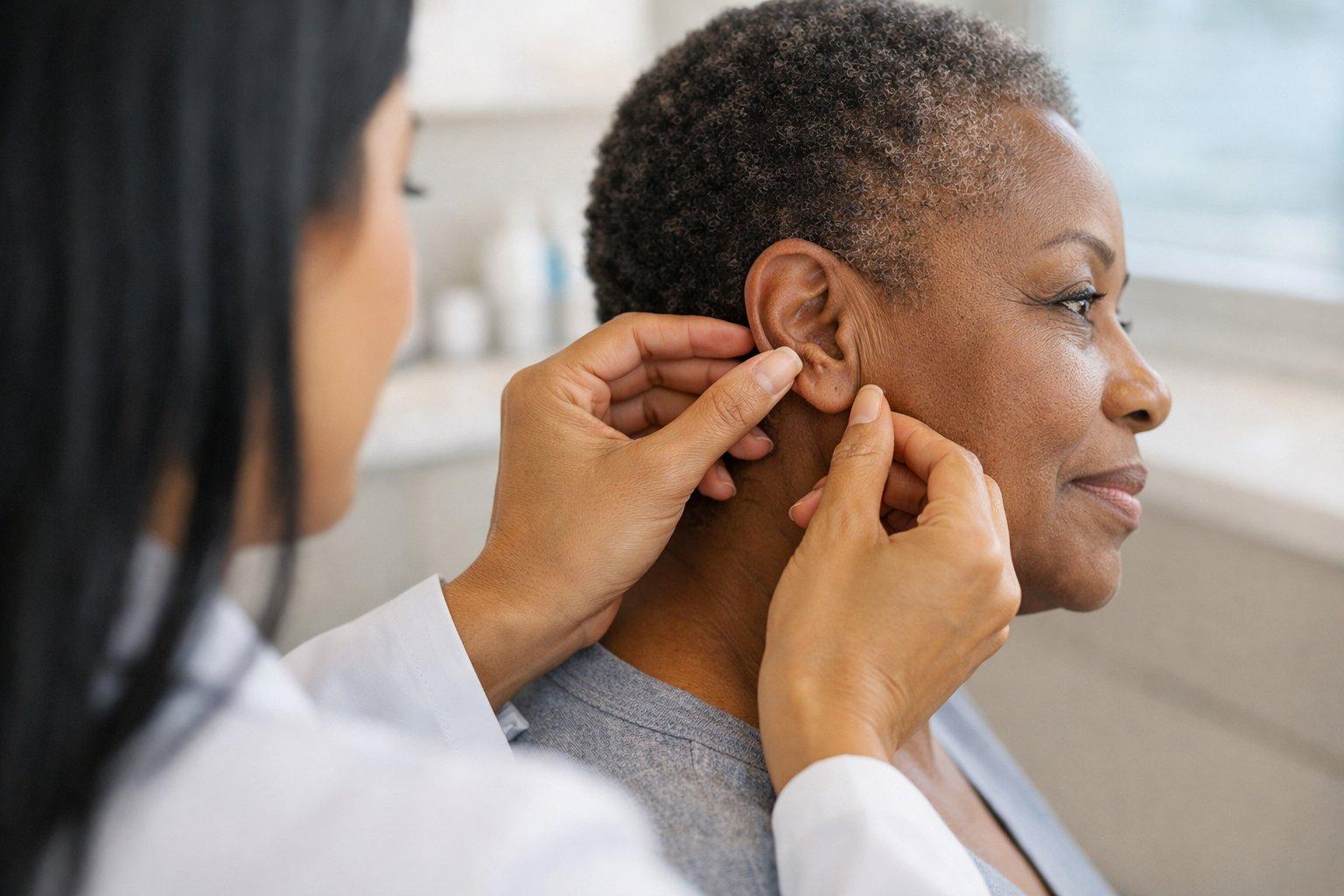
A greasy film or waxy buildup behind the ears is common, and it is often related to a mix of skin oil, sweat, shampoo residue, hair products, and dead skin. Many people notice it more in hot weather, after workouts, or when they are using richer styling products. The good news is that simple skin-care changes may help, but persistent buildup can sometimes be associated with irritation or an inflammatory skin condition that deserves a closer look.
In plain terms, the best approach is to keep the area clean without over-scrubbing, simplify products that may be collecting there, and pay attention to symptoms like itching, redness, flaking, odor, or tenderness. If it keeps coming back or starts to look inflamed, a dermatologist can evaluate what is driving it and guide treatment.
Quick answer
- Greasy buildup behind the ears is often a mix of natural oil, sweat, dead skin, and product residue.
- Gentle daily cleansing may help more than harsh scrubbing.
- Hair sprays, pomades, conditioners, sunscreen, and fragrance can collect in this fold of skin.
- If the area is red, itchy, flaky, sore, or has an odor, it is worth getting checked.
- When home care is not enough, professional evaluation can help narrow down the cause.
What it is
The skin behind the ears has a natural crease where oil, moisture, and product residue can build up. Because it is easy to miss when washing your face or shampooing your hair, the area can collect a soft, greasy, sometimes slightly waxy layer over time. In some people, that buildup is mostly cosmetic. In others, it may be associated with irritation from products, friction from glasses or mask straps, or a skin condition that causes excess flaking and oiliness.
Common causes or triggers
- Natural oil production: Some people simply make more oil in this area, especially if the scalp is oily.
- Sweat and humidity: South Florida heat and humidity can leave skin feeling slick and make residue collect faster.
- Hair products: Conditioners, serums, pomades, gels, and sprays can settle behind the ears.
- Skin-care residue: Sunscreen, cleanser, moisturizer, and makeup may not get fully rinsed away.
- Dead skin buildup: Skin cells can mix with oil and create a thicker film.
- Friction and occlusion: Glasses, headphones, hats, and mask loops can trap moisture and irritate the skin.
- Inflammatory skin conditions: Flaking, redness, or itching may be associated with issues such as dandruff-related irritation or eczema.
What you can do at home
Start with gentle cleansing once a day. While washing your face or in the shower, use lukewarm water and a mild cleanser to clean the fold behind the ears. Rinse well, then pat dry. The goal is to remove residue without stripping the skin.
It also helps to look at your product routine. If you use rich hair products, styling creams, leave-in conditioners, or sunscreen around the hairline, try keeping them away from the ear crease and make sure they are fully washed off at the end of the day. Cleaning eyeglass arms, earbuds, and anything else that sits in that area can also reduce repeated buildup.
Avoid picking, scraping, or aggressively exfoliating the skin. That can make irritation worse, especially if the area already feels tender or itchy. If the skin seems dry or easily irritated, a light, fragrance-free moisturizer may help support the skin barrier after cleansing.
Professional options
If the buildup keeps returning, looks inflamed, or is paired with itching and flaking, professional evaluation can help. Common options include a closer skin exam, guidance on what products to stop, and high-level treatment approaches based on what your dermatologist sees. Depending on the pattern, your clinician may discuss medicated washes, prescription anti-inflammatory treatment, or other targeted care. The right plan depends on whether the issue is mostly residue, irritation, or an underlying skin condition.
When to see a dermatologist
- The area stays red, itchy, flaky, or painful.
- You notice cracking, bleeding, crusting, or drainage.
- There is a persistent odor that does not improve with gentle cleansing.
- The buildup keeps coming back even after simplifying products and cleaning carefully.
- You also have scalp flaking, facial irritation, or rash-like changes nearby.
- You are not sure whether it is simple buildup or something else.
FAQ
Is greasy buildup behind the ears always a hygiene issue?
No. It can happen even when someone bathes regularly. The area naturally traps oil, sweat, and product residue, and some people are simply more prone to buildup than others.
Can hair products make it worse?
Yes. Leave-in conditioners, pomades, sprays, and serums can collect behind the ears, especially if they are applied near the hairline or not fully washed away.
Should I scrub the area to get it off faster?
Usually, gentle cleansing is better than scrubbing. Harsh rubbing may irritate the skin and make the area more sensitive.
What if the skin is flaky as well as greasy?
That pattern can be associated with irritation or an inflammatory skin issue, especially if there is itching or redness. If you are unsure, it is worth getting checked.
Can an aesthetician help?
An aesthetician may be helpful with gentle skin-care guidance and product review, but if the area is inflamed, recurrent, or uncomfortable, a dermatologist is the best place to start for evaluation.
Ready to get help?
Schedule an appointment or send a message and our team will get back to you.
Prefer to call? 954-666-3736
Disclaimer: This article is for educational purposes and is not medical advice. For diagnosis and personalized treatment, please book an appointment with a board-certified dermatologist.
