

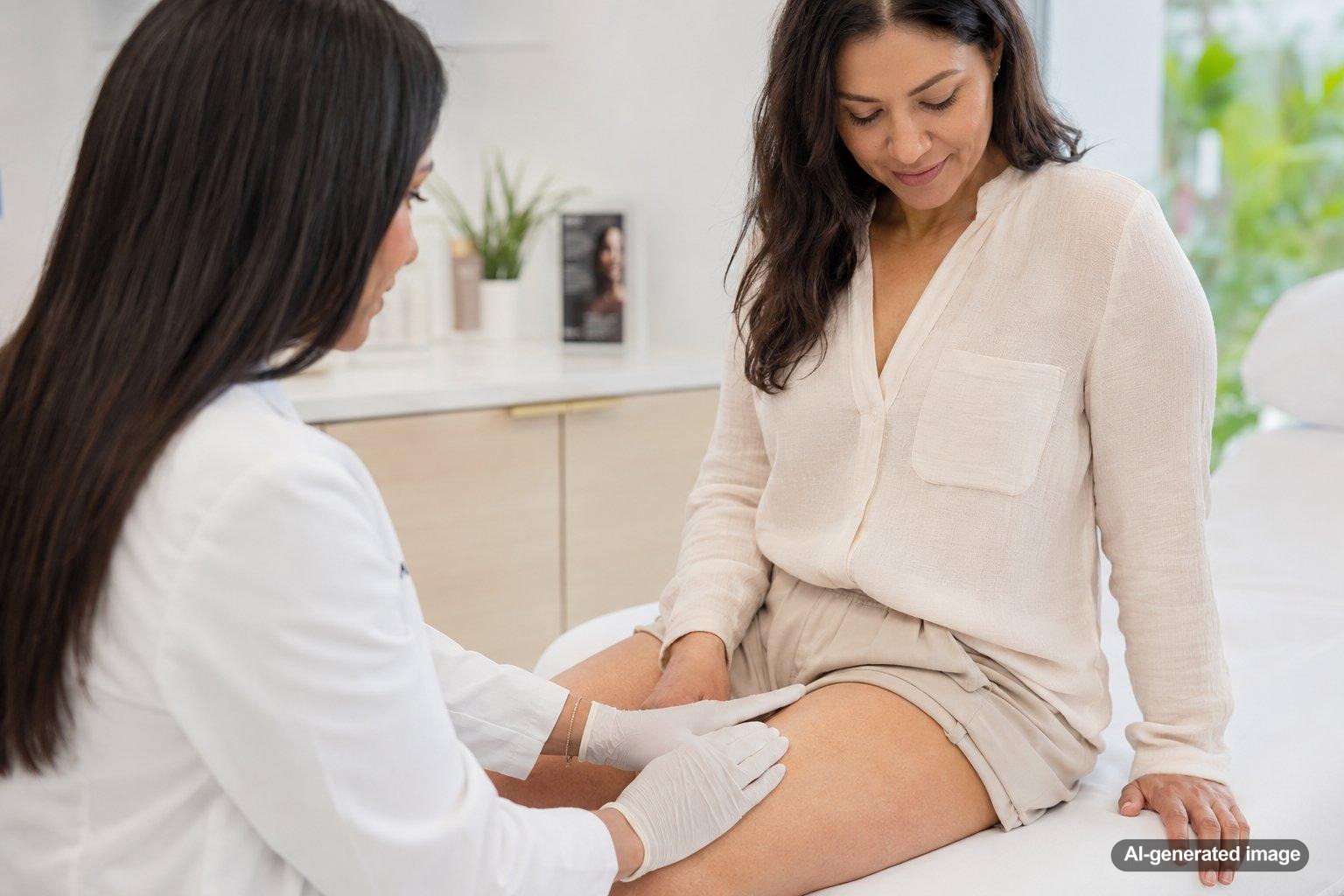
A chafing rash between the thighs is usually related to friction, heat, sweat, tight clothing, or skin rubbing against skin. In Fort Lauderdale’s warm, humid climate, it can be especially frustrating for residents, travelers, and snowbirds who are walking, exercising, or spending long days outdoors.
The first step is usually to reduce rubbing, keep the area gently dry, and protect the skin barrier. However, not every inner thigh rash is simple chafing. A rash in this area can sometimes be associated with intertrigo, yeast, fungus, eczema, irritation from products, or another condition that needs a dermatologist’s evaluation.
Quick answer
- Pause friction when possible by wearing soft, breathable, well-fitting clothing.
- Cleanse gently, pat the area dry, and avoid scrubbing.
- Use a bland barrier ointment or anti-chafe balm to reduce rubbing.
- Avoid fragranced products, harsh exfoliants, and aggressive home remedies on irritated skin.
- Book a dermatology visit if the rash is painful, spreading, recurrent, draining, blistering, very itchy, or not improving.
What it is
Chafing is irritation that happens when skin repeatedly rubs against skin, clothing, or another surface. Between the thighs, this friction can disturb the skin barrier and leave the area feeling sore, tender, stinging, or raw. When moisture and heat are trapped in a skin fold, inflammation can become more noticeable, and the area may be more vulnerable to yeast or fungal overgrowth.
Intertrigo is a related term dermatologists use for inflammation in skin folds, including the groin and inner thigh area. It does not mean one single diagnosis. It describes a pattern of irritation that may have different contributors, so treatment depends on what your dermatologist sees during an exam.
Common causes or triggers
- Heat and humidity: Sweat can increase friction and make the skin feel sticky.
- Exercise or walking: Repeated movement can irritate the inner thighs, especially during travel or outdoor activity.
- Tight clothing: Seams, compression, or non-breathable fabrics may worsen rubbing.
- Moisture trapped in skin folds: Damp skin is more easily irritated.
- Fragrance or harsh products: Scented washes, wipes, deodorants, and exfoliants can sting or inflame sensitive skin.
- Possible yeast or fungal involvement: If the rash is very itchy, scaly, spreading, has a defined border, or keeps returning, it is worth being checked.
What you can do at home
For mild irritation that seems clearly related to rubbing, conservative skin care may help calm the area. Wash with a gentle, fragrance-free cleanser, rinse well, and pat dry with a soft towel. Avoid scrubbing, exfoliating acids, retinoids, alcohol-based products, and fragranced powders on irritated skin.
Before walking or exercising, consider applying a thin layer of a bland barrier ointment, petroleum-based product, or anti-chafe balm to areas that rub. Choose breathable underwear or shorts that reduce skin-to-skin friction without feeling tight. After sweating, change out of damp clothing promptly and let the area dry before reapplying any barrier product.
Be cautious with over-the-counter creams if you are unsure what the rash is. For example, steroid creams can sometimes make certain fungal rashes harder to recognize or manage. If the rash is intense, recurrent, or in a sensitive area, a dermatologist can help you choose the right approach.
Professional options
At a dermatology visit, the clinician can look for clues that suggest simple friction, intertrigo, yeast, fungal rash, eczema, contact dermatitis, psoriasis, or another cause. Depending on the exam, common options may include barrier repair guidance, prescription anti-inflammatory medication, antifungal treatment, antibacterial treatment if needed, or changes to your skincare and clothing routine.
The goal is not only to quiet the current irritation, but also to understand why it is happening. A personalized plan may be especially helpful if the rash comes back often, affects exercise or travel, or is uncomfortable enough to interfere with daily life.
When to see a dermatologist
Schedule an appointment if the rash is not improving with gentle care, keeps coming back, spreads, becomes increasingly painful, develops open areas, has drainage, forms blisters, smells unusual, or is accompanied by fever or feeling unwell. You should also be evaluated if you notice marked swelling, severe tenderness, rapidly worsening redness, or a rash involving the groin that you cannot identify.
Because the inner thigh and groin area can develop several different types of rashes, an exam is often the most direct way to avoid guessing. If you’re unsure, it’s worth getting checked by a board-certified dermatologist.
FAQ
Can chafing between the thighs happen even if I do not exercise?
Yes. Walking, heat, humidity, clothing seams, sweating, and skin-to-skin contact can all contribute. It is not limited to athletes.
Should I keep the area dry or moisturized?
Both ideas can matter. The area should be gently dried after cleansing or sweating, but a thin protective barrier may help reduce rubbing. The right balance depends on the skin and whether infection or another rash is present.
Can I use baby powder?
Some powders can reduce moisture, but they may cake, irritate, or be messy in a skin fold. A dermatologist can help you decide whether a powder, barrier ointment, or another option makes sense for your situation.
How do I know if it is fungal instead of chafing?
You may not be able to tell by appearance alone. A fungal rash may be very itchy, scaly, ring-like, spreading, or recurrent, but other rashes can overlap. Evaluation is helpful when the rash does not behave like simple friction.
Can I prevent thigh chafing while traveling in South Florida?
Many people find it helpful to wear breathable, friction-reducing clothing, change out of damp garments, pat the skin dry, and apply a thin anti-chafe barrier before longer walks or outdoor plans.
Ready to get help?
Schedule an appointment or send a message and our team will get back to you.
Prefer to call? 954-666-3736
Disclaimer
This article is for educational purposes and is not medical advice. For diagnosis and personalized treatment, please book an appointment with a board-certified dermatologist.
Sources & further reading
- Cleveland Clinic – Chafing: Causes, Treatment and Prevention
- Cleveland Clinic – Intertrigo: What Is It, Causes, Symptoms and Treatment
- MedlinePlus (NIH) – Intertrigo
- American Academy of Dermatology (AAD) – Rash 101 in Adults: When to Seek Medical Treatment
