

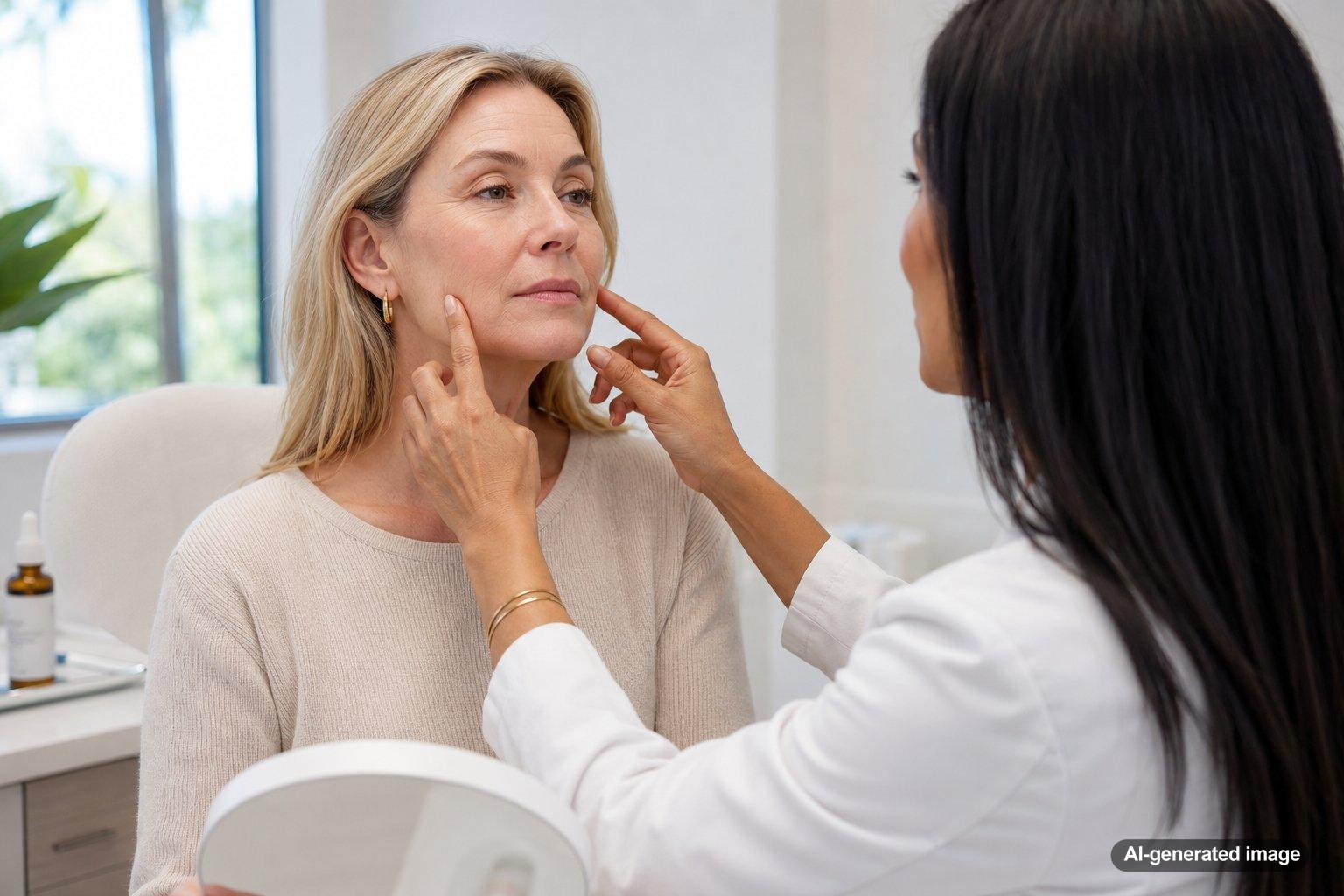
A damaged skin barrier can feel like skin that has suddenly become fussy, reactive, tight, or harder to calm than usual. You may notice stinging with products that used to be comfortable, dryness that returns quickly, or a rough, flaky texture that does not feel like your normal skin.
The short answer: your skin barrier may be stressed when dryness, burning, itching, redness, flaking, or sensitivity show up together and linger. These signs can also overlap with eczema, rosacea, allergic reactions, acne irritation, or other skin conditions, so a dermatologist can help you sort out what is actually happening.
Quick answer
- Your skin barrier may be irritated if your skin feels tight, rough, itchy, flaky, or unusually sensitive.
- Stinging or burning after applying gentle products can be a clue that the outer layer of skin is stressed.
- Common triggers include over-exfoliating, harsh cleansers, dry weather, too many active ingredients, fragrance, and sun exposure.
- At home, focus on a simple routine: gentle cleanser, moisturizer, sunscreen, and a temporary pause on strong exfoliants or irritating actives.
- See a dermatologist if irritation is painful, spreading, cracking, bleeding, infected-looking, or not improving with gentle care.
What is the skin barrier?
Your skin barrier is the outer protective layer of your skin. A simple way to picture it is as a carefully organized wall that helps keep water in and helps reduce contact with irritants, allergens, and everyday environmental stressors. When that barrier is working well, skin usually feels more comfortable, hydrated, and resilient.
When the barrier is stressed, the skin may lose moisture more easily and become more reactive. That does not always mean there is a serious problem, but it is a useful signal to slow down and simplify your routine.
Common signs your barrier may be damaged
Skin barrier stress can look a little different from person to person. Common clues include:
- A tight or squeaky feeling after washing
- Dry patches, flaking, peeling, or rough texture
- Stinging, burning, or warmth after applying products
- Redness or blotchiness, especially after cleansing or exfoliating
- Itching or a more sensitive feeling than usual
- Breakouts that seem connected to irritation rather than oiliness alone
- Makeup applying unevenly because the skin surface feels dry or textured
These symptoms can be associated with barrier disruption, but they can also come from dermatitis, rosacea, acne treatments, allergies, or other concerns. If you are unsure, it is worth getting checked rather than guessing.
Common causes and triggers
A stressed barrier is often the result of too much irritation and not enough recovery time. Common triggers include:
- Using exfoliating acids, scrubs, retinoids, or acne treatments too often
- Layering several strong active ingredients in the same routine
- Harsh, fragranced, or stripping cleansers
- Long hot showers or washing the face with water that is too hot
- Cold weather, dry indoor air, travel, or frequent changes in climate
- Sun exposure without consistent protection
- Picking, rubbing, shaving irritation, or over-cleansing
- Underlying skin conditions such as eczema or rosacea
For Fort Lauderdale patients and seasonal visitors, travel can be a sneaky factor. Airplanes, hotel air conditioning, extra sun, more frequent sunscreen reapplication, and changes in water or routine can all leave skin feeling less balanced.
What you can do at home
When your skin feels irritated, the most helpful first step is usually to simplify. Think of it as giving your skin a quieter environment for a while.
- Use a gentle, fragrance-free cleanser and avoid scrubbing.
- Wash with lukewarm water instead of hot water.
- Apply moisturizer while skin is slightly damp to help reduce water loss.
- Look for barrier-supportive ingredients such as ceramides, glycerin, hyaluronic acid, petrolatum, or colloidal oatmeal, depending on what your skin tolerates.
- Pause exfoliating acids, scrubs, peels, strong retinoids, and irritating masks until your skin feels calmer.
- Use broad-spectrum sunscreen during the day, especially if your skin is already irritated or peeling.
- Introduce products back slowly, one at a time, so you can see what your skin accepts.
Avoid trying to repair irritation with a crowded routine. More products can sometimes create more confusion, especially when skin is already reactive.
Professional options
If barrier symptoms are persistent or keep returning, a dermatology visit can help identify whether you are dealing with irritation, eczema, contact dermatitis, rosacea, acne-treatment irritation, or another skin concern. Your clinician may review your skincare routine, look for possible triggers, and discuss gentle, barrier-conscious options.
Professional care might include routine adjustments, prescription therapies when appropriate, testing for contact allergy in select cases, or supportive treatments once the skin is calm enough. The right plan depends on your skin, your history, and what your dermatologist sees during evaluation.
At Waverly DermSpa, we offer HydraFacial and can help you understand whether it may be appropriate.
When to see a dermatologist
Book an appointment if your skin is not improving with gentle care, or if symptoms are uncomfortable enough to interrupt sleep, work, travel, or daily life. You should also seek evaluation if you notice:
- Cracks, bleeding, oozing, crusting, or increasing pain
- Rapidly spreading redness or swelling
- Severe itching or burning
- A rash around the eyes, lips, or genitals
- Irritation after starting a new prescription or over-the-counter treatment
- Repeated flares that keep returning despite a simple routine
A dermatologist can evaluate whether the barrier is only irritated or whether another condition needs attention.
FAQ
Can a damaged skin barrier cause acne?
It can contribute to irritation that looks or feels like breakouts, and it may make acne-prone skin harder to manage. Acne itself has multiple causes, so it is helpful to have a dermatologist evaluate persistent or painful breakouts.
Should I stop retinol if my barrier feels damaged?
Many people pause retinoids and exfoliating products when skin is stinging, peeling, or unusually sensitive. Your clinician can help you decide when and how to restart, especially if you use prescription-strength products.
Is slugging good for a damaged skin barrier?
Occlusive ointments may help some dry or irritated skin hold onto moisture, but they are not right for every skin type or every condition. If you are acne-prone, very inflamed, or unsure what is causing the irritation, ask a dermatologist before relying on it.
How long does it take for the skin barrier to feel better?
Timing varies. Some mild irritation may settle with a simpler routine, while recurring or inflamed symptoms may need professional evaluation and a more specific plan.
Can sunscreen irritate a damaged skin barrier?
It can, especially if the formula contains ingredients your skin does not tolerate. Still, sun protection remains important. A dermatologist can help you choose options that are more appropriate for sensitive or irritated skin.
Ready to get help?
Schedule an appointment or send a message and our team will get back to you.
Prefer to call? 954-666-3736
This article is for educational purposes and is not medical advice. For diagnosis and personalized treatment, please book an appointment with a board-certified dermatologist.
Sources & further reading
- American Academy of Dermatology (AAD) – Dermatologists’ top tips for relieving dry skin
- National Eczema Association – Skin Barrier Basics for People With Eczema
- Cleveland Clinic – Epidermis
