

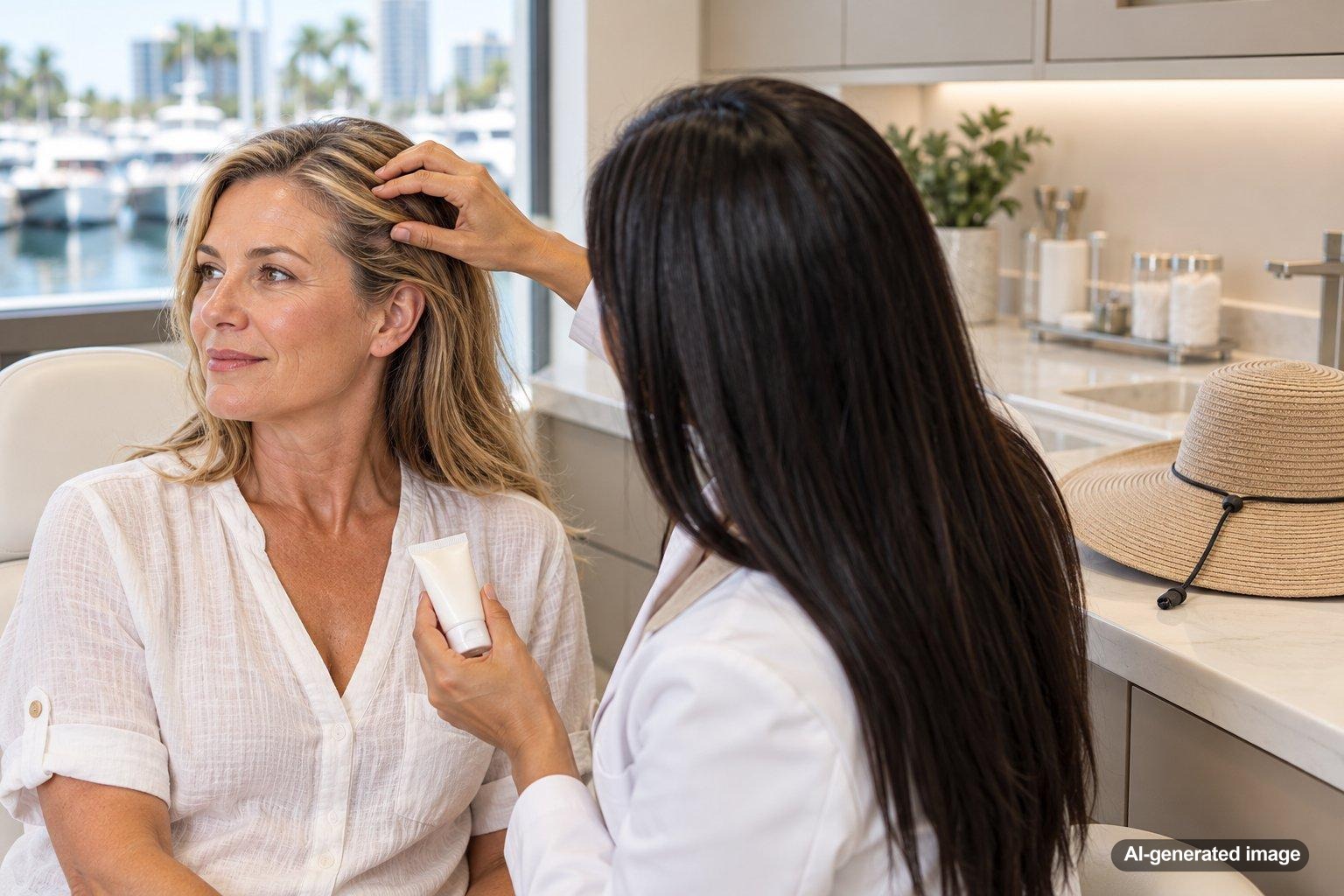
Spending a day on the water is one of the pleasures of living in South Florida. Whether you’re fishing offshore, sailing along the coast, or enjoying a weekend cruise through Fort Lauderdale’s waterways, your scalp and ears deserve more sun protection than they often receive. These easily overlooked areas can accumulate significant ultraviolet (UV) exposure, particularly during long hours outdoors.
Boaters should protect their scalp and ears by combining a secure, wide-brimmed or neck-flap hat with broad-spectrum, water-resistant SPF 30 or higher sunscreen on exposed skin. Reapplication, shade, and regular skin checks complete the routine. Because sunlight reflects off water and marine conditions can make protective habits more difficult to maintain, thoughtful preparation matters even on breezy or cloudy days.
Quick Answer: Scalp and Ear Protection for Boaters
- Wear a protective hat: Choose a wide brim or a cap with ear and neck flaps, ideally made from fabric rated UPF 50+.
- Apply sunscreen carefully: Use broad-spectrum, water-resistant SPF 30 or higher on both ears, exposed scalp, the hairline, and surrounding skin.
- Reapply consistently: Reapply approximately every two hours outdoors and after swimming, heavy sweating, or toweling off, following the product’s water-resistance instructions.
- Use available shade: Take breaks beneath a boat canopy or other shade, while remembering that reflected UV radiation may still reach exposed skin.
- Monitor your skin: Have new, changing, bleeding, or nonhealing spots evaluated by a dermatologist.
Why Boating Creates Special Sun Exposure Challenges
Boating combines extended outdoor exposure with environmental conditions that can make UV protection less straightforward. Water reflects ultraviolet radiation, potentially adding to the exposure received directly from the sun. Wind may keep skin feeling comfortable even while substantial sun exposure is occurring.
In Fort Lauderdale, boating is a year-round activity. Residents, seasonal visitors, and international travelers may spend hours on decks, docks, fishing boats, and personal watercraft. A cooler morning or overcast afternoon should not be mistaken for an absence of UV radiation.
The scalp and ears are particularly easy to miss. Hair can conceal exposed areas of the scalp, while sunglasses, baseball caps, and ordinary clothing may leave the upper ears and sides of the head uncovered.
How to Protect Your Scalp While Boating
Choose Headwear That Covers More Than Your Forehead
A standard baseball cap provides some protection to the forehead and the scalp beneath it, but typically leaves the ears, sideburn areas, and neck exposed. A wide-brimmed hat offers more complete coverage when worn correctly.
For boating, look for a lightweight hat with a secure chin strap or another retention feature so it remains comfortable in windy conditions. A hat with a neck cape or ear flaps can be especially useful during fishing or other activities requiring prolonged sun exposure.
Ultraviolet protection factor (UPF) ratings indicate how effectively fabric blocks UV radiation. UPF 50+ materials are a practical option, although actual coverage still depends on fit, fabric condition, and which areas the hat covers.
Apply Sunscreen to Exposed Scalp Areas
People with thinning hair, shaved heads, receding hairlines, or prominent hair parts should pay particular attention to scalp protection. Hair offers variable coverage, and visible skin between strands may receive direct sunlight.
Common sunscreen options include lightweight lotions, gels, and carefully applied sticks. Gels may be convenient for areas with hair, while creams or lotions can work well on a shaved scalp.
When using a spray formulation, avoid inhaling the product or spraying against the wind. Dispense it according to the label and spread it evenly to achieve adequate coverage. A hat is often the more dependable primary barrier for extensive scalp exposure.
How to Protect Your Ears From UV Radiation
The ears are frequently forgotten during sunscreen application. Their shape includes curves, edges, and folds that can be difficult to cover evenly, particularly when someone applies sunscreen quickly before boarding a boat.
Apply broad-spectrum SPF 30 or higher sunscreen to the exposed outer ear, including the upper rim, front surfaces, and skin behind the ears. Avoid placing sunscreen inside the ear canal. Remember the nearby temples, sideburn areas, and upper neck.
A sunscreen stick or lotion may offer more controlled application than an aerosol spray in windy conditions. Check coverage around eyeglass arms, sunglasses, and hat straps, where missed areas can occur.
If your hat leaves the ears exposed, sunscreen becomes especially important. For longer outings, ear-covering headwear adds a useful physical layer of protection.
What Makes a Sunscreen Appropriate for Boating?
The American Academy of Dermatology recommends selecting sunscreen with three essential features: broad-spectrum coverage, SPF 30 or higher, and water resistance.
- Broad-spectrum coverage: Protects against both UVA and UVB radiation.
- SPF 30 or higher: Provides substantial UVB protection when applied correctly.
- Water resistance: Indicates that the product has been tested for 40 or 80 minutes of water exposure, as specified on its label.
- Comfortable texture: A formula that feels practical on the scalp, ears, and hairline may encourage consistent application.
No sunscreen is waterproof. Water resistance does not mean a product remains protective throughout an entire boating trip, and choosing a higher SPF does not eliminate the need for reapplication.
Build a Practical Sun Protection Routine on the Boat
Before Leaving the Dock
Apply sunscreen approximately 15 minutes before going outdoors. Cover the scalp where skin is visible, both ears, the face, neck, lips, and other uncovered areas. Put on protective headwear before prolonged exposure begins.
Keep sunscreen accessible rather than packed beneath other equipment. A small, secure storage pouch near your personal belongings can make reapplication easier throughout the trip.
During the Trip
Reapply sunscreen approximately every two hours while outdoors. Reapply sooner as directed after swimming, significant sweating, or toweling off. If the product lists 40 or 80 minutes of water resistance, follow that specific limit during water exposure.
Set a reminder if you expect to spend several hours fishing, cruising, or sailing. Check whether your hat has shifted and exposed part of your scalp or ears.
Use a shaded cockpit, covered seating area, or canopy when available. Because UV radiation can reflect off water, shade is an important supplement rather than a complete replacement for other protective measures.
After Returning Ashore
Inspect areas that may have received more sun than expected, including the top of your head, outer ears, and back of your neck. If skin feels sunburned, avoid additional exposure while it recovers. Cool compresses and gentle, fragrance-free moisturizers may help with mild discomfort.
Severe blistering, significant pain, fever, dizziness, or other concerning symptoms warrant prompt medical attention.
When Should Boaters See a Dermatologist?
Repeated UV exposure is associated with skin aging and skin cancer risk. The scalp and ears can be difficult to inspect independently, especially when hair conceals a lesion or a spot is located behind the ear.
Consider a dermatology evaluation if you notice:
- A new growth, spot, or mole that looks unusual.
- A lesion that changes in size, shape, or color.
- A rough, persistently scaly area that does not resolve.
- A sore that repeatedly crusts, bleeds, or does not heal.
- A spot that looks noticeably different from surrounding moles or marks.
These findings do not automatically indicate skin cancer, but they deserve professional assessment. A dermatologist can examine areas that are difficult to see and determine whether further evaluation is appropriate.
At Waverly DermSpa, Dr. Maryann Mikhail, MD, can evaluate skin concerns involving the scalp, ears, and other sun-exposed areas and discuss individualized prevention and follow-up recommendations.
Frequently Asked Questions
Does a baseball cap provide enough sun protection while boating?
Usually not by itself. A baseball cap may shade much of the upper scalp and forehead, but it generally leaves the ears and neck exposed. A wide-brimmed hat or protective cap with ear and neck flaps offers more complete coverage.
Should I use sunscreen on my scalp if I still have hair?
Yes, on any exposed scalp skin. Hair density, part width, and hairstyle influence how much coverage your hair provides. Apply sunscreen along visible parts or thinning areas, or use protective headwear that covers the scalp.
Can I skip sunscreen on a cloudy boating day?
No. UV radiation can penetrate clouds, and water can reflect UV radiation toward exposed skin. Consistent sun protection remains appropriate even when temperatures are mild or the sky appears overcast.
How often should I reapply sunscreen while fishing or sailing?
Approximately every two hours during outdoor exposure, and sooner after swimming, heavy sweating, or toweling off. Follow the sunscreen label’s specific 40- or 80-minute water-resistance guidance when applicable.
Is a sunscreen spray or lotion better for the scalp?
Both may be useful when applied correctly. A lotion or gel can make it easier to control placement, while sprays require special care to avoid inhalation, wind drift, and incomplete coverage. Choose a formulation you can apply generously and evenly, and use protective headwear whenever practical.
Should I have my scalp and ears checked if I boat frequently?
Regular skin self-examination is valuable, particularly for areas receiving repeated sun exposure. A dermatologist can help determine an appropriate examination schedule based on your personal history, risk factors, and any concerning skin changes.
Ready to get help?
Schedule an appointment or send a message and our team will get back to you.
Prefer to call? 954-666-3736
Disclaimer
This article is for educational purposes and is not medical advice. For diagnosis and personalized treatment, please book an appointment with a board-certified dermatologist.
Sources & further reading
- American Academy of Dermatology (AAD) – How to apply sunscreen
- Centers for Disease Control and Prevention (CDC) – Sun Exposure in Travelers
- American Academy of Dermatology (AAD) – How to decode a sunscreen label
