

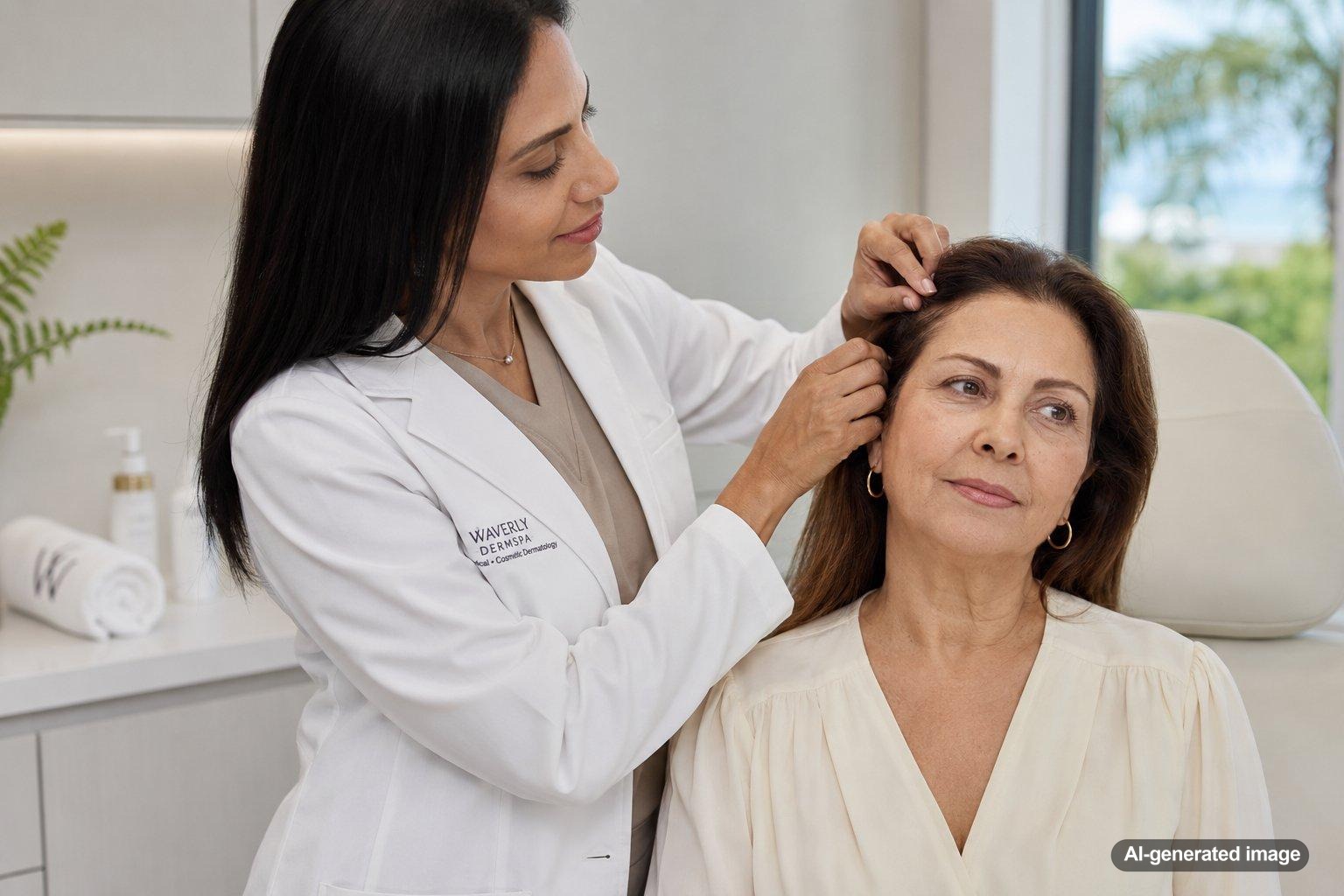
Fungal folliculitis is a skin condition that can appear as small, uniform bumps that often resemble acne. It happens when yeast that normally lives on the skin becomes overgrown and affects hair follicles. This can be confusing because it may look similar to other types of folliculitis or acne, but the underlying cause and triggers are different.
Understanding what contributes to this imbalance can help you recognize patterns and decide when a dermatology evaluation may be helpful. Many factors related to skin environment, sweat, and occlusion can play a role, especially in warm or humid climates.
Quick answer
- Fungal folliculitis is associated with an overgrowth of yeast in hair follicles
- It is often linked to heat, sweat, and occlusive clothing or skincare products
- It can resemble acne but may not respond to typical acne treatments
- It may appear on the chest, back, shoulders, or forehead
- A dermatologist can evaluate and help confirm the cause
What it is
Fungal folliculitis refers to inflammation of hair follicles related to yeast overgrowth, most commonly Malassezia species. These organisms are part of the normal skin microbiome but can sometimes multiply more than usual under certain conditions. This imbalance can lead to small, itchy or uniform bumps that cluster in areas with more sweat and oil production.
Common causes or triggers
- Hot and humid environments that increase sweating
- Occlusive clothing or tight athletic wear
- Heavy or oily skincare and hair products
- Prolonged moisture on the skin after exercise
- Use of certain antibiotics or medications that alter skin flora
What you can do at home
Gentle skin care adjustments may help reduce irritation and support a healthier skin environment. Many people focus on keeping the skin clean and dry, especially after sweating. Choosing lightweight, non-occlusive products may also be helpful. If symptoms persist or worsen, it is worth getting checked rather than self-treating indefinitely.
Professional options
A dermatologist can evaluate whether folliculitis is fungal, bacterial, or related to another skin condition. Treatment approaches may vary depending on the underlying cause and often focus on restoring balance in the skin microbiome. Prescription topical or oral therapies may be considered when appropriate.
When to see a dermatologist
- Persistent or recurring bumps that do not improve over time
- Worsening inflammation or spreading areas
- Uncertainty about whether the condition is acne or folliculitis
- Symptoms that interfere with comfort or daily activities
FAQ
Is fungal folliculitis the same as acne?
No. While it can look similar, fungal folliculitis is related to yeast overgrowth in hair follicles, whereas acne involves clogged pores, oil, and bacteria.
Why does it get worse in heat?
Warm, humid conditions can increase sweating and create an environment where yeast can thrive more easily on the skin.
Can skincare products contribute to it?
Some heavy or occlusive products may trap moisture and oil, which can contribute to imbalance in the skin environment for some individuals.
Do I need lab testing to confirm it?
A dermatologist may diagnose it clinically, and in some cases additional testing may be considered if the presentation is unclear.
Ready to get help?
Schedule an appointment or send a message and our team will get back to you.
Prefer to call? 954-666-3736
This article is for educational purposes and is not medical advice. For diagnosis and personalized treatment, please book an appointment with a board-certified dermatologist.
