

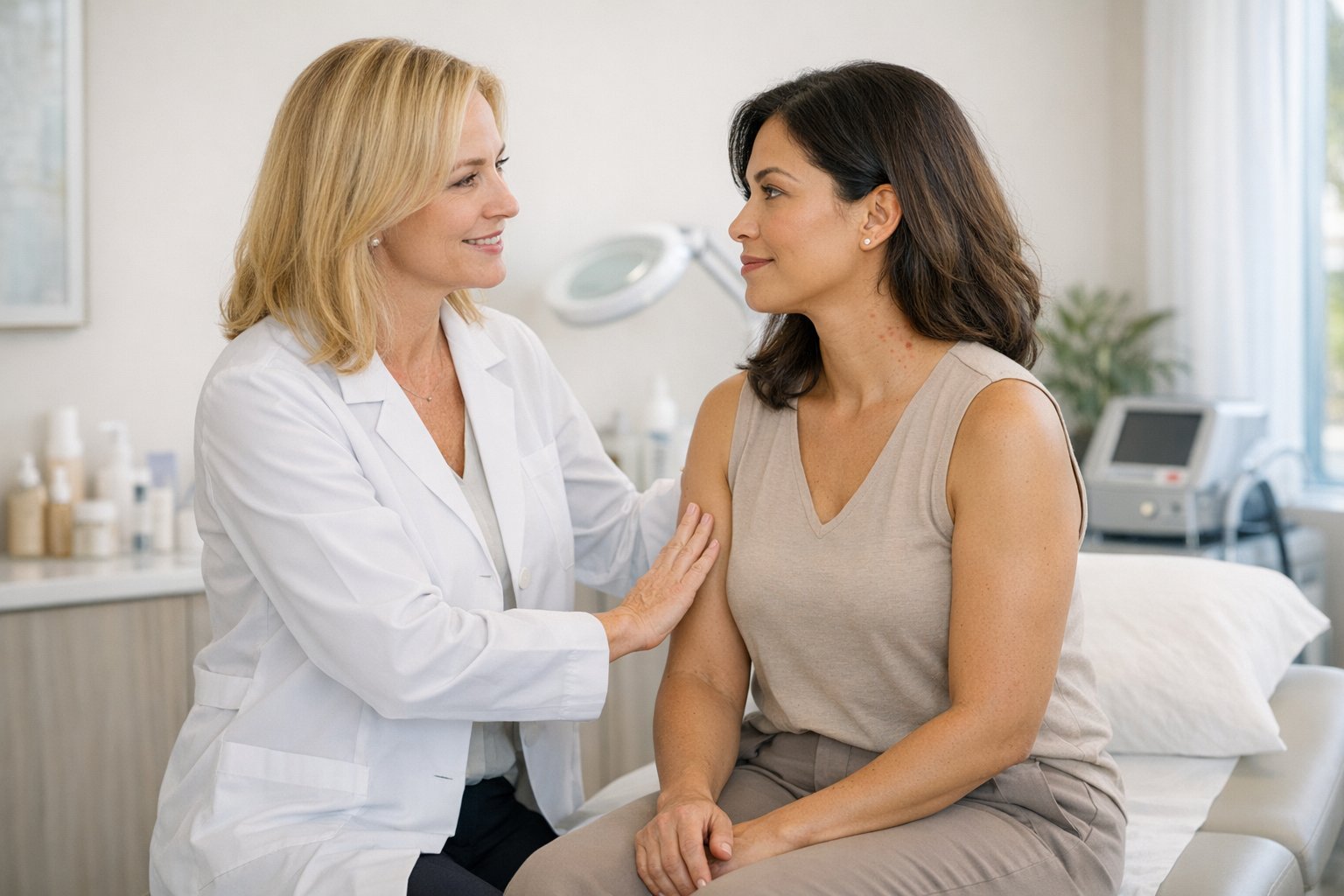
Heat bumps can be annoying, especially in a warm, humid climate or during travel. The good news is that they are often tied to sweat and friction and can improve with a few simple changes.
Quick answer
- Heat bumps (miliaria) happen when sweat gets trapped under the skin.
- They are more common in hot, humid weather, after workouts, or under tight clothing.
- Cooling the skin and reducing friction may help calm the bumps and itch.
- If a rash is worsening, painful, or you are unsure what it is, a dermatologist can evaluate it.
What it is (plain English)
Miliaria (often called heat bumps or heat rash) is a skin reaction that can show up when sweat ducts get blocked. Instead of evaporating normally, sweat can irritate the skin, leading to small bumps, a prickly feeling, and sometimes itching. It can appear on the chest, back, neck, under the bra line, in skin folds, or anywhere clothing traps heat.
Common causes/triggers
- Hot, humid weather (including Florida summers and tropical travel)
- Exercise or sweating for long stretches
- Tight, non-breathable clothing or athletic gear
- Friction in skin folds or under straps
- Occlusive skincare products (very heavy creams or ointments in hot weather)
- Prolonged time in airless environments (long flights, long car rides, outdoor events)
- Increased sweating from stress, heat exposure, or certain routines
What you can do at home
Home care focuses on cooling, reducing sweat, and protecting the skin barrier. Many people notice improvement when they remove the triggers and keep the area dry and comfortable.
- Cool the skin: a cool shower or cool compress may help with the prickly feeling.
- Choose breathable fabrics: lightweight, loose cotton or moisture-wicking options can reduce trapping heat.
- Reduce friction: avoid tight straps, layered compression, and rubbing in the affected area.
- Keep it simple: use a gentle cleanser and avoid heavy, oily products on the rash-prone area in hot weather.
- Skip heat: take breaks from sun and sauna-like environments when possible, especially during flare-ups.
- Try a light, fragrance-free moisturizer if the skin feels dry, but avoid thick occlusive layers while sweating heavily.
If you are considering an over-the-counter itch reliever or rash product, check labels carefully and avoid anything that stings, contains heavy fragrance, or seems to worsen irritation.
Professional options
If bumps keep returning, look unusually inflamed, or are hard to distinguish from other rashes, a professional evaluation can help. Common options may include:
- Confirming the diagnosis and ruling out look-alikes (like folliculitis, eczema flares, contact irritation, or acneiform rashes)
- Personalized guidance on skincare and sweat management for your skin type and lifestyle
- Prescription-strength anti-inflammatory options when appropriate (kept high-level and individualized)
- Strategies for excessive sweating when that is a major trigger, which can be discussed with a dermatologist
In a practice setting, your clinician can also help you adjust routines for seasonal heat, travel, and long days outdoors so your skin stays calmer.
When to see a dermatologist
- The rash is painful, rapidly spreading, or very swollen
- There is pus, crusting, warmth, or tenderness that could suggest infection
- You have fever or feel unwell along with a new rash
- The bumps are not improving after cooling and trigger reduction
- You are unsure whether it is heat bumps versus another condition
- The rash keeps recurring and affects daily comfort or sleep
FAQ
Are heat bumps contagious? Heat bumps are generally related to trapped sweat and irritation, not something that spreads person-to-person. If a rash has drainage, crusting, or significant tenderness, it is worth getting checked to rule out other causes.
How is miliaria different from acne? Acne is driven by clogged pores and inflammation around oil glands. Heat bumps are more tied to blocked sweat ducts and heat exposure. The appearance can overlap, which is why an exam can be helpful when it is not clear.
Can sunscreen cause heat bumps? Some heavier, more occlusive formulas can feel trapping in hot, humid conditions. Many people do well with lightweight, non-comedogenic, fragrance-free options and reapplying in thin layers.
Why do I get this on trips or flights? Travel can combine heat, friction, stress sweating, long periods in the same clothing, and limited airflow. Simple changes like breathable layers and cooling breaks may help.
Should I stop moisturizing? You do not have to avoid moisturizers entirely. In hot weather, many people do best with a lighter, fragrance-free moisturizer and avoiding thick layers on areas that are sweating heavily.
Ready to get help?
Schedule an appointment or send a message and our team will get back to you.
Prefer to call? 954-666-3736
Disclaimer
This article is for educational purposes and is not medical advice. For diagnosis and personalized treatment, please book an appointment with a board-certified dermatologist.
