

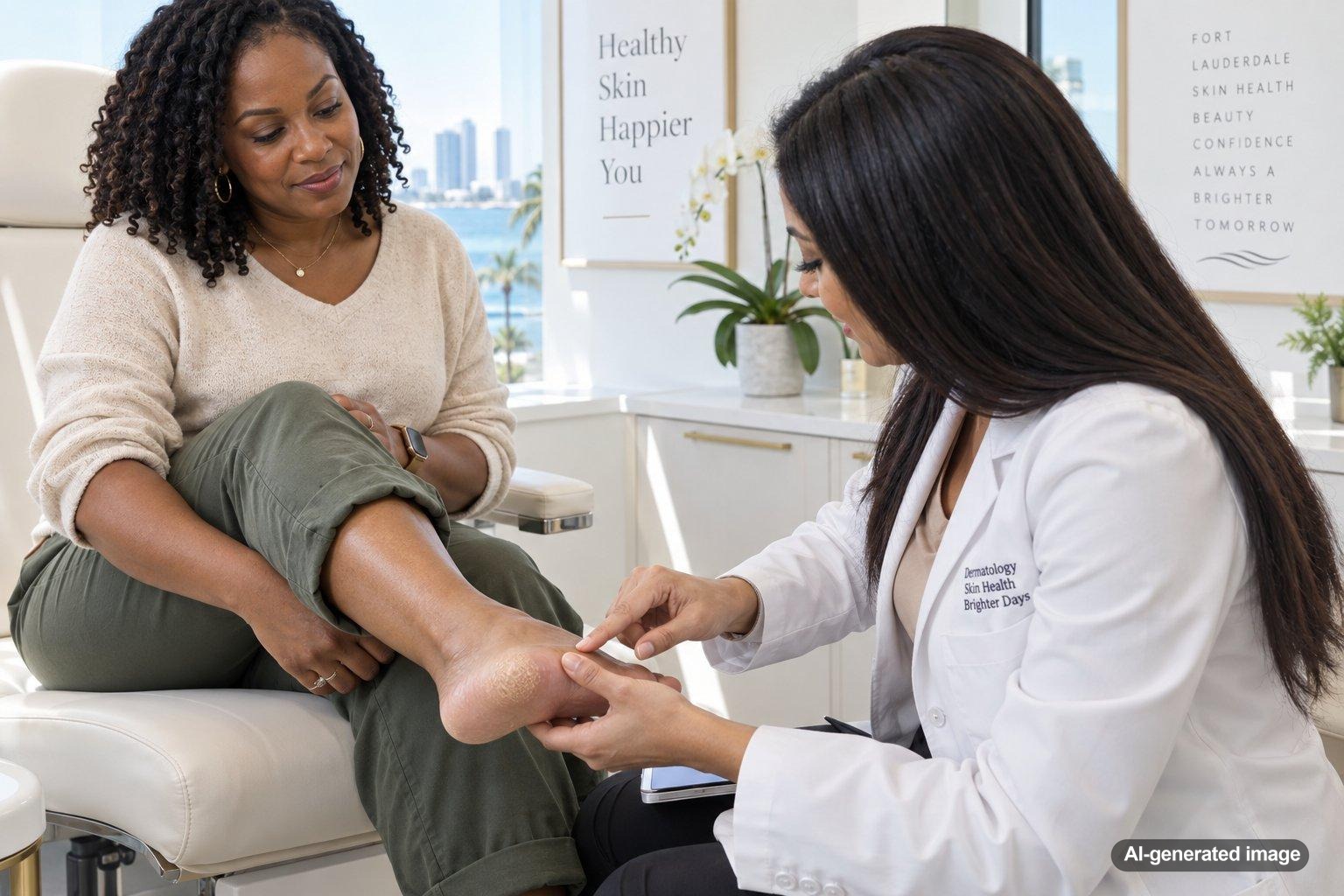
A hard, yellow area on the heel is often thickened skin that has developed in response to repeated pressure or friction. The yellow or waxy appearance can come from compact layers of dead skin cells. When that skin becomes dry and less flexible, normal pressure from standing and walking can cause it to split into cracks, sometimes called heel fissures.
Although this pattern is common, appearance alone cannot confirm the cause. A dermatologist can evaluate persistent, painful, unusually thick, or changing heel skin and determine whether another skin or health condition may be contributing.
Quick answer
- Repeated pressure and friction can cause the heel to build a protective layer of thick skin.
- Compact callused skin may look yellow, pale, rough, or waxy.
- Dryness reduces flexibility, allowing the thickened skin to crack under pressure.
- Gentle moisturizing and pressure reduction may help, but deep, painful, or persistent cracks deserve professional evaluation.
What is a hard, yellow heel callus?
A callus is an area of skin that has become thicker after repeated pressure or rubbing. On the heel, it often forms around the outer edge or directly beneath weight-bearing areas. The skin may feel firm, rough, or uneven and can appear yellow because the accumulated keratin is denser than the surrounding skin.
The thick layer is initially protective. However, callused skin contains less moisture and does not stretch as easily as healthy skin. As the heel expands slightly with each step, the rigid surface can pull apart and form shallow lines or deeper fissures.
Common causes and contributing factors
- Repeated pressure: Long periods of standing, frequent walking, and higher-impact activities can increase stress on the heels.
- Open-backed footwear: Sandals, flip-flops, and worn shoes may allow the heel to spread outward without enough support.
- Poorly fitting shoes: Shoes that rub, pinch, or allow the foot to slide can encourage callus formation.
- Dry skin: Low humidity, hot showers, harsh cleansers, and inconsistent moisturizing can make heel skin less flexible.
- Foot mechanics: The way weight is distributed across the foot may place additional pressure on one part of the heel.
- Underlying skin or health concerns: Persistent thickening or cracking can sometimes be associated with a skin condition, reduced sensation, or circulation concerns that require evaluation.
What can you do at home?
Start with conservative care designed to soften the skin and reduce pressure. Apply a thick, fragrance-free moisturizer shortly after bathing, while the skin is still slightly damp. Ingredients such as urea or lactic acid may help soften thick skin, but potentially irritating products should not be applied to open, bleeding, or inflamed cracks unless a clinician recommends them.
Plain petroleum jelly at bedtime can help reduce moisture loss. Wearing clean cotton socks over it may protect bedding and keep the product in place. Supportive, properly fitting shoes with a closed heel can also limit friction and outward spreading.
If the skin is intact and you do not have diabetes, reduced foot sensation, or poor circulation, very gentle use of a pumice stone after a brief bath or shower may reduce surface roughness. Stop if the area becomes painful or irritated. Do not cut, shave, or peel away the callus with a blade, and avoid aggressive scraping.
Professional options
A dermatologist can examine the heel to confirm whether the thickened area is a straightforward callus or whether another process may be affecting the skin. Depending on the findings, professional care may include carefully reducing excess thickness, recommending an appropriate keratolytic moisturizer, protecting fissures, or addressing an underlying skin concern.
If pressure distribution appears to be a major factor, your clinician may also suggest footwear changes, cushioning, or an evaluation by a foot specialist. Treatment should be individualized, especially when cracks are deep or there are medical conditions affecting the feet.
When should you see a dermatologist?
Schedule an evaluation if the callus repeatedly returns, does not improve with gentle care, becomes increasingly painful, or looks different from the surrounding thickened skin. Prompt medical attention is important for deep or bleeding cracks, spreading redness, warmth, swelling, drainage, fever, or difficulty walking.
Do not self-treat a heel callus with sharp tools or strong exfoliating products if you have diabetes, poor circulation, reduced sensation, or a history of slow-healing foot wounds. Even a small injury may require careful professional management.
Frequently asked questions
Why does the callus look yellow?
Dense layers of keratin can give thickened skin a pale yellow or waxy appearance. Color by itself does not establish a diagnosis, so new or unusual changes are worth having examined.
Can I cut the hard skin off?
No. Cutting or shaving a callus at home can remove too much skin and create bleeding, pain, or a wound. A dermatologist or qualified foot-care professional can reduce excess skin more safely when appropriate.
Should I use a foot file every day?
Daily filing can be too irritating for some skin. If gentle filing is appropriate for you, use light pressure and avoid cracked or tender areas. Stop if you notice soreness, redness, or worsening splits.
Will moisturizer make a thick callus disappear?
Moisturizer may soften the skin and reduce dryness, but it may not address the pressure or friction causing the callus. Combining consistent moisturizing with supportive footwear and appropriate evaluation is often more useful.
Why does the crack keep coming back?
Recurrence may happen when the skin remains dry or the heel continues to experience concentrated pressure. Persistent fissures can also signal that a skin or health concern needs professional assessment.
Ready to get help?
Schedule an appointment or send a message and our team will get back to you.
Prefer to call? 954-666-3736
This article is for educational purposes and is not medical advice. For diagnosis and personalized treatment, please book an appointment with a board-certified dermatologist.
