

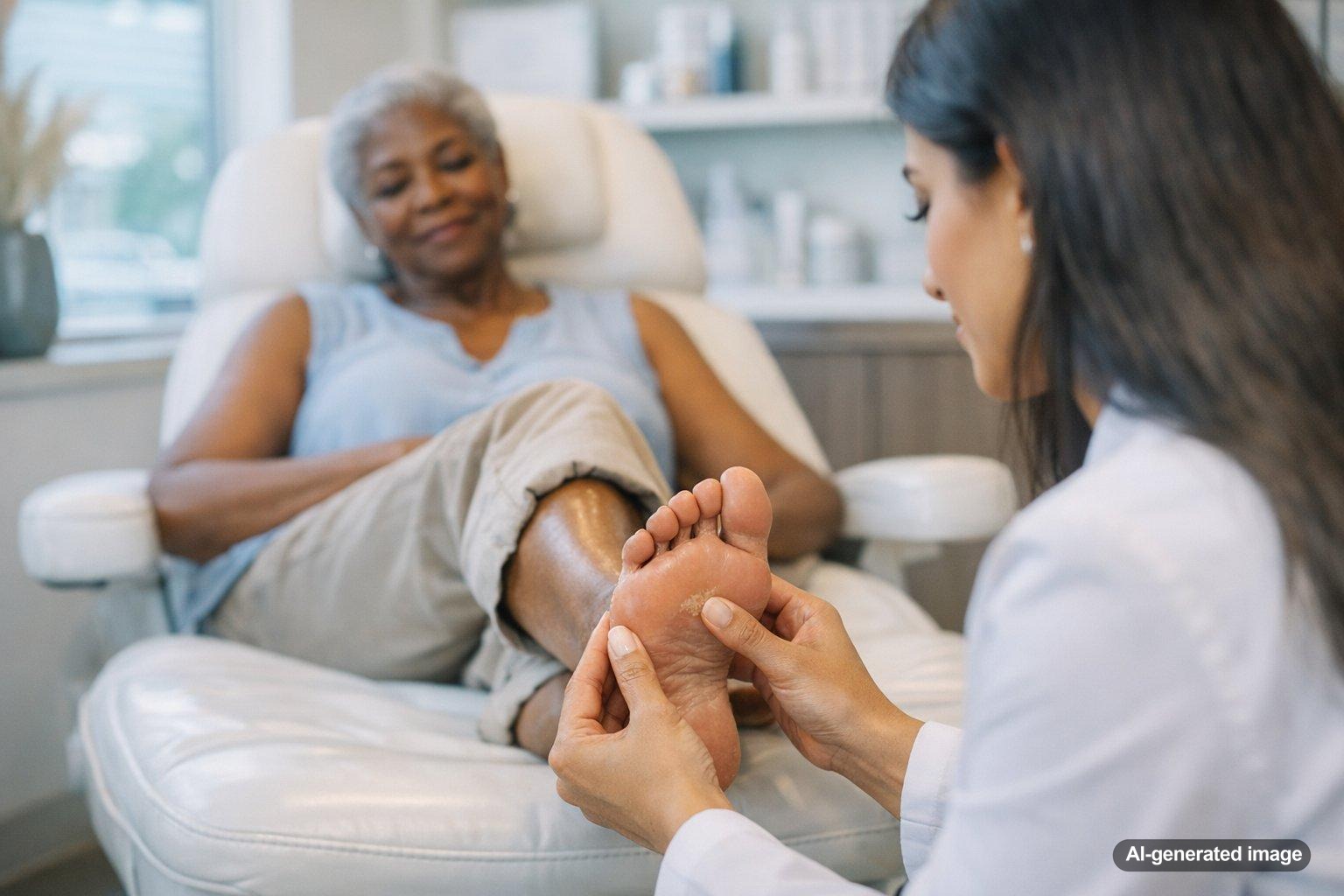
A hard patch on the bottom of your foot can be surprisingly hard to read. Sometimes it is simply thickened skin from pressure and friction. Other times, it may be a plantar wart, which is a growth linked to a common viral infection in the skin. Because both can look rough, feel firm, and show up in weight-bearing areas, it is easy to confuse one for the other.
The short answer is that a plantar wart and a callus can look similar, but they often behave differently. A wart may interrupt the normal skin lines, feel tender when squeezed from the sides, and sometimes show tiny dark dots. A callus is more often a broader area of thick skin that forms where your foot takes repeated pressure. If you are not sure, it is worth getting checked rather than guessing and treating the wrong thing.
Quick answer
- A callus is thickened skin from friction or pressure.
- A plantar wart is a skin growth caused by HPV on the sole of the foot.
- Warts may break up the normal skin lines and can be tender with side-to-side pressure.
- Calluses are often larger, more even in texture, and usually match areas of repeated rubbing or weight-bearing.
- If the spot is painful, spreading, persistent, or unclear, a dermatologist can evaluate it and guide treatment.
What it is
A plantar wart is a rough growth that develops on the bottom of the foot when certain types of HPV enter the skin through tiny breaks. Because it sits in a pressure-heavy area, it may grow inward and feel like you are stepping on a pebble. A callus, by contrast, is not an infection. It is your skin’s way of protecting itself after repeated rubbing, pressure, or shoe friction.
That difference matters. If a hard spot is truly a wart, paring it down like a simple callus may not solve the problem. If it is just thickened skin, aggressive wart treatments may irritate the area without helping much.
Common clues that may help you tell the difference
- Skin lines: A callus usually keeps the normal lines of the skin running through it. A plantar wart may disrupt them.
- Pain pattern: Many plantar warts hurt more when pinched from the sides, while calluses often feel sore from direct downward pressure.
- Appearance: Warts may look grainy or uneven and can sometimes show tiny dark dots. Calluses usually look more uniformly thickened.
- Location: Calluses often form exactly where friction or weight is greatest. Plantar warts can also appear there, which is why the two get confused.
- Number: A callus is often a single pressure spot. Warts can be single or appear in clusters.
Common causes or triggers
- Repeated pressure from walking, running, or standing
- Shoes that rub or change how weight is distributed
- Barefoot exposure in shared areas such as locker rooms or pool decks
- Small breaks in the skin that allow HPV to enter
- Trying to trim or pick at the area, which can add irritation
What you can do at home
If the area seems mild and you are not dealing with diabetes, poor circulation, or significant pain, start with simple foot care. Reduce friction where you can, wear shoes with a comfortable fit, and consider cushioned support if pressure is part of the problem. Avoid cutting deeply into the spot at home, since that can make irritation worse and can be risky if the diagnosis is not clear.
If you think it may be a callus, gentle soaking and careful smoothing may help. If you think it may be a wart, over-the-counter salicylic acid products are a common option for some people, but they should be used carefully and according to directions. If the area becomes more painful, red, or starts changing, stop self-treating and have it evaluated.
Professional options
When a hard spot keeps coming back, hurts when you walk, or simply does not look typical, an in-office exam can save time and frustration. A dermatologist can evaluate whether the area is more consistent with pressure-related thickening, a plantar wart, or another kind of lesion that should not be treated like a callus at home.
Common options for plantar warts may include guided topical treatment, cryotherapy, or other office-based approaches depending on the location and how stubborn it has been. For pressure-related thickening, treatment may focus more on safely reducing buildup and addressing the cause of friction or pressure. The right plan depends on what is actually there.
When to see a dermatologist
- The spot is painful enough to affect walking or exercise
- You have tried home care and it is not improving
- The area is growing, spreading, or multiplying
- You are unsure whether it is a wart, callus, or something else
- There is bleeding, drainage, marked redness, or unusual color change
- You have diabetes, neuropathy, poor circulation, or a history of slow wound healing
FAQ
Can a plantar wart feel like a callus?
Yes. Both can feel hard and thick, especially on the sole of the foot. That is one reason plantar warts are often mistaken for calluses.
Do plantar warts always have black dots?
Not always. Tiny dark dots can be a clue, but they are not present in every case and may be hard to see through thick surface skin.
Are plantar warts contagious?
They can be associated with HPV, which can spread through direct or indirect contact. Shared barefoot surfaces may play a role, although not every exposure leads to a wart.
Should I cut the hard skin off at home?
It is better to be cautious. Cutting into a painful or unclear lesion can irritate the area and may complicate care, especially if it is not a simple callus.
Can a dermatologist tell the difference in the office?
In many cases, yes. A close exam often helps distinguish a wart from a callus and can guide the next step if treatment is needed.
Ready to get help?
Schedule an appointment or send a message and our team will get back to you.
Prefer to call? 954-666-3736
This article is for educational purposes and is not medical advice. For diagnosis and personalized treatment, please book an appointment with a board-certified dermatologist.
Sources & further reading
- American Academy of Dermatology (AAD) – Warts: Diagnosis and treatment
- Cleveland Clinic – Plantar Warts: Symptoms, Causes, Treatment & Removal
- MedlinePlus (NIH) – Warts
