

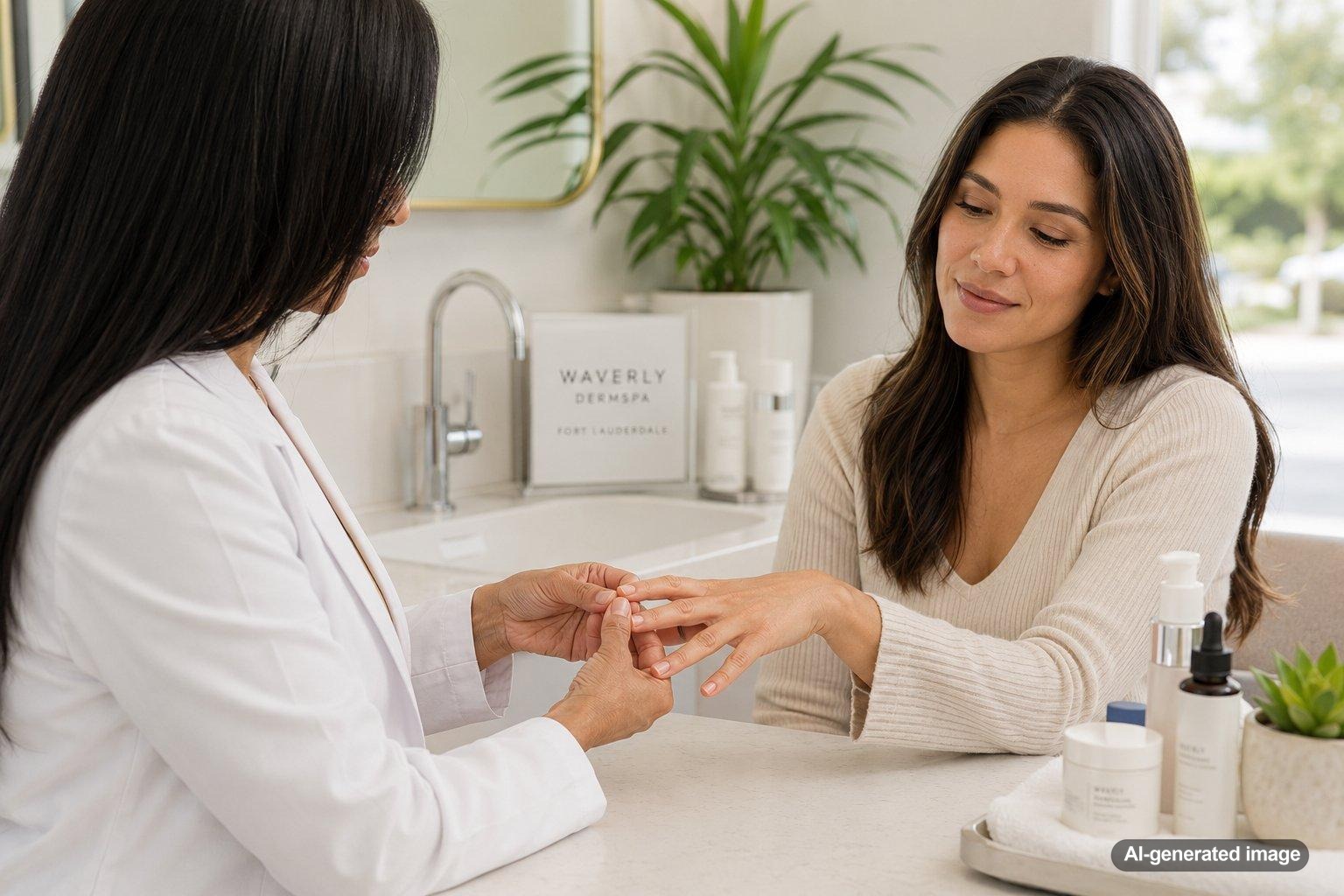
Hangnails are small tears of skin along the side of a nail or near the cuticle. They are common, but they can feel surprisingly tender because the nail fold has delicate skin and many nerve endings. The usual pattern is simple: skin becomes dry or irritated, a tiny edge lifts, and daily friction turns it into a painful snag.
Most hangnails are not a sign of something serious. Prevention usually comes down to protecting the skin barrier, trimming nails carefully, moisturizing consistently, and avoiding picking or biting. If the area becomes increasingly painful, swollen, warm, draining, or does not improve, a dermatologist can evaluate whether there may be nail fold inflammation or infection.
Quick answer
- Hangnails often happen when the skin around the nail becomes dry, cracked, or irritated.
- Common triggers include frequent handwashing, sanitizer use, cold or dry air, nail biting, picking, aggressive cuticle trimming, and repeated wet work.
- Do not rip a hangnail. Clip the loose skin carefully with clean nail clippers or small cuticle scissors.
- Moisturizing the nail folds and wearing gloves for wet or chemical work may help reduce recurrence.
- Redness, swelling, pus, throbbing pain, or spreading tenderness should be checked by a clinician.
What a hangnail is
A hangnail is not usually part of the nail plate itself. It is a small split or flap of skin from the cuticle area or sidewall of the nail. Because that skin helps protect the space around the nail, tearing it can leave the area more vulnerable to irritation and germs.
The goal is to calm the skin, prevent more tearing, and avoid turning a small snag into a larger wound. Gentle care matters more than aggressive grooming.
Why hangnails happen
Hangnails usually form when the skin around the nails loses flexibility or is repeatedly traumatized. Once the skin is rough or lifted, it catches on towels, clothing, hair, gloves, or nail grooming tools.
- Dry skin: Low humidity, air conditioning, travel, and frequent cleansing can leave nail folds brittle.
- Repeated wet-dry cycles: Washing dishes, cleaning, swimming, or frequent handwashing can weaken the surrounding skin barrier.
- Hand sanitizer and harsh cleansers: These can be useful for hygiene, but repeated exposure may dry the cuticle area.
- Nail biting or picking: Pulling at the cuticle or sidewall creates tiny breaks in the skin.
- Aggressive salon nail services: Cutting cuticles too closely or pushing them back forcefully can irritate the protective seal around the nail.
- Short or uneven trimming: Jagged nail edges can catch nearby skin and increase friction.
How to prevent hangnails
Prevention is most effective when it becomes part of your ordinary hand care routine. The focus is on keeping the nail folds smooth, flexible, and protected.
- Moisturize after washing: Apply hand cream or ointment around the nail folds while skin is still slightly damp.
- Use cuticle oil if helpful: A simple cuticle oil can soften rough edges and reduce catching.
- Wear gloves for wet work: Use gloves when washing dishes, cleaning, gardening, or handling irritating products.
- Trim nails smoothly: Keep nails short enough to reduce snagging, then smooth sharp edges with a file.
- Avoid cutting healthy cuticle: The cuticle helps protect the nail fold. Over-trimming can make irritation more likely.
- Do not bite or pick: This is one of the biggest steps for preventing small tears from becoming painful.
What to do when you already have one
If a hangnail is bothering you, resist the urge to pull it. Pulling can tear deeper skin and make tenderness worse. Wash your hands, soften the area with warm water, and use clean nail clippers or small cuticle scissors to trim only the loose piece of skin close to the base. Do not cut into attached or living skin.
After trimming, apply a bland moisturizer or ointment and consider covering the area with a small bandage if it keeps catching. Keeping it protected may help the skin settle while it heals. If the skin is open, avoid nail grooming tools and harsh products until the area feels calmer.
Professional options
Most hangnails can be managed with careful home care and prevention. In an office visit, a dermatologist can examine the nail fold, look for signs of irritation or infection, and discuss whether there are contributing factors such as eczema, frequent wet work, nail biting, or salon grooming-related trauma.
If there are signs of nail fold infection or persistent inflammation, common options may include wound care guidance, prescription topical or oral medication when appropriate, or recommendations to reduce recurrence. The best approach depends on the exam and your health history.
When to see a dermatologist
It is worth getting checked if a hangnail becomes more than a small nuisance. Nail fold infections, sometimes called paronychia, can happen when bacteria, yeast, or other organisms enter through broken skin near the nail.
- Increasing redness, warmth, swelling, or throbbing pain
- Pus, drainage, or a pocket of fluid near the nail
- Redness that spreads beyond the nail fold
- Pain that interferes with typing, work, sleep, or daily activities
- Changes in the nail plate, repeated infections, or symptoms that keep coming back
- Concerns if you have diabetes, circulation concerns, immune suppression, or another condition that affects healing
FAQ
Are hangnails caused by a vitamin deficiency?
Dryness, irritation, picking, and grooming habits are more common reasons. If nails are changing in multiple ways, or if you have broader health concerns, a clinician can help decide whether evaluation is appropriate.
Should I cut my cuticles to prevent hangnails?
Usually, no. The cuticle helps protect the nail fold. Keeping it moisturized and avoiding aggressive trimming is often a better prevention strategy.
Can salon nail services make hangnails worse?
They can if the cuticle is cut too closely, tools are used aggressively, or polish removers and products dry the skin. Gentle technique and clean tools matter.
Is a painful hangnail always infected?
No. A small tear can be tender without infection. Increasing swelling, warmth, redness, drainage, or throbbing pain should be evaluated.
How can I stop picking at hangnails?
Keep the area moisturized, trim loose skin cleanly, and cover rough edges with a small bandage when needed. Reducing the snag often reduces the urge to pick.
Ready to get help?
Schedule an appointment or send a message and our team will get back to you.
Prefer to call? 954-666-3736
Disclaimer: This article is for educational purposes and is not medical advice. For diagnosis and personalized treatment, please book an appointment with a board-certified dermatologist.
Sources & further reading
- American Academy of Dermatology (AAD) – How to trim your nails
- Cleveland Clinic – Paronychia (Nail Infection): What Is It, Symptoms, Causes and Treatment
- MedlinePlus (NIH) – Paronychia
