

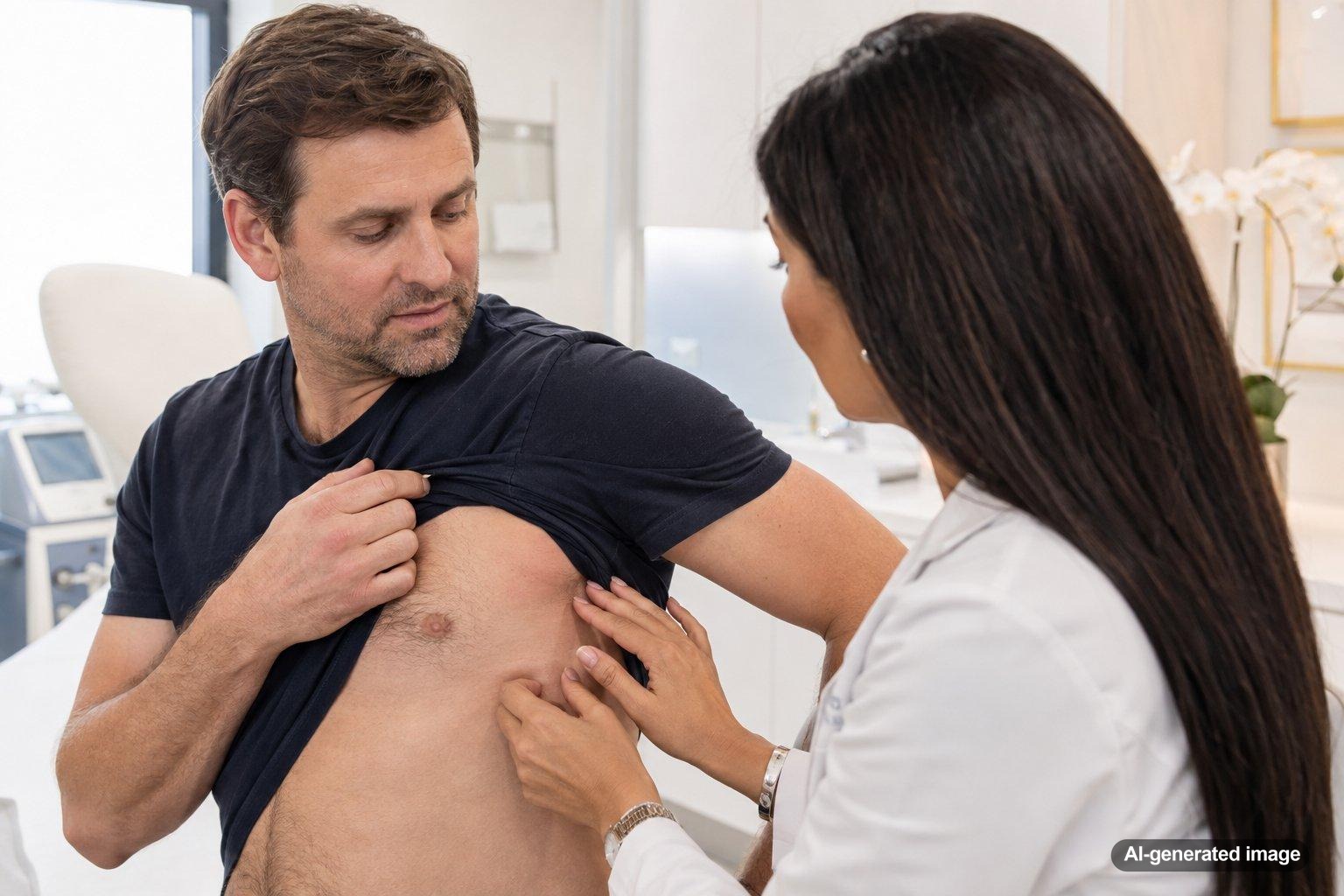
Recurring painful blisters, cracks, or raw patches in the armpits, groin, beneath the breasts, or other body folds can be uncomfortable and frustrating, especially when heat and sweating seem to make them return. Hailey-Hailey disease is an inherited skin disorder that can cause this pattern because the cells in the outer layer of the skin do not hold together as strongly as they normally should.
The condition can look similar to several more common rashes, including fungal or bacterial infections and other inflammatory skin problems. Because treatment depends on what is actually causing the irritation, a dermatologist can evaluate persistent or recurrent symptoms and help determine the most appropriate approach.
Quick answer
- Hailey-Hailey disease is a hereditary condition that makes the outer layer of skin unusually fragile.
- It commonly affects moist, high-friction areas such as the armpits, groin, neck, beneath the breasts, and between the buttocks.
- Heat, sweating, moisture, and friction can contribute to flares.
- Damaged skin can sometimes develop a secondary bacterial, fungal, or viral infection.
- Management is individualized and often combines trigger reduction, gentle skin care, and dermatologist-directed treatment.
What is Hailey-Hailey disease?
Hailey-Hailey disease, also called benign familial pemphigus, is a genetic skin disorder. Despite its older name, it is different from autoimmune pemphigus. Changes involving the ATP2C1 gene affect processes that help skin cells adhere to one another. When those connections are weakened, the surface of the skin can separate more easily with moisture, rubbing, and other minor stresses.
The result may be tender blisters that break quickly, leaving red, moist, eroded, cracked, or crusted areas. Burning, itching, soreness, and discomfort can occur. The rash commonly appears symmetrically in body folds and tends to recur over time. Some people have relatively limited episodes, while others experience more persistent or disruptive symptoms.
Common causes or triggers
The underlying tendency toward Hailey-Hailey disease is genetic, but everyday environmental factors can influence when symptoms become more noticeable. Common flare triggers can include:
- Heat and sweating: Warm weather and perspiration can increase moisture within skin folds.
- Friction: Repeated rubbing from skin, tight clothing, exercise, or movement can irritate fragile areas.
- Prolonged moisture: Damp skin may be more vulnerable to maceration and breakdown.
- Skin irritation: Harsh products or unnecessary rubbing may aggravate already sensitive skin.
- Secondary infection: Broken skin may become affected by bacteria, fungi, or viruses, potentially increasing pain, odor, drainage, or inflammation.
People living in or visiting hot, humid climates such as South Florida may find that sweat and friction require additional attention during warmer periods. Individual triggers vary, so recognizing personal patterns can be useful.
What you can do at home
Conservative skin care is generally focused on reducing heat, moisture, rubbing, and unnecessary irritation. Keeping affected folds comfortably cool and dry may help reduce some common flare triggers. Loose, breathable clothing can also minimize friction compared with tight garments that repeatedly rub the same areas.
Use gentle cleansing rather than aggressive scrubbing, and pat delicate areas dry instead of rubbing them. If exercise or outdoor activity leads to significant sweating, changing out of damp clothing when practical may reduce prolonged moisture against the skin. Avoid repeatedly experimenting with strong acids, fragranced products, or other potentially irritating treatments on raw or blistered areas unless a clinician has recommended them.
Because several infections and inflammatory conditions can resemble a Hailey-Hailey flare, persistent open skin should not automatically be treated as fungal, bacterial, or allergic without an evaluation. If you’re unsure what is causing a recurring rash in a body fold, it’s worth getting checked.
Professional options
A dermatologist can examine the distribution and appearance of the rash, review your symptoms and family history, and consider whether another condition could be responsible. In some situations, additional testing such as a skin biopsy may be used to clarify the diagnosis.
Treatment is tailored to the severity, location, complications, and frequency of flares. Depending on the clinical situation, dermatologist-directed options may include topical anti-inflammatory treatment, antimicrobial treatment when secondary infection is suspected or confirmed, strategies to reduce excessive sweating, or other medical and procedural approaches for persistent disease. Prescription medications and procedures require individualized evaluation because their benefits and risks can differ from person to person.
Ongoing management also involves identifying practical ways to reduce triggers without making daily life unnecessarily restrictive. Your clinician can help you decide which combination of skin care, environmental adjustments, and medical therapy makes sense for your situation.
When to see a dermatologist
Consider scheduling a dermatology evaluation when a rash in a body fold keeps returning, causes significant pain or burning, develops blisters or open erosions, or does not improve with simple measures to reduce heat and friction. An examination is particularly useful when the diagnosis has never been confirmed because fungal infections, bacterial infections, contact dermatitis, intertrigo, and other blistering disorders can sometimes resemble one another.
Seek prompt medical attention for rapidly worsening redness, substantial swelling, pus or drainage, increasing warmth, severe pain, fever, widespread blistering, or other symptoms that could suggest a significant infection or another condition requiring timely care. New or changing areas that look substantially different from a person’s usual flares should also be evaluated rather than assumed to be part of the same condition.
FAQ
Is Hailey-Hailey disease contagious?
Hailey-Hailey disease itself is inherited rather than contagious. However, areas where the skin barrier has broken down can sometimes develop secondary infections. A dermatologist can evaluate new drainage, crusting, odor, increasing pain, or rapidly worsening inflammation.
Why does Hailey-Hailey disease often affect skin folds?
Skin folds naturally experience more friction, warmth, sweating, and trapped moisture. Because Hailey-Hailey disease makes the outer skin more fragile, these conditions can make blistering and erosion more likely to appear in areas such as the armpits, groin, neck, beneath the breasts, and between the buttocks.
Can hot weather make Hailey-Hailey disease worse?
Yes. Heat and sweating are recognized flare triggers for many people with the condition. Strategies that reduce prolonged moisture and friction may help, although individual triggers and responses vary.
Can Hailey-Hailey disease be mistaken for a fungal rash?
It can. The location and appearance may overlap with fungal infections, bacterial infections, intertrigo, contact dermatitis, and other skin disorders. A clinician may use the examination, medical history, testing, or occasionally a biopsy to distinguish among possible causes.
Does Hailey-Hailey disease run in families?
Hailey-Hailey disease is commonly associated with changes in the ATP2C1 gene and follows an autosomal dominant inheritance pattern. This means the condition can occur across generations within a family, although a person’s symptoms and severity may differ from those of relatives.
Should I treat every flare the same way?
Not necessarily. A familiar-looking flare may occasionally be complicated by infection or another source of irritation. Treatment also depends on how extensive and uncomfortable the affected area is. A dermatologist can help establish a personalized plan for routine flares and explain which changes should prompt another examination.
Ready to get help?
Schedule an appointment or send a message and our team will get back to you.
Prefer to call? 954-666-3736
This article is for educational purposes and is not medical advice. For diagnosis and personalized treatment, please book an appointment with a board-certified dermatologist.
Sources & further reading
- DermNet – Hailey-Hailey disease (benign familial pemphigus)
- MedlinePlus (NIH) – Hailey-Hailey disease
