

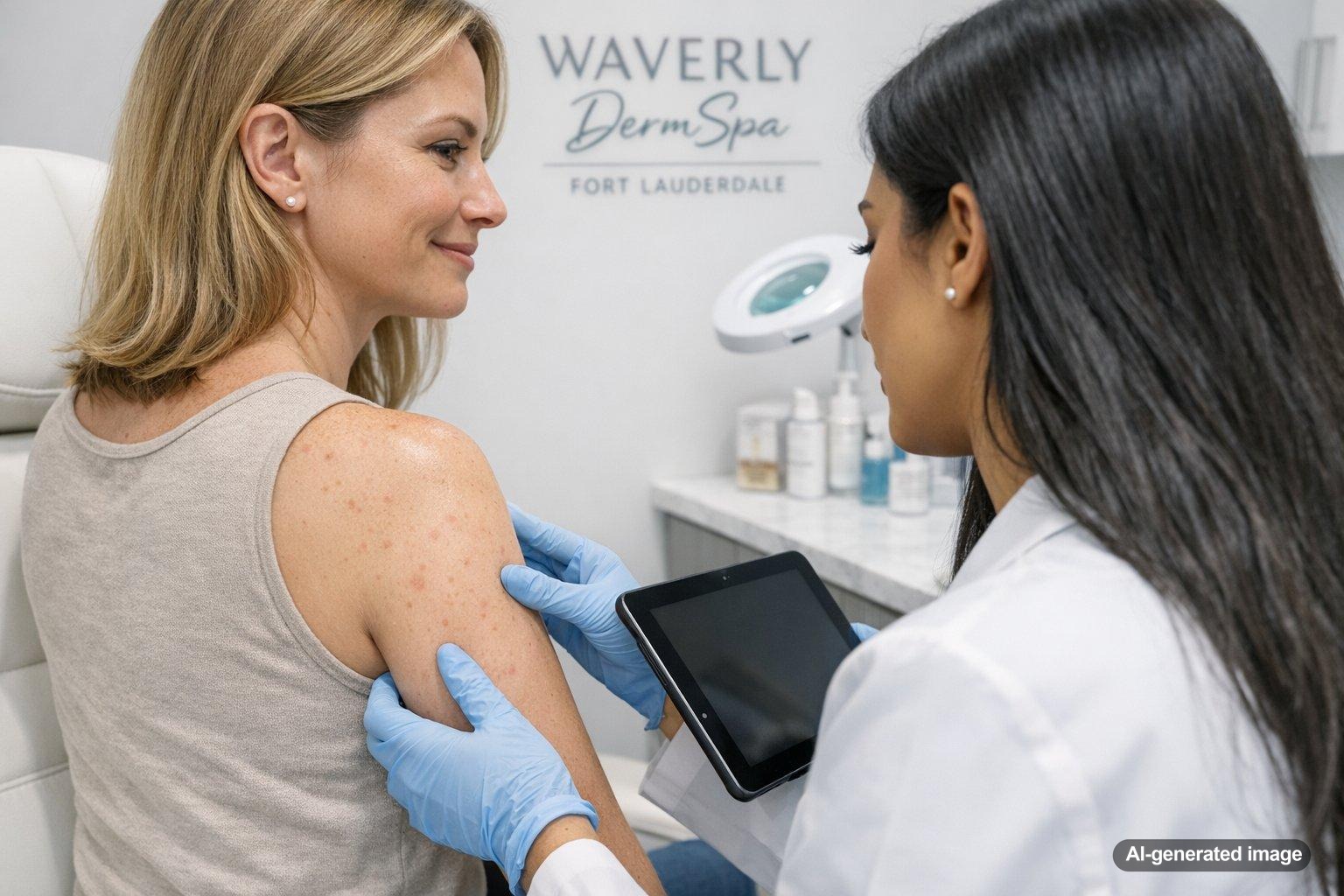
Guttate psoriasis can feel especially surprising because it may seem to arrive all at once. Instead of the thicker plaques many people associate with psoriasis, it often appears as many small, drop-like spots that can spread across the trunk, arms, or legs.
The sudden change can be unsettling, but it does not automatically mean something dangerous is happening. Guttate psoriasis is an inflammatory skin condition that can be associated with immune activity after an infection, most commonly a recent sore throat or strep infection. A dermatologist can examine the pattern, review recent health changes, and help determine what kind of care may be appropriate.
Quick answer
- Guttate psoriasis may appear suddenly, often after an infection such as strep throat.
- It commonly looks like many small, pink, red, or salmon-colored scaly spots.
- It is not something to self-diagnose, because other rashes can look similar.
- Gentle skin care and avoiding irritation may help support comfort while you wait to be evaluated.
- A dermatologist can help confirm what is happening and discuss treatment options if needed.
What guttate psoriasis is
Guttate psoriasis is a type of psoriasis that tends to show up as small, scattered, scaly spots. The word “guttate” refers to the drop-like shape of the lesions. The spots may be more widespread than expected, and they can look different depending on skin tone.
Psoriasis is related to inflammation and immune system activity in the skin. With guttate psoriasis, that immune response may be triggered by an infection or another stressor. This is why someone may notice a rash soon after they have been sick, even if the illness seemed mild or has already improved.
Common causes or triggers
Guttate psoriasis can be associated with several possible triggers. Not everyone will identify a clear cause, and a dermatologist can help sort through what is most relevant.
- Recent strep throat or sore throat: This is one of the best-known associations with guttate psoriasis.
- Other respiratory infections: Some people notice a flare after tonsillitis, bronchitis, or another upper respiratory illness.
- Skin injury or irritation: Scratches, friction, or other irritation may sometimes contribute to new spots in people prone to psoriasis.
- Stress on the body: Illness, emotional stress, or other immune stressors may play a role for some patients.
- Medication changes: Certain medications can be associated with psoriasis flares, so it is helpful to bring an updated medication list to your visit.
What you can do at home
While you are waiting for a dermatology appointment, keep skin care simple and gentle. The goal is comfort and barrier support, not aggressive exfoliation or harsh treatment.
- Use a mild, fragrance-free cleanser and avoid scrubbing the spots.
- Apply a bland moisturizer after bathing to help reduce dryness and irritation.
- Avoid picking at scale, which can make the skin more inflamed.
- Choose loose, breathable clothing if friction makes the rash feel worse.
- Make a note of recent sore throat, fever, infections, new medications, or travel.
- If you have throat symptoms, fever, rapidly worsening rash, or feel unwell, contact a healthcare professional promptly.
Professional options
A dermatologist may start with a skin exam and a careful history. In some cases, the pattern is recognizable, but testing may be considered if another condition needs to be ruled out or if there are signs of a recent infection.
Common professional options may include prescription topical medications, light-based treatment in selected cases, or other medical therapies depending on severity, symptoms, medical history, and whether the eruption is isolated or part of ongoing psoriasis. If infection is suspected, your clinician can advise whether testing or treatment is needed. These decisions should be individualized rather than guessed at from appearance alone.
When to see a dermatologist
It is worth scheduling an appointment if a new rash appears suddenly, spreads quickly, becomes painful, involves sensitive areas, or does not improve with gentle care. You should also seek medical guidance if the rash follows a sore throat, fever, or other signs of infection.
A dermatologist can help distinguish guttate psoriasis from eczema, pityriasis rosea, drug eruptions, fungal rashes, viral rashes, or other inflammatory skin conditions. This matters because the right next step depends on the diagnosis, the extent of the rash, and your overall health.
FAQ
Can guttate psoriasis appear overnight?
Some people notice the spots very suddenly, but the immune changes behind the rash may have been building after an infection or other trigger. A dermatologist can help evaluate timing and pattern.
Is guttate psoriasis contagious?
Psoriasis itself is not considered contagious. However, infections that may trigger it, such as strep throat, can be contagious, which is one reason recent symptoms are important to discuss with a clinician.
Does guttate psoriasis always become chronic?
Not always. Some episodes improve over time, while others may recur or be connected with other types of psoriasis. Your dermatologist can help you understand what your specific pattern suggests.
Should I ask about strep testing?
If the rash followed a sore throat, fever, swollen glands, or exposure to strep, it is reasonable to mention this during your visit. Your clinician can decide whether testing is appropriate.
Can skin care alone clear it?
Gentle skin care may support comfort and reduce irritation, but it does not replace evaluation. Prescription treatment or additional steps may be recommended depending on the case.
Ready to get help?
Schedule an appointment or send a message and our team will get back to you.
Prefer to call? 954-666-3736
Disclaimer
This article is for educational purposes and is not medical advice. For diagnosis and personalized treatment, please book an appointment with a board-certified dermatologist.
Sources & further reading
- National Psoriasis Foundation – Guttate Psoriasis: Symptoms, Causes & Treatment
- American Academy of Dermatology (AAD) – Psoriasis: Signs and Symptoms
- DermNet – Guttate Psoriasis
- Cleveland Clinic – Guttate Psoriasis: Symptoms, Causes & Treatments
