

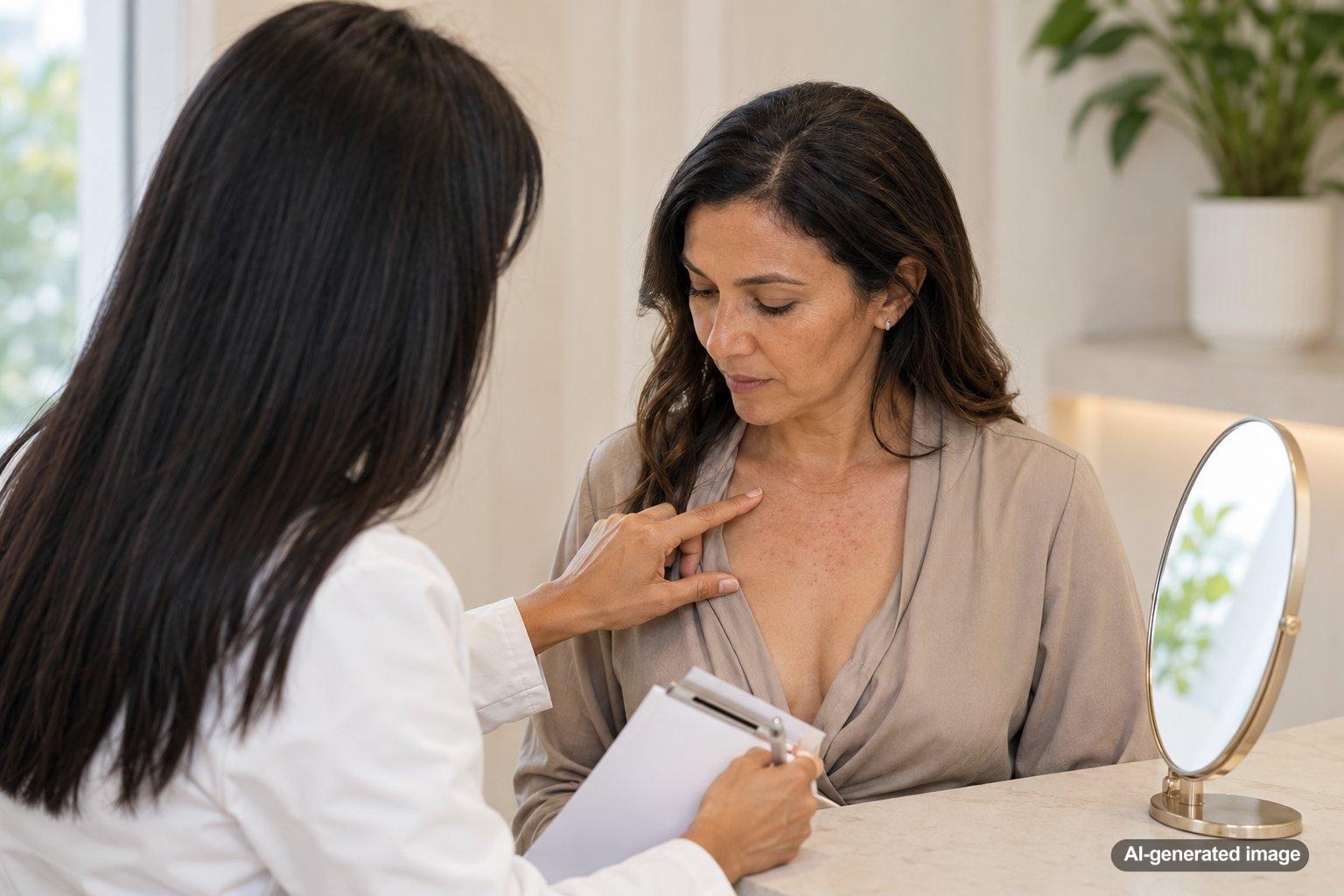
Sudden itchy red bumps on the central chest can feel surprising, especially when they seem to appear out of nowhere in middle age. One possible explanation a dermatologist may consider is Grover’s disease, also called transient acantholytic dermatosis, a rash that often affects the chest, back, or upper trunk.
Grover’s disease is not something to self-diagnose from a photo or a symptom list. Many rashes can look similar, including eczema, heat rash, medication reactions, infections, and other inflammatory skin conditions, so a careful skin exam can help clarify what is happening and what may help.
Quick answer
- Grover’s disease can cause small, itchy red bumps on the chest, back, or trunk.
- It is more often seen in middle-aged and older adults, especially men, but it can affect different patients.
- Heat, sweating, friction, dry skin, and sun exposure may be associated with flares in some people.
- At-home steps may focus on cooling the skin, reducing irritation, and avoiding scratching.
- A dermatologist can evaluate the rash and discuss options if symptoms are persistent, severe, spreading, or unclear.
What Grover’s disease is
Grover’s disease is an acquired, itchy rash that most often appears on the trunk. The bumps may look red, raised, crusted, scaly, or blister-like, and the itch can range from mild to very uncomfortable. The medical name, transient acantholytic dermatosis, refers to changes that may be seen under the microscope if a skin biopsy is needed.
Although the word transient suggests temporary, the course can vary. Some people notice improvement over time, while others experience recurring or longer-lasting flares. Because the pattern can overlap with other rashes, the goal of a dermatology visit is not just to name the condition, but to rule out look-alikes and choose a sensible care plan.
Common causes or triggers
The exact cause is not always clear. In many cases, Grover’s disease appears to be linked with skin stress rather than one single trigger. Possible contributors may include:
- Heat and sweating, including humid weather or heavy exercise
- Friction from tight clothing, athletic gear, or rough fabrics
- Dry or irritated skin
- Sun exposure or recent skin overheating
- Prolonged bed rest or heavy sweating during illness in some cases
- Certain medications or medical conditions, which your clinician can review if relevant
What you can do at home
Simple, conservative steps may help reduce irritation while you arrange care or monitor a mild rash. Try keeping the skin cool, choosing loose breathable clothing, and showering soon after sweating. A gentle, fragrance-free cleanser and moisturizer may support the skin barrier, especially if the skin feels dry or sensitive.
It is also wise to avoid picking or scratching, since irritated skin can become more inflamed and uncomfortable. Cool compresses may feel soothing for itch. Avoid harsh scrubs, fragranced body products, and aggressive exfoliation on the rash, since these can make already reactive skin feel worse.
Professional options
A dermatologist may diagnose Grover’s disease based on the appearance, location, symptoms, and history. If the rash is atypical or not improving, a skin biopsy or other testing may be discussed to help distinguish it from similar conditions.
Treatment is individualized. Common options may include prescription anti-inflammatory creams, itch-relieving strategies, medication review, or other therapies for more persistent cases. The right approach depends on the severity, extent of the rash, medical history, and whether another condition could be contributing.
When to see a dermatologist
It is worth getting checked if the rash is new, very itchy, painful, spreading, blistering, crusting, bleeding, draining, or not improving. You should also schedule an evaluation if you have fever, feel unwell, recently started a new medication, are immunocompromised, or are unsure what the rash is.
Because Fort Lauderdale’s heat, humidity, sun, travel schedules, and seasonal lifestyle changes can all affect the skin, a personalized exam can be especially helpful. A dermatologist can help sort out whether Grover’s disease is likely and whether additional evaluation is needed.
FAQ
Is Grover’s disease contagious?
Grover’s disease is generally considered a non-contagious inflammatory skin condition. Still, other rashes can mimic it, so a dermatologist should evaluate a new or changing rash.
Why does it often show up on the chest?
The chest and back are common areas because Grover’s disease tends to affect the trunk. Heat, sweat, friction, and skin occlusion in this area may contribute for some people.
Can Grover’s disease go away on its own?
It may improve over time for some patients, but the course is variable. Some people have recurring or persistent symptoms, which is why evaluation can be helpful when itch or inflammation is bothersome.
Can skincare products make it worse?
Fragranced products, scrubs, harsh soaps, and heavy occlusive products may irritate already inflamed skin. Gentle, fragrance-free products are often a safer starting point while waiting for medical guidance.
Should I use over-the-counter cortisone?
Some people reach for over-the-counter anti-itch products, but it is best to ask a dermatologist, especially if the rash is widespread, persistent, recurrent, or unclear. Prescription therapies may be considered after evaluation.
Ready to get help?
Schedule an appointment or send a message and our team will get back to you.
Prefer to call? 954-666-3736
This article is for educational purposes and is not medical advice. For diagnosis and personalized treatment, please book an appointment with a board-certified dermatologist.
Sources & further reading
- DermNet – Transient acantholytic dermatosis
- Mayo Clinic – Treatment for Grover’s Disease Geared Toward Relieving Itching and Rash
