

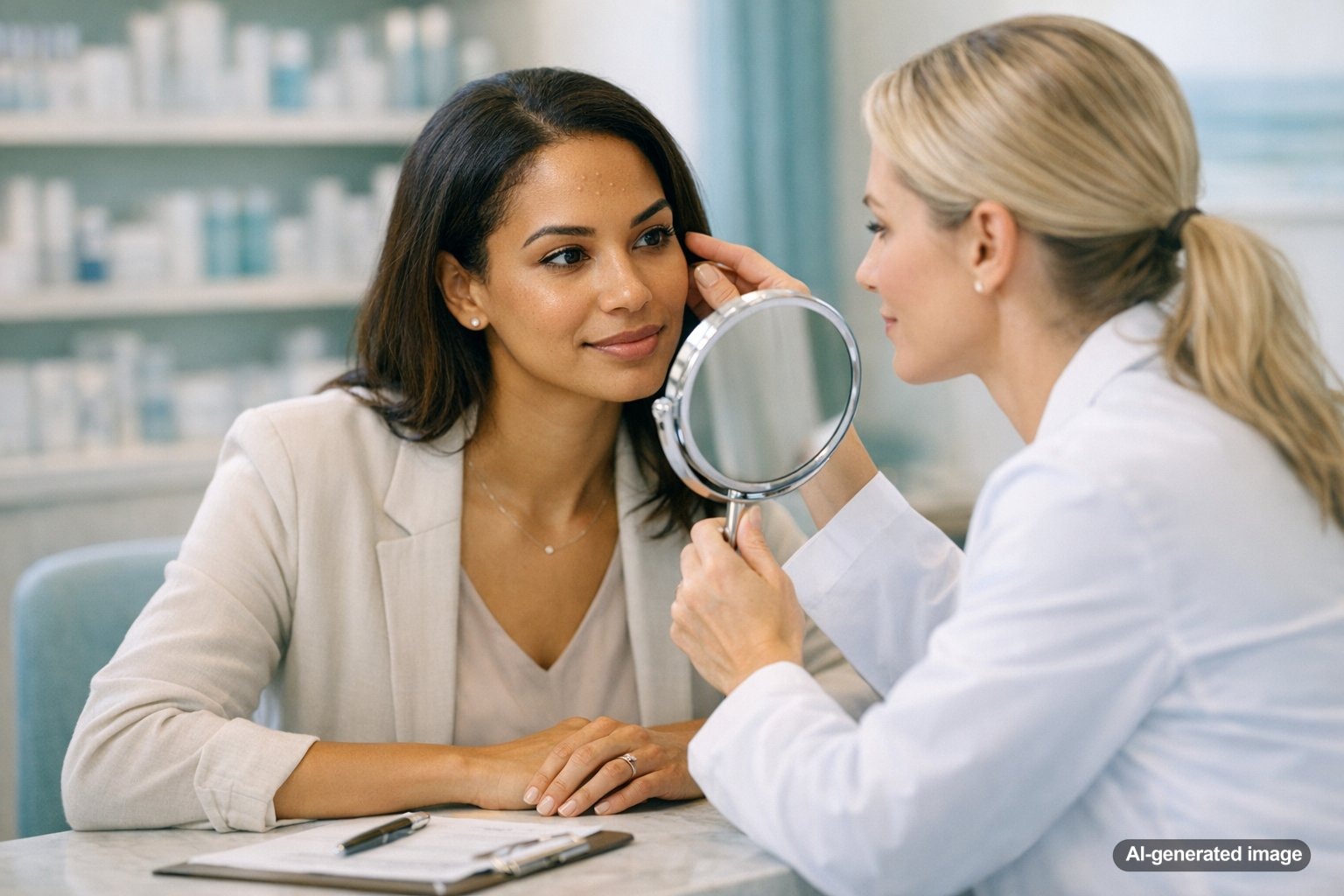
Forehead bumps are common, frustrating, and usually manageable once you understand the pattern behind them. The key is noticing what the bumps look and feel like, what triggers them, and how your skin responds to gentle, consistent care.
Quick answer
- Small, flesh-colored bumps without much redness often point to clogged pores (closed comedones).
- Uniform, itchy bumps that cluster along the hairline can be associated with yeast overgrowth in follicles (often called “fungal acne”).
- Red, tender pimples, especially with oiliness, can fit typical acne patterns.
- If bumps are persistent, painful, spreading, or changing, a dermatologist can evaluate and help you choose the right approach.
What it is
“Forehead bumps” is a catch-all phrase for several look-alike issues. Some are related to clogged pores, some are triggered by irritation (from hair products, sweat, friction, or over-cleansing), and some are caused by inflammation around the hair follicle. Because different causes can look similar, the safest approach is to treat your skin gently at home first and get a professional evaluation if the pattern does not improve.
Common causes and triggers
- Clogged pores (closed comedones): Tiny, skin-colored bumps that make the forehead feel rough. Often linked with heavier moisturizers, occlusive sunscreen, or makeup that is not well tolerated.
- Inflammatory acne: Red bumps, sometimes tender, that may come and go with stress, hormones, or occlusion (think hats, helmets, or frequent touching).
- Yeast-associated folliculitis (often called “fungal acne”): Uniform bumps that can be itchy and tend to flare with heat, sweating, humidity, and occlusive products. It may look like acne but behaves differently.
- Hairline product buildup: Pomades, oils, leave-in conditioners, dry shampoo, and styling sprays can contribute to congestion along the hairline and forehead.
- Friction and sweat (“acne mechanica”): Sports headbands, hats, masks, or frequent wiping can irritate follicles and worsen bumps.
- Over-exfoliation or barrier stress: Too many acids, scrubs, peels, or strong retinoids can lead to irritation bumps and sensitivity that mimics breakouts.
- Less common look-alikes: Milia, contact dermatitis, rosacea-like inflammation, or other rashes can sometimes resemble acne.
What you can do at home
Start with a calm, minimalist routine for 2 to 4 weeks. The goal is to reduce irritation while giving your skin a chance to reset.
- Cleanse gently: Use a mild, fragrance-free cleanser once or twice daily. If you sweat, rinse soon after workouts.
- Keep products lightweight: Choose non-greasy moisturizers and sunscreens that feel breathable on the forehead. If bumps cluster at the hairline, keep hair products off facial skin.
- Introduce one active at a time: If you tolerate it, consider an acne-focused ingredient like salicylic acid or benzoyl peroxide a few times per week, then adjust based on dryness or irritation.
- Avoid picking and harsh scrubs: Picking can prolong inflammation and increase the chance of marks.
- Rethink hairline habits: Wash hats/headbands regularly, keep bangs and styling products from sitting on the forehead, and cleanse after heavy sweating.
- Watch the “uniform itchy” pattern: If bumps are very similar in size and itch is a major feature, it is worth getting checked rather than cycling through stronger acne products that may not address the driver.
Because different conditions can look alike, avoid stacking multiple actives at once. A simple plan performed consistently is usually more helpful than an aggressive routine that stresses the skin barrier.
Professional options
If forehead bumps are persistent, recurring, or affecting your confidence, a dermatologist can evaluate what is driving them and tailor a plan. Common options include:
- Diagnosis and skin exam: Clarifying whether bumps are primarily comedonal acne, inflammatory acne, folliculitis, or an irritation pattern.
- Prescription topicals: Options may include prescription-strength retinoids, anti-inflammatory agents, or other targeted therapies based on your skin type and goals.
- Oral medications (when appropriate): For certain acne patterns or folliculitis, your clinician may discuss oral options, balancing benefits and risks.
- In-office support: Guidance on product selection, barrier repair, and prevention strategies that fit your lifestyle (including travel, humidity, and frequent sun exposure).
When to see a dermatologist
- Bumps are painful, rapidly worsening, or spreading.
- Significant itch, burning, or scaling suggests an irritation or follicle-based rash that needs a closer look.
- You are seeing scarring, dark marks, or frequent recurrences.
- You have tried a gentle routine for several weeks with little improvement.
- You are pregnant, nursing, or have medication sensitivities and want a plan that is appropriate for you.
- You notice anything changing in an unusual way (size, color, bleeding, crusting) or you are simply unsure.
FAQ
Is “fungal acne” actually acne? The term is commonly used online, but it often refers to yeast-related folliculitis (inflammation around hair follicles) rather than classic acne. A dermatologist can help distinguish these patterns.
Why do my bumps show up mostly along the hairline? Hair products, sweat, friction, and buildup can contribute to clogged pores and irritation in that area. Keeping styling products off facial skin and cleansing after sweating may help.
Are closed comedones the same as whiteheads? Closed comedones are clogged pores under the surface that can look like tiny, skin-colored or pale bumps. Some become visible whiteheads, while others stay subtle but create texture.
Should I exfoliate more to smooth the bumps? More is not always better. Over-exfoliation can irritate the skin and make bumps look worse. A slow, consistent approach with gentle products is typically better tolerated.
Can sunscreen cause forehead bumps? Some formulas can feel heavy or occlusive for certain skin types, especially in heat and humidity. Switching to a lighter texture and cleansing thoroughly at night may help.
Ready to get help?
Schedule an appointment or send a message and our team will get back to you.
Prefer to call? 954-666-3736
Disclaimer
This article is for educational purposes and is not medical advice. For diagnosis and personalized treatment, please book an appointment with a board-certified dermatologist.
Sources & further reading
- DermNet: Malassezia (pityrosporum) folliculitis
- Cleveland Clinic: Comedonal acne (whiteheads and blackheads)
- American Academy of Dermatology: Acne clinical guideline highlights
