

Small inflamed bumps in the beard area can be frustrating, especially when they resemble acne but do not behave like typical breakouts. Folliculitis barbae refers to inflammation of hair follicles in beard-bearing skin, often appearing as tender or itchy bumps, pustules, or irritation after shaving.
Because beard-area bumps can come from acne, ingrown hairs, bacterial folliculitis, fungal folliculitis, contact irritation, or other skin conditions, a calm, careful evaluation can make a meaningful difference. The goal is not to guess at home, but to understand what may be contributing and know when professional guidance is worthwhile.
Quick answer
- Folliculitis barbae may look like acne because both can cause red bumps and pustules.
- It often centers around hair follicles in the beard area, especially where shaving, friction, or irritation occurs.
- Some cases are associated with bacteria, while other beard-area bumps may come from ingrown hairs or noninfectious irritation.
- Gentle skin care, clean shaving tools, and avoiding close aggressive shaving may help reduce irritation.
- A dermatologist can evaluate persistent, painful, spreading, or recurring bumps and discuss appropriate options.
What folliculitis barbae is
Folliculitis barbae is inflammation of the hair follicles in areas where beard hair grows. It can appear as small red bumps, white-tipped pustules, tenderness, itching, burning, or crusting. Since each bump often starts around a follicle, the pattern may look slightly different from classic acne, even though the two can be easy to confuse.
The beard area is particularly prone to irritation because shaving can create tiny openings in the skin barrier, nick raised bumps, and add friction. In some cases, bacteria may be involved. In others, the main issue may be ingrown hairs, irritation, or another acne-like condition that needs a different approach.
Common causes or triggers
- Close shaving: Shaving very close to the skin can irritate follicles and may contribute to bumps.
- Dull or contaminated razors: Blades that are not clean or sharp may increase irritation and introduce unwanted microbes.
- Friction: Masks, collars, sports gear, or frequent rubbing can aggravate beard-area skin.
- Heavy or occlusive products: Thick oils, balms, or comedogenic grooming products may trap sweat and debris around follicles.
- Ingrown hairs: Curved or coarse hairs can re-enter the skin and create inflammation that resembles folliculitis.
- Underlying skin sensitivity: A compromised skin barrier, eczema tendency, or irritation from fragrances and dyes may make bumps more likely.
What you can do at home
For mild beard-area irritation, simple supportive care may help while you decide whether a visit is needed. Keep the area clean with a gentle cleanser, avoid scrubbing, and consider pausing close shaving if shaving seems to worsen the bumps. Use a clean, sharp razor, avoid sharing razors, and shave in the direction of hair growth rather than repeatedly passing over the same area.
It can also help to simplify grooming products for a short period. Choose non-comedogenic, fragrance-light or fragrance-free products when possible, and avoid picking or squeezing bumps because that may increase inflammation, marks, or secondary irritation. If bumps are painful, widespread, draining, or recurring, it is better to get checked rather than continuing to experiment.
Professional options
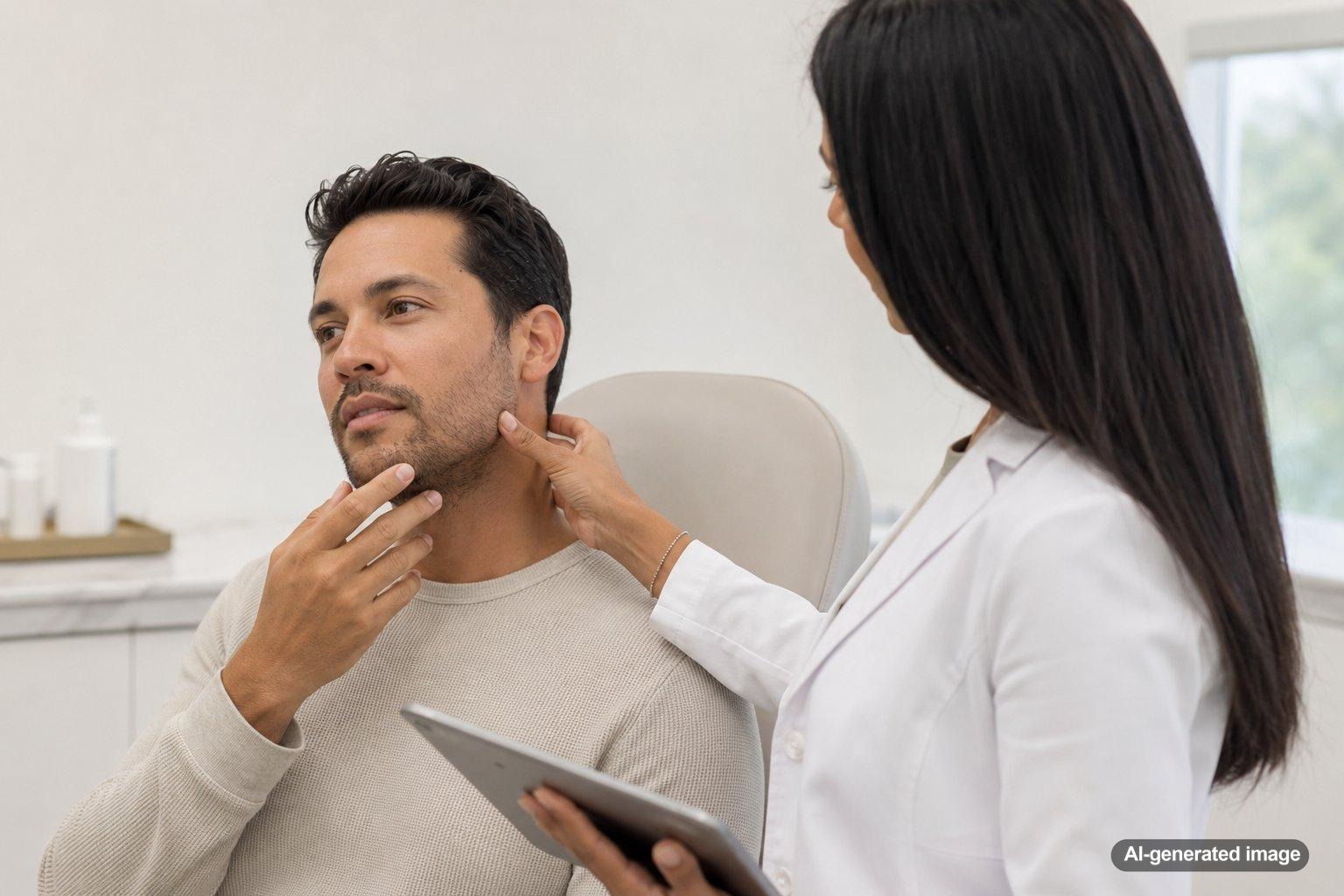
A dermatologist can examine the pattern, timing, shaving habits, skin type, and symptoms to help distinguish folliculitis barbae from acne, pseudofolliculitis barbae, contact dermatitis, fungal folliculitis, or other causes. Depending on the evaluation, common options may include prescription topical or oral medications, antimicrobial washes, anti-inflammatory treatments, culture testing in select cases, or guidance on safer shaving techniques.
For people whose bumps are strongly linked to shaving or ingrown hairs, longer-term hair reduction may sometimes be discussed. At Waverly DermSpa, we offer Excel HR Laser Hair Removal and can help you understand whether it may be appropriate.
When to see a dermatologist
- Bumps are painful, warm, swollen, draining, or rapidly spreading.
- Breakouts keep returning despite gentle shaving changes.
- The area develops crusting, scarring, dark marks, or tender deeper bumps.
- You are unsure whether the bumps are acne, ingrown hairs, folliculitis, or another rash.
- Symptoms involve the lips, eyes, or a large area of the face.
- You have a weakened immune system or a history that makes skin infections more concerning.
Seeing a dermatologist can be especially helpful because acne-like bumps do not all respond to the same care. The right plan depends on what is actually driving the inflammation.
FAQ
Is folliculitis barbae the same as acne?
Not exactly. Folliculitis barbae centers on inflamed hair follicles in beard-bearing skin, while acne involves pores, oil glands, bacteria, and inflammation in a broader pattern. They can look similar, so professional evaluation may help.
Can shaving make folliculitis barbae worse?
Shaving can contribute for some people, especially if the blade is dull, the shave is very close, or bumps are nicked during shaving. Adjusting technique may help reduce irritation.
Should I stop shaving completely?
Some people benefit from taking a temporary break from close shaving, but the best approach depends on the cause and severity of the bumps. A dermatologist can help personalize that decision.
Can beard oils or balms contribute to bumps?
They may for some skin types, especially if products are heavy, fragranced, or occlusive. If bumps flare after a new grooming product, simplifying the routine may be useful.
When should I avoid treating it like regular acne?
If bumps are centered around hairs, painful, itchy, crusting, spreading, or recurring after shaving, it is worth considering that something other than routine acne may be involved.
Ready to get help?
Schedule an appointment or send a message and our team will get back to you.
Prefer to call? 954-666-3736
Disclaimer
This article is for educational purposes and is not medical advice. For diagnosis and personalized treatment, please book an appointment with a board-certified dermatologist.
Sources & further reading
- DermNet – Folliculitis barbae
- American Academy of Dermatology (AAD) – Acne-like breakouts could be folliculitis
- Cleveland Clinic – Folliculitis: Appearance, Causes, Symptoms & Treatment
- Mayo Clinic – Folliculitis: Symptoms and causes
