

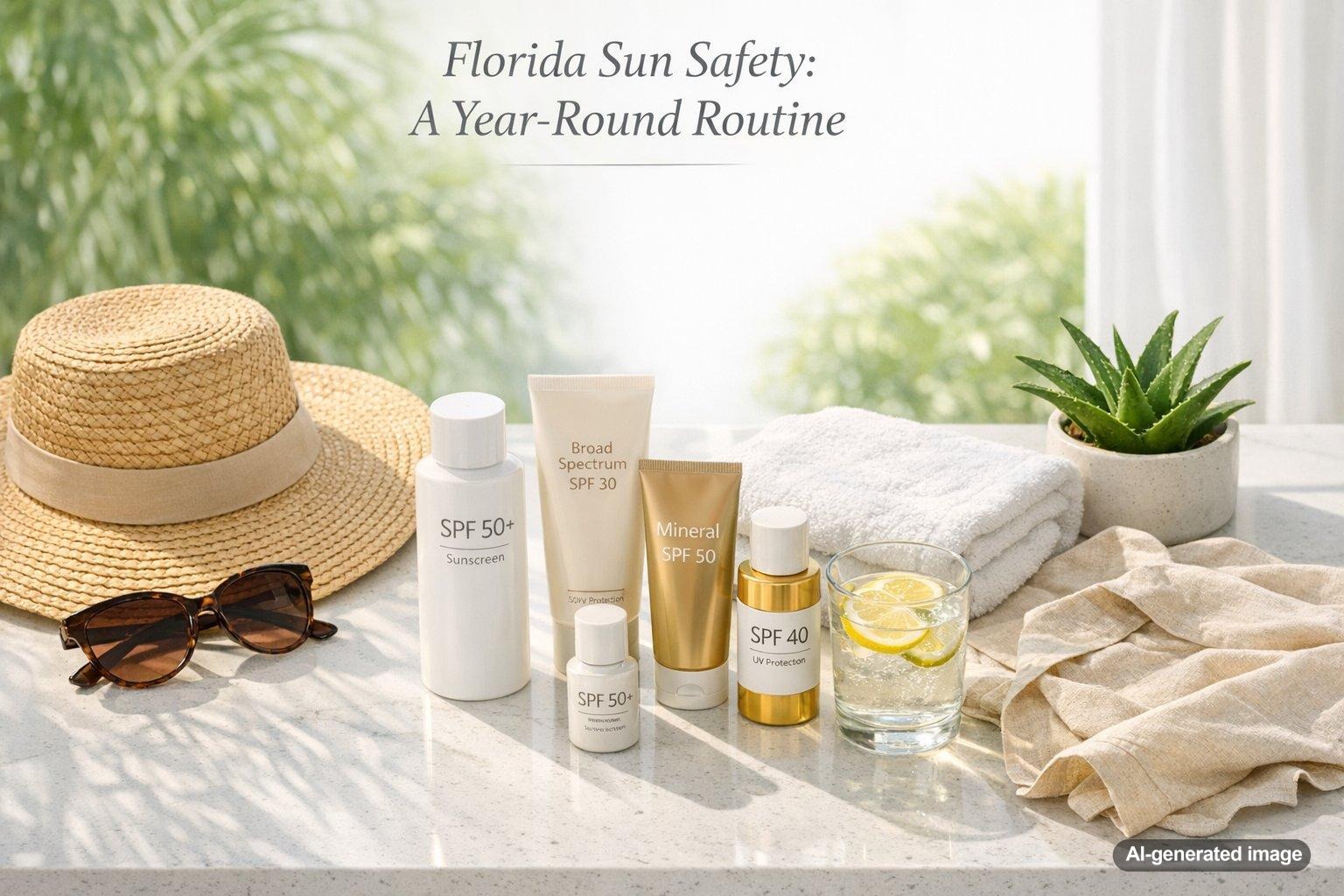
In Fort Lauderdale, sun protection is not just a beach-day habit. It is part of daily skin care, whether you are driving, walking between appointments, playing golf, visiting for the season, or enjoying lunch outside. Florida’s bright, reflective environment can make ultraviolet exposure feel constant, even when the day is cloudy or the plan is casual.
A year-round sun safety routine should feel realistic, not fussy. The goal is to make a few simple choices consistently: broad-spectrum sunscreen, protective clothing, shade when possible, and regular attention to changing spots on the skin.
Quick answer
- Use a broad-spectrum sunscreen with SPF 30 or higher on exposed skin every day.
- Reapply sunscreen when you are outdoors for extended time, especially after swimming, sweating, or toweling off.
- Pair sunscreen with shade, sunglasses, wide-brimmed hats, and UPF-rated clothing when possible.
- Remember that UV exposure can happen through clouds, during errands, and while driving.
- See a dermatologist if a mole or spot is changing, bleeding, not healing, or looks different from your other spots.
What Florida sun safety means
Sun safety means reducing unnecessary ultraviolet exposure while still living your life. It does not mean avoiding the outdoors completely. In South Florida, a practical routine often includes applying sunscreen before leaving home, keeping a travel-size sunscreen in a bag, choosing shaded seating, wearing sunglasses, and using a hat or sun-protective clothing for longer outdoor plans.
Broad-spectrum sunscreen matters because it helps protect against both UVA and UVB rays. SPF 30 or higher is a common dermatology recommendation for everyday use, but sunscreen works best as one part of a complete routine rather than the only step.
Common causes or triggers for excess sun exposure
- Short outdoor errands: Quick walks, valet lines, school pickup, and outdoor dining can add up over time.
- Driving: Hands, arms, chest, and the left side of the face may get repeated exposure through car windows.
- Water and sand: Beach, boating, pool, and marina days can increase reflected light and make reapplication more important.
- Cloudy weather: A cooler or overcast day can still involve meaningful UV exposure.
- Seasonal travel: Snowbirds and visitors may underestimate how strong the sun feels compared with their home climate.
- Outdoor fitness: Tennis, golf, pickleball, running, and walking are often done during high-UV hours.
What you can do at home
Start with a sunscreen you actually like enough to use. Look for broad-spectrum coverage, SPF 30 or higher, and water resistance if you will be swimming or sweating. Apply it to commonly missed areas such as the ears, neck, chest, hands, hairline, tops of the feet, and the part line of the scalp.
For longer outdoor days, set a simple reminder to reapply. Keep sunscreen where you use it: near your toothbrush, in your beach bag, by the door, or in a golf or tennis tote. If you wear makeup, a tinted sunscreen, sunscreen stick, or powder SPF may make reapplication more convenient, though the amount applied still matters.
Clothing can make sun protection easier. A wide-brimmed hat, UV-protective sunglasses, lightweight long sleeves, and UPF-rated fabrics can reduce the amount of skin that needs sunscreen. Shade also helps, especially during midday hours when UV intensity is often higher.
Professional options
A dermatologist can help you build a routine that fits your skin type, history, and lifestyle. This may include guidance on sunscreen textures for acne-prone, sensitive, melasma-prone, or mature skin, as well as a skin exam schedule based on your personal risk factors.
If sun exposure has contributed to dark spots, redness, rough texture, or visible signs of photoaging, professional options may be discussed during an evaluation. These can include prescription skin care, chemical peels, laser-based treatments, photodynamic therapy for certain precancerous concerns, or other in-office approaches when appropriate. Suitability varies, and the right plan depends on a clinician’s assessment.
When to see a dermatologist
Book a dermatology visit if you notice a new or changing mole, a spot that bleeds, a sore that does not heal, a rough patch that keeps returning, or a lesion that looks different from the rest of your skin. It is also worth scheduling a skin check if you have a personal or family history of skin cancer, a history of many sunburns, frequent outdoor exposure, or significant tanning bed use in the past.
For many people in Florida, a routine full-body skin exam is a helpful part of preventive care. Your dermatologist can recommend an interval based on your skin, history, and findings.
FAQ
Do I need sunscreen every day in Florida?
For exposed skin, daily sunscreen is a practical habit in Florida because UV exposure can happen during regular activities, not only at the beach. Pairing sunscreen with shade and protective clothing gives better coverage than relying on one step alone.
Is SPF 30 enough?
SPF 30 or higher is commonly recommended for everyday broad-spectrum protection. The right product also depends on how much you apply, whether you reapply, and whether you are swimming or sweating.
Do darker skin tones need sun protection?
Yes. While natural pigment may offer some protection, UV exposure can still contribute to sun damage, dark spots, melasma, premature aging, and skin cancer risk. A dermatologist can help tailor a routine for your skin tone and concerns.
Can sunscreen help with hyperpigmentation?
Consistent broad-spectrum sun protection may help reduce the chance that dark spots look more noticeable from UV exposure. For melasma or persistent discoloration, professional evaluation can help identify options that may be appropriate.
What areas are most often missed?
Commonly missed areas include the ears, neck, chest, hands, lips, scalp part, hairline, and tops of the feet. These areas are especially easy to forget during quick errands or outdoor meals.
Ready to get help?
Schedule an appointment or send a message and our team will get back to you.
Prefer to call? 954-666-3736
Disclaimer
This article is for educational purposes and is not medical advice. For diagnosis and personalized treatment, please book an appointment with a board-certified dermatologist.
Sources & further reading
- American Academy of Dermatology (AAD) – Sunscreen FAQs
- Centers for Disease Control and Prevention (CDC) – Sun Safety Facts
- The Skin Cancer Foundation – Sun Protection
