

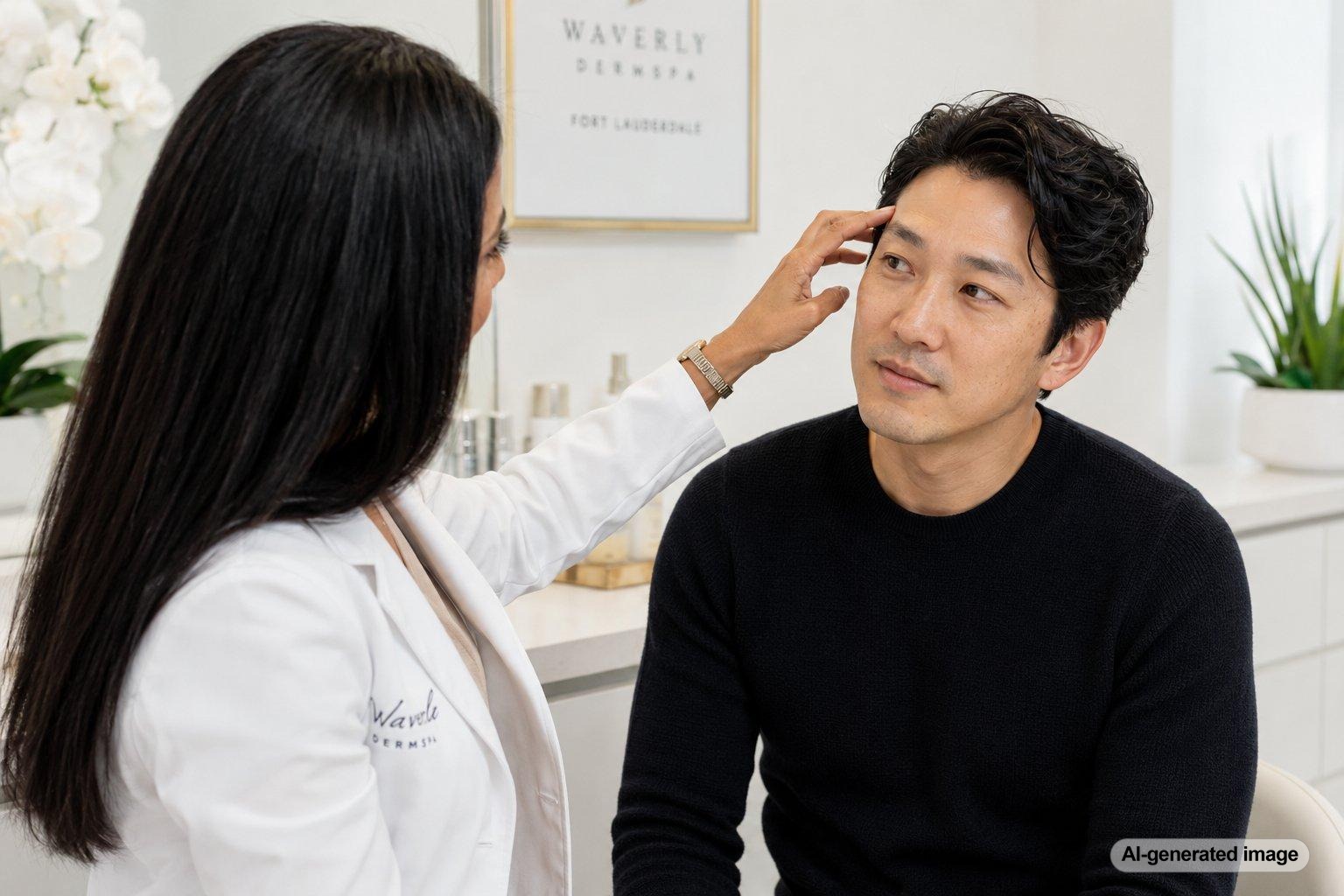
Fine lines and wrinkles are often mentioned together, but they are not exactly the same. Fine lines are usually shallow, delicate creases that may show up first around areas that move often, such as the eyes, mouth, and forehead. Wrinkles tend to be deeper, more noticeable folds that can become visible even when the face is relaxed.
The difference usually comes down to depth, skin support, movement, sun exposure, and time. Understanding what is happening beneath the surface can make it easier to choose a calm, realistic plan for skincare, prevention, and professional treatment options.
Quick answer
- Fine lines are usually lighter, more superficial creases in the skin.
- Wrinkles are typically deeper lines or folds that may be visible at rest.
- Both can be associated with normal aging, facial movement, sun exposure, dryness, and changes in collagen and elastin support.
- Daily sunscreen, gentle hydration, and consistent skincare may help support the look and feel of the skin.
- A dermatologist can evaluate your skin and discuss options that may include skincare, injectables, resurfacing, or collagen-supporting treatments.
Fine lines vs wrinkles: the key difference
| Feature | Fine lines | Wrinkles |
|---|---|---|
| Depth | Usually shallow and delicate | Often deeper or more defined |
| When visible | May appear with expression, dryness, or close inspection | May remain visible when the face is relaxed |
| Common areas | Around eyes, mouth, and forehead | Forehead, between brows, around mouth, cheeks, neck, and lower face |
| Skin changes involved | Surface dehydration, early texture change, repeated movement | More advanced change in skin support, volume, elasticity, and repeated folding |
What is happening in the skin?
Skin naturally changes over time. It may become drier, thinner, or less elastic, and it can gradually lose some of the firmness and bounce that helps it look smooth. Repeated facial movement can create creases in areas that fold often, while environmental exposure can contribute to uneven texture and visible aging changes.
Fine lines often begin as subtle surface changes. Wrinkles usually reflect deeper structural changes in the skin and supporting tissues. This is why the right approach can vary from person to person, even when two people are concerned about lines in the same area.
Common causes and triggers
- Normal changes in collagen, elastin, and skin hydration over time
- Repeated facial expressions, such as smiling, squinting, or frowning
- Unprotected sun exposure and cumulative UV exposure
- Dryness, dehydration, or a weakened skin barrier
- Smoking or exposure to environmental stressors
- Genetics, facial structure, and natural skin thickness
- Sleep patterns, stress, and lifestyle factors that can affect the skin’s appearance
What you can do at home
At-home care works best when it is steady and gentle. A simple routine that supports the skin barrier may help soften the look of fine lines, especially when dryness is making texture more noticeable.
- Use a broad-spectrum sunscreen every morning and reapply when needed, especially in South Florida sun.
- Cleanse gently instead of scrubbing, which can make dryness and sensitivity more noticeable.
- Choose a moisturizer that helps support hydration and barrier comfort.
- Consider dermatologist-guided ingredients, such as retinoids or retinol, if appropriate for your skin.
- Avoid starting too many active products at once, especially if your skin is sensitive.
- Keep expectations realistic: skincare may help support texture and glow, but deeper wrinkles often need a more personalized plan.
Professional options
Professional care may be considered when lines are becoming more noticeable, when skincare is not enough, or when you want a more tailored plan. Common options include neuromodulators for expression-related lines, dermal fillers for selected areas of volume support, resurfacing treatments for texture, and procedures that may support collagen remodeling.
At Waverly DermSpa, we offer Botox and can help you understand whether it may be appropriate.
When to see a dermatologist
It is worth seeing a dermatologist when lines are changing quickly, when skin texture is paired with irritation or sensitivity, or when you are unsure which options fit your skin. A dermatologist can also help separate cosmetic concerns from medical skin issues that may need evaluation.
- Book an evaluation if a spot, mole, or lesion is changing, bleeding, crusting, or not healing.
- Seek guidance if your skin is persistently irritated, peeling, burning, or reacting to products.
- Ask for help before using prescription-strength products or combining multiple active ingredients.
- Consider a consultation if you want to compare skincare, injectables, lasers, microneedling, or other office-based options.
FAQ
Are fine lines the same as wrinkles?
No. Fine lines are usually more superficial, while wrinkles are typically deeper and more defined. They can be related, but they are not identical.
Can fine lines turn into wrinkles?
Fine lines may become more noticeable over time, especially with repeated movement, sun exposure, dryness, and natural skin changes. This does not happen the same way for everyone.
Can moisturizer remove fine lines?
Moisturizer may help the skin look smoother and more hydrated, which can make some fine lines appear less noticeable. It does not replace a personalized plan for deeper wrinkles.
Do injectables help fine lines or wrinkles?
Injectables may help in selected situations, depending on the type of line, its location, and your facial movement. A clinician can evaluate whether neuromodulators, fillers, or another option may be appropriate.
Is it better to start treatment early?
Early care can be helpful when it focuses on sun protection, barrier support, and thoughtful prevention. Medical or aesthetic treatments should be discussed with a qualified clinician so the plan fits your skin and goals.
Ready to get help?
Schedule an appointment or send a message and our team will get back to you.
Prefer to call? 954-666-3736
Disclaimer
This article is for educational purposes and is not medical advice. For diagnosis and personalized treatment, please book an appointment with a board-certified dermatologist.
