

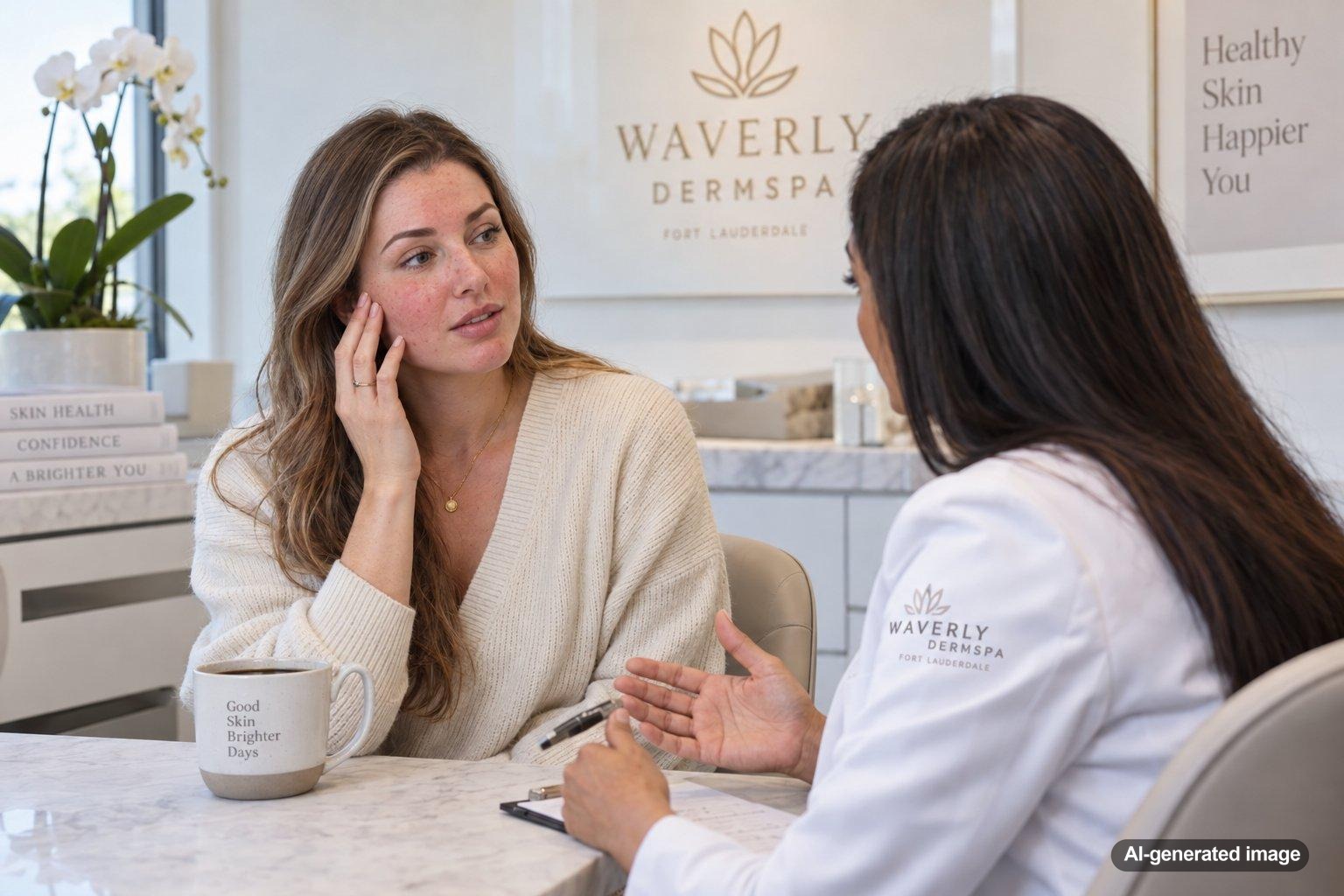
If your cheeks, nose, chin, or forehead become red and bumpy after a steaming cup of coffee, the temperature of the drink may be part of the explanation. Hot beverages can trigger facial flushing in some people, particularly when the skin is already sensitive or prone to rosacea. The heat can temporarily widen superficial blood vessels and may contribute to a flare of redness, warmth, or inflammatory-looking bumps.
That does not mean coffee itself is always the problem. Temperature, caffeine, ingredients added to the drink, and your individual skin sensitivity can all matter. Repeated or persistent symptoms are worth discussing with a dermatologist rather than assuming coffee is the only cause.
Quick answer
- The heat may matter more than the coffee. Very hot beverages are a recognized trigger for some people with rosacea-prone skin.
- Facial flushing can happen when blood vessels respond to heat. This may make the cheeks, nose, forehead, or chin look red or feel warm.
- Bumps can accompany an inflammatory flare. Rosacea can sometimes include small red bumps or pus-filled bumps, but other skin conditions can look similar.
- Cooling the drink may help you identify a pattern. Trying warm, lukewarm, or iced coffee can help clarify whether temperature seems to be involved.
- Persistent redness or recurring bumps deserve evaluation. A dermatologist can help distinguish rosacea from acne, irritation, dermatitis, or another cause.
Why can hot coffee make your face turn red?
Heat naturally affects circulation near the surface of the skin. When you drink something very hot, your body may respond by widening small blood vessels, which can make the face look flushed. For many people, this is brief and harmless. For someone with rosacea-prone or highly reactive skin, however, the response may be more noticeable or last longer.
Hot beverages are among the triggers reported by people with rosacea. Importantly, the temperature of the beverage may be a major factor. You may notice that steaming coffee causes more redness than the same coffee served iced or allowed to cool.
Why do bumps sometimes appear with the redness?
Rosacea is not limited to flushing. Some forms can include inflammatory bumps that resemble acne. These may appear on the cheeks, nose, chin, or forehead and can occur along with warmth, sensitivity, stinging, or persistent facial redness.
Still, bumps after coffee do not automatically point to rosacea. Acne, irritation from skincare products, perioral dermatitis, follicle irritation, and other conditions can create a similar appearance. Timing also matters. A rapid flare immediately after a hot drink may suggest a heat-related vascular response, while bumps that remain for days may need a broader evaluation.
Is caffeine causing the reaction?
Not necessarily. It can be tempting to blame caffeine whenever coffee causes flushing, but the relationship is not always that simple. If hot coffee seems to trigger your skin, temperature is one practical factor to test first.
You can compare how your skin responds to the same type of coffee served at different temperatures. If iced or lukewarm coffee is consistently easier on your skin, heat may be playing a meaningful role. If redness happens regardless of temperature, other factors may deserve attention.
Could milk, creamer, or flavorings be involved?
Sometimes the drink contains more variables than coffee and water. Milk, flavored syrups, sweeteners, spices, protein additives, and other ingredients can complicate the picture. They do not affect everyone the same way, and a facial reaction after a specialty coffee does not establish that any specific ingredient is responsible.
If the pattern is consistent, keeping the drink simple for a short period can make it easier to notice whether temperature, coffee itself, or an added ingredient seems to correlate with your symptoms.
What can you do at home?
A few conservative changes can help you understand your triggers without dramatically changing your routine:
- Let coffee cool before drinking it instead of consuming it piping hot.
- Try iced coffee and compare your skin’s response.
- Keep a simple note of when flushing or bumps appear and how long they last.
- Pay attention to other possible triggers on the same day, including sun exposure, exercise, stress, spicy foods, alcohol, and overheating.
- Use a gentle cleanser and moisturizer if your skin feels sensitive or reactive.
- Avoid aggressively scrubbing, exfoliating, or applying multiple strong products during a flare.
- Use daily sun protection, since sun exposure can also aggravate rosacea-prone skin.
The goal is not to eliminate everything you enjoy. It is to look for repeatable patterns that give you useful information about your own skin.
What professional options are available?
If redness and bumps happen frequently, a dermatologist can evaluate what is actually driving the reaction. Depending on the diagnosis and your skin, management may involve a simplified skincare routine, prescription topical or oral medications, or office-based treatments that target persistent redness and visible blood vessels.
The appropriate approach varies because flushing, inflammatory bumps, acne, dermatitis, and sensitive skin do not all respond to the same treatments. An evaluation can help avoid spending time and money on products that may not match the underlying issue.
When should you see a dermatologist?
Consider scheduling an evaluation if facial redness or bumps are becoming frequent, lasting longer, spreading, or interfering with your comfort. It is also worth getting checked if you experience persistent burning or stinging, visible facial blood vessels, significant swelling, or symptoms around the eyes such as ongoing redness, irritation, dryness, or a gritty sensation.
A dermatologist can also help if you simply cannot tell whether you are dealing with rosacea, acne, irritation, or another condition. Photos taken during a flare and a short record of possible triggers can be useful during the visit.
FAQ
Can hot coffee trigger rosacea?
Hot beverages can be a trigger for some people with rosacea. If you notice a repeatable pattern, trying coffee at a cooler temperature may help you determine whether heat contributes to your flare.
Does redness after coffee mean I have rosacea?
No. Facial flushing can occur for many reasons, and redness after a hot drink alone does not establish a diagnosis. Recurring redness, inflammatory bumps, sensitivity, or visible blood vessels may be reasons to ask a dermatologist for an evaluation.
Why does iced coffee seem easier on my skin?
If iced coffee causes less flushing than very hot coffee, temperature may be an important trigger for you. Heat can promote facial flushing, especially in people with reactive or rosacea-prone skin.
Can rosacea bumps look like acne?
Yes. Some rosacea flares can include red inflammatory bumps or pus-filled bumps that resemble acne. Because the two conditions can overlap in appearance, professional evaluation can be helpful when the pattern is unclear.
Should I stop drinking coffee completely?
Not necessarily. If coffee appears to correlate with your symptoms, first consider whether temperature or another part of the drink is involved. A dermatologist can help you make more individualized decisions if the reaction is frequent or difficult to manage.
Ready to get help?
Schedule an appointment or send a message and our team will get back to you.
Prefer to call? 954-666-3736
This article is for educational purposes and is not medical advice. For diagnosis and personalized treatment, please book an appointment with a board-certified dermatologist.
Sources & further reading
- American Academy of Dermatology (AAD) – How to prevent rosacea flare-ups
- DermNet – What’s triggering my rosacea?
