

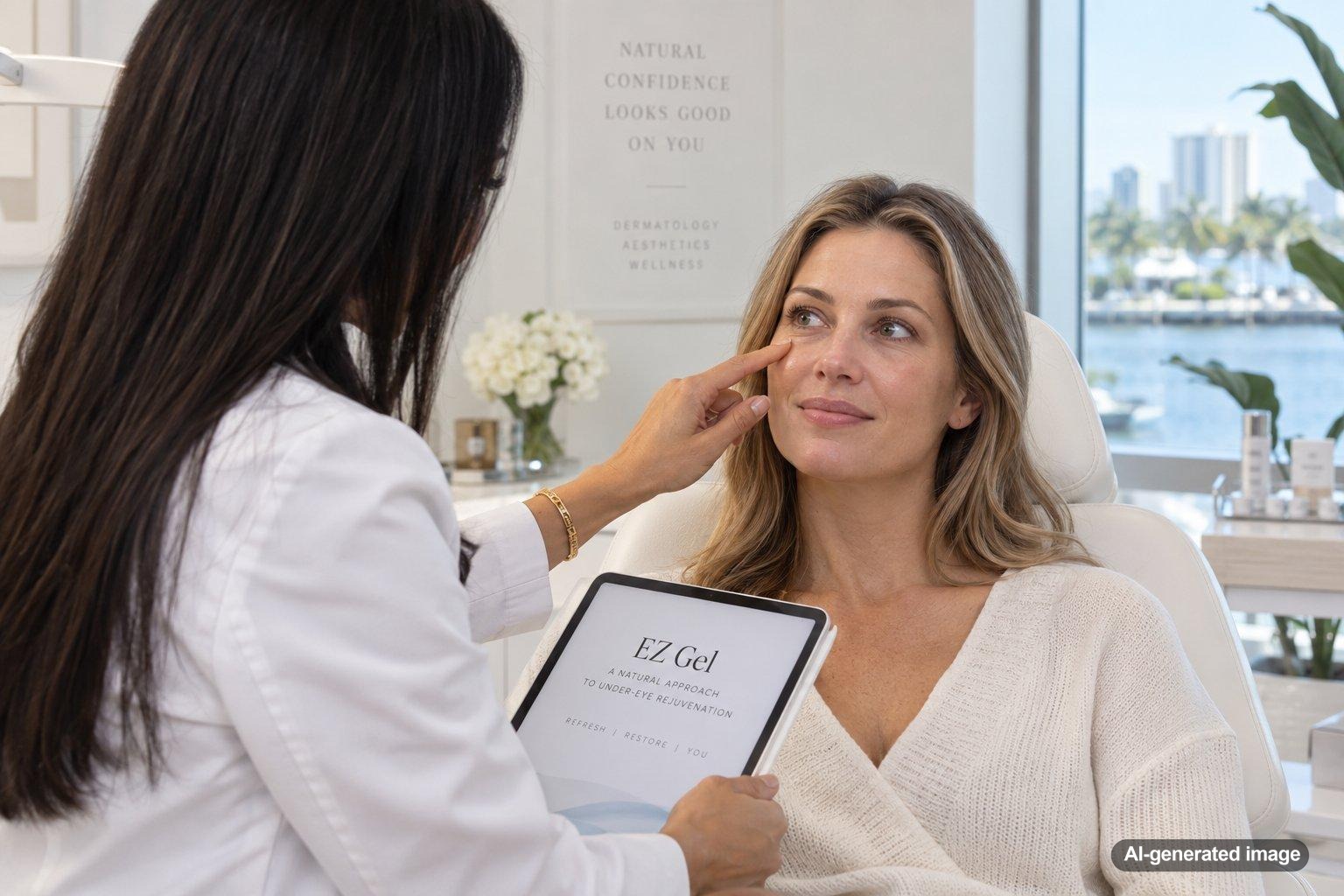
Tear trough hollows can create shadows under the eyes that make the face look tired even when you feel well rested. For patients who want a subtle approach rather than an obviously filled appearance, EZ Gel may be one option to discuss with a dermatologist. The goal is not to erase every contour under the eye, but to consider whether carefully placed treatment could soften the transition between the lower eyelid and upper cheek.
Because the under-eye area has thin skin and complex anatomy, treatment should be individualized. What looks like a simple hollow can also involve skin quality, pigmentation, swelling, cheek volume, or natural facial structure, so an in-person evaluation matters.
Quick answer
- EZ Gel is a natural filler option prepared from components of a patient’s own blood.
- It may be considered for selected patients with tear trough hollows who prefer a gradual, understated approach.
- Under-eye shadows are not always caused by volume loss, so adding volume is not appropriate for everyone.
- The amount and placement used in this area should be conservative because the skin is thin and small changes can be noticeable.
- A dermatologist can evaluate the under-eye area and help determine whether EZ Gel or another approach may be appropriate.
What EZ Gel is
EZ Gel is an autologous treatment, meaning it is prepared from material obtained from the patient’s own blood rather than from a premanufactured dermal filler syringe. The preparation process creates a gel-like material that can be placed strategically in selected areas where subtle volume support is desired.
Patients sometimes find this approach appealing when they want facial rejuvenation that feels conservative and aligned with their existing features. It is still a medical procedure, however, and the decision to use it should be based on anatomy, treatment goals, medical history, and examination of the area.
Why tear trough hollows need a careful approach
The tear trough is the groove that can form between the lower eyelid and upper cheek. A visible hollow may be influenced by several factors, including facial structure, age-related changes in nearby tissues, cheek volume, skin thickness, and lighting or shadow.
Under-eye concerns can also come from issues that do not respond to added volume. Pigmentation, visible blood vessels, skin texture, puffiness, and fluid retention can all affect how the area looks. Treating a shadow as though it is purely a volume problem may not address the main concern.
Why patients may prefer a natural-looking option
Under-eye treatment tends to look most natural when the goal is improvement rather than complete correction. The lower eyelid and cheek should still move and look like the same face after treatment. Conservative placement may help soften a pronounced hollow while preserving normal contours.
This is especially important around the eyes because even small changes can alter facial expression. During a consultation, it can be helpful to explain whether your priority is looking less tired, softening a shadow, improving the eyelid-to-cheek transition, or simply avoiding an overfilled appearance.
Who may not be a good candidate for volume under the eyes
Not every patient with an under-eye concern needs filler or gel placement. A dermatologist may be cautious about adding volume when puffiness, prominent under-eye bags, significant fluid retention, or another anatomical factor is contributing to the appearance.
The treatment plan may also change if the primary issue is skin discoloration, surface texture, laxity, or another concern that would be better addressed with a different approach. A personalized examination helps separate true hollowing from other causes of under-eye shadowing.
What to do before your consultation
You do not need to diagnose the cause of your own tear troughs before an appointment. It is more useful to think about what you want to change and how subtle you want the result to look.
- Bring photos that show how your under-eye area has changed over time if that is helpful.
- Tell your clinician about previous filler, injections, laser treatments, or surgery around the eyes.
- Share your current medications, supplements, allergies, and relevant medical history.
- Mention whether puffiness changes during the day or with sleep, travel, allergies, or other factors.
- Be clear if preserving your natural facial proportions is your main priority.
Professional options for under-eye rejuvenation
Depending on what is causing the concern, professional options may include conservative volume support, treatments focused on skin quality, or other approaches aimed at the surrounding cheek and lower eyelid area. Sometimes the most natural result comes from addressing adjacent facial support rather than placing material directly into the deepest part of a tear trough.
Your clinician can help you decide which category of treatment makes sense for your anatomy and goals. At Waverly DermSpa, we offer EZ Gel (Natural Filler) and can help you understand whether it may be appropriate.
When to see a dermatologist
If you are considering any injectable treatment around the eyes, a dermatologist can evaluate the anatomy and discuss potential benefits, limitations, and risks. It is also worth getting checked if a new change around one eye appears suddenly, is accompanied by significant swelling, pain, redness, vision changes, or another concerning symptom rather than being a long-standing cosmetic hollow.
FAQ
Does EZ Gel make the under-eye area look fuller?
It may provide subtle volume support when used in an appropriate patient, but the amount and placement are individualized. The goal may be to soften a hollow rather than create visible fullness.
Is EZ Gel the same as traditional dermal filler?
No. EZ Gel is prepared from components of the patient’s own blood, while traditional dermal fillers are manufactured injectable products. They have different properties, so a clinician can explain which approach may better match a particular concern.
Can EZ Gel help dark circles?
It depends on why the under-eye area looks dark. A hollow can create a shadow that contributes to darkness, but pigmentation, visible vessels, thin skin, and other factors can also play a role. A dermatologist can evaluate the likely cause before recommending treatment.
Will the result look natural?
A natural-looking result depends on anatomy, treatment selection, conservative placement, and the amount used. Discussing your preference for subtle change during consultation helps your clinician understand the result you are seeking.
How long does EZ Gel last under the eyes?
Duration can vary from person to person and should not be assumed to follow one fixed timeline. Your clinician can discuss what is reasonable to expect based on the treatment plan and your individual response.
Should I treat the tear trough itself or the cheeks?
That depends on your facial anatomy. In some people, support in the upper cheek may influence the appearance of the tear trough, while others may have a different combination of concerns. An in-person evaluation is the most useful way to decide.
Ready to get help?
Schedule an appointment or send a message and our team will get back to you.
Prefer to call? 954-666-3736
This article is for educational purposes and is not medical advice. For diagnosis and personalized treatment, please book an appointment with a board-certified dermatologist.
