

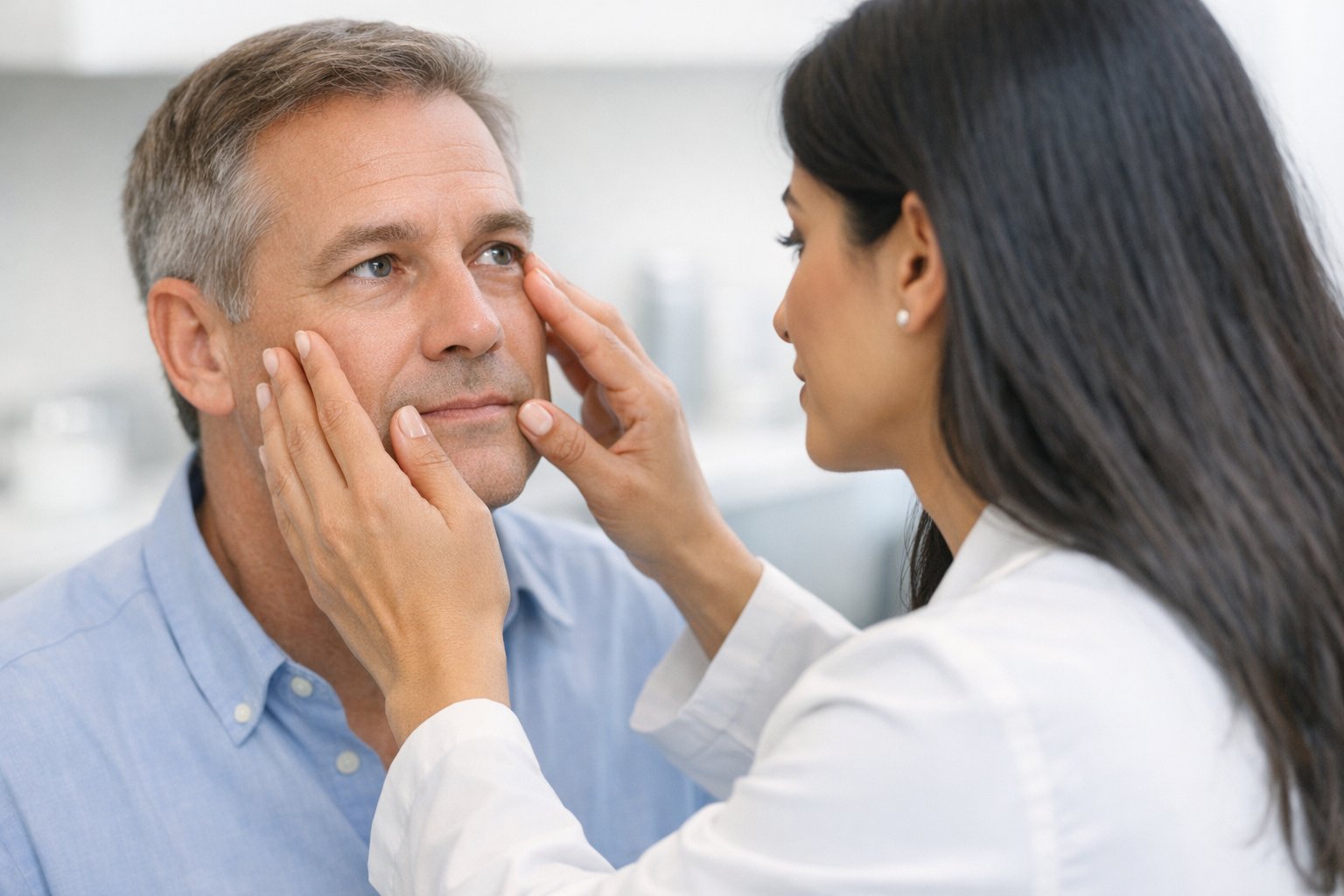
The skin around the eyes is thinner and often the first place people notice dryness, creasing, or a tired look. That is one reason eye creams are so popular. Some can be useful, but not every concern under the eyes is really an eye cream problem.
The most helpful way to think about eye cream is this: it can support the skin, add moisture, and improve comfort or appearance in some cases, but it usually has limits. If your main concern is genetics, volume loss, stronger discoloration, or persistent irritation, a cream may not do very much on its own.
Quick answer
- Eye creams may help with dryness, temporary dehydration lines, and mild sensitivity when the formula is gentle and moisturizing.
- They can sometimes improve the look of mild puffiness or early fine lines, especially when paired with consistent sun protection and a simple routine.
- They usually do not do much for hollowing, more noticeable dark circles, significant skin laxity, or swelling tied to allergies or health issues.
- A regular facial moisturizer can sometimes work just as well if it is bland, fragrance-free, and well tolerated around the eyes.
- If the area burns, flakes, stays swollen, or changes suddenly, it is worth getting checked rather than trying product after product.
What eye cream can actually do
In plain English, eye creams are moisturizers made for the delicate skin around the eyes. Many are designed to feel lighter, sting less, and layer well under sunscreen or makeup. The best candidates for improvement are concerns related to dryness and barrier support.
Ingredients that may help include humectants such as glycerin or hyaluronic acid, soothing ingredients like niacinamide, and barrier-supportive ingredients such as ceramides. Some formulas also include caffeine, which may help the eye area look a little less puffy for some people. Results tend to be subtle and depend on the cause of the concern.
When eye cream may help
- Dryness and tightness: A richer, fragrance-free formula can make the area feel more comfortable and look smoother.
- Fine dehydration lines: When skin is dry, lines can look more obvious. Moisture may soften that appearance.
- Mild sensitivity: A simple product with fewer irritants may be easier to tolerate than a stronger face cream.
- Early signs of aging: Some people notice modest improvement in texture when using a gentle retinoid or peptide product made for the eye area, but tolerance varies.
- Mild morning puffiness: Cooling application and ingredients like caffeine may help the area look a bit less swollen.
When eye cream usually does not help much
- Hollowing or volume loss: If the under-eye area looks sunken, that is often structural and not something a cream can refill.
- Dark circles from shadowing or visible vessels: Creams may have limited impact when discoloration is caused by anatomy, thinner skin, or pigmentation that sits deeper.
- Loose skin: Creams can moisturize the surface, but they do not tighten skin in a dramatic way.
- Persistent swelling: Ongoing puffiness can be associated with allergies, irritation, salt intake, sleep habits, or other factors that a cream alone will not address.
- Active irritation: If a product is stinging or the skin is red and flaky, adding more products often makes things worse, not better.
How to choose one without overcomplicating it
Look for a product that matches the problem you are actually trying to solve. For dryness, keep it simple and focus on barrier support. For a tired look, a lightweight formula with caffeine may be worth trying. For texture concerns, choose gentle actives and go slowly.
- Choose fragrance-free formulas when possible.
- Patch test first if your skin is reactive.
- Use only a small amount, about the size of a grain of rice for each side.
- Avoid rubbing too close to the lash line.
- Do not assume more expensive means more effective.
What you can do at home
A calm, consistent routine usually matters more than having a long list of eye products. Start with a gentle cleanser, moisturize, and wear sunscreen daily. If your regular moisturizer feels comfortable around the eyes, you may not need a separate eye cream at all.
It also helps to notice patterns. If puffiness is worse after poor sleep, travel, salty meals, or seasonal allergies, the solution may be lifestyle or trigger management rather than a new jar of cream. If you use retinoids or exfoliating acids on the face, keep them away from the eye area unless the product is specifically intended for that use and your skin tolerates it well.
Professional options
If your concerns are not improving with conservative skincare, a professional evaluation can help narrow down what is actually going on. Common options include adjusting your skincare routine, discussing prescription-strength topicals for select concerns, or reviewing cosmetic treatments for texture, laxity, pigment, or volume-related changes. A dermatologist can evaluate what may be appropriate based on your skin, goals, and sensitivity level.
When to see a dermatologist
- The skin around the eyes is persistently red, itchy, flaky, or burning.
- You have swelling that keeps coming back or is getting worse.
- Darkening or irritation appears suddenly or spreads.
- You are using multiple products and the area seems more reactive over time.
- You are concerned about discoloration, laxity, or hollowing and want a more tailored plan.
FAQ
Do I really need a separate eye cream?
Not always. Many people do well with a bland, fragrance-free facial moisturizer used carefully around the eyes. A separate eye cream may be useful if the area is especially sensitive or dry.
Can eye cream get rid of dark circles?
Sometimes it may help a little, depending on the cause. But if dark circles are related to shadowing, visible vessels, or natural anatomy, improvement may be limited.
Can I use retinol near my eyes?
Some people can, but the eye area is easy to irritate. A product made specifically for that region may be better tolerated, and it is best to start slowly.
Why does my eye cream sting?
That can happen when the formula is too active, fragranced, or simply not a good match for your skin barrier. Stop using it and simplify your routine if the area feels irritated.
Ready to get help?
Schedule an appointment or send a message and our team will get back to you.
Prefer to call? 954-666-3736
This article is for educational purposes and is not medical advice. For diagnosis and personalized treatment, please book an appointment with a board-certified dermatologist.
