

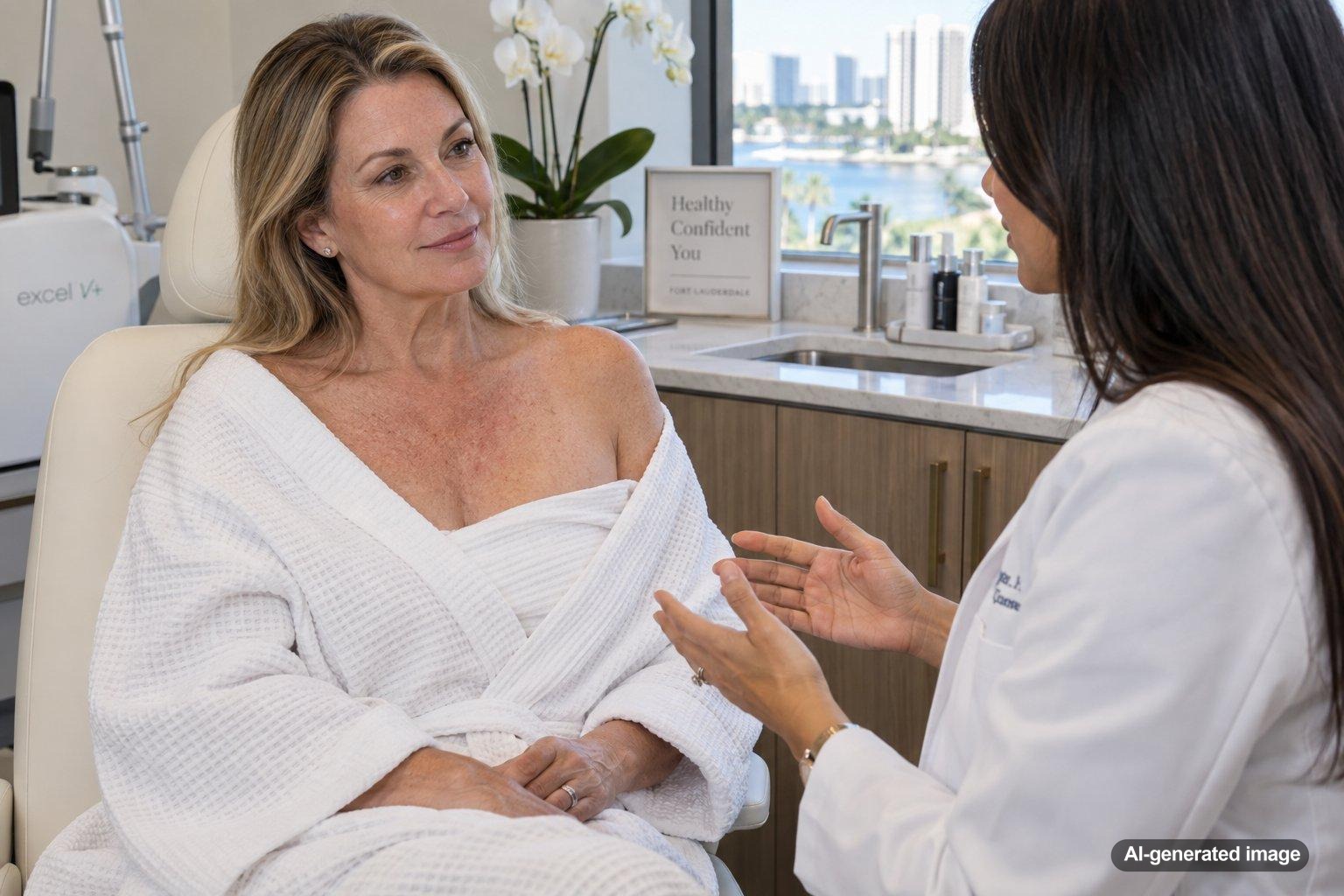
Red marks can linger on the chest long after the bumps from folliculitis have settled. These spots are often described as scars, but some may actually represent persistent post-inflammatory redness rather than permanent changes in skin texture. That distinction matters because different types of marks respond to different approaches.
Excel V+ is a laser platform that can be used for selected vascular and redness-related concerns. When lingering chest marks are predominantly red, rather than brown, raised, depressed, or actively inflamed, a dermatologist may consider whether a vascular laser approach could be appropriate. An in-person evaluation is important before treatment because the appearance and cause of the marks can vary.
Quick answer
- Excel V+ may be considered for persistent red marks that remain after folliculitis has healed.
- Red marks are not always true scars. Some are areas of post-inflammatory erythema caused by lingering visible blood vessels and inflammation-related redness.
- Brown discoloration, raised scars, depressed scars, and active folliculitis may require different management.
- The chest can be sensitive and may respond differently from facial skin, so treatment settings and expectations should be individualized.
- A dermatologist should first confirm that the folliculitis is no longer active and determine what type of mark is present.
Why folliculitis can leave red marks on the chest
Folliculitis describes inflammation around hair follicles. It can appear as small red bumps, pustules, or tender spots and may be associated with several different triggers. On the chest, heat, sweat, friction, occlusive clothing, shaving, exercise, and certain skin or hair products can sometimes contribute to follicular irritation.
After the active bump resolves, the surrounding skin may remain red for a period of time. This residual redness is often called post-inflammatory erythema. It differs from post-inflammatory hyperpigmentation, which tends to appear tan, brown, gray, or darker than the surrounding skin. Some people have a mixture of redness and pigmentation.
True scarring is different again. A scar may change the texture or contour of the skin, becoming raised, firm, indented, or otherwise structurally different. Laser treatment aimed primarily at redness does not address every type of scar in the same way.
How Excel V+ may be used for persistent redness
Excel V+ is a laser platform used by trained clinicians for selected vascular and pigment-related concerns. For red marks, the goal of treatment may be to target visible vascular components that contribute to persistent redness while minimizing unnecessary impact on surrounding tissue.
Whether this approach makes sense depends on what the marks actually represent. A spot that looks bright pink or red may be approached differently from one that is mainly brown, purple, raised, indented, or still inflamed. Skin tone, recent sun exposure, sensitivity, medical history, medications, and the condition of the chest skin can also influence treatment planning.
Red marks versus brown marks versus true scars
Looking carefully at the color and texture of a lingering spot can help explain why one treatment is not appropriate for every mark.
- Red or pink flat marks: These may reflect post-inflammatory erythema and can sometimes be evaluated for a vascular laser approach.
- Brown or gray flat marks: These are more consistent with pigment changes and may need a different treatment strategy.
- Raised or firm areas: These may represent hypertrophic or other scar changes and should be assessed before choosing a procedure.
- Indented areas: These involve a change in skin texture rather than redness alone and may require a different category of treatment.
- New bumps, pustules, crusting, or tenderness: These can suggest that the original follicular problem is still active and should be evaluated before cosmetic treatment of leftover marks.
Why the chest requires a thoughtful treatment plan
The skin of the chest does not always behave exactly like facial skin. It can be exposed to friction from clothing, sweat during exercise, fragrances, body products, and significant sunlight. The chest is also an area where some people are more prone to noticeable scar formation.
For that reason, a clinician may take a conservative approach when evaluating laser treatment on this area. The appropriate settings, treatment area, and interval between sessions can vary from person to person. Improvement may also be gradual, and the number of treatments needed cannot be predicted from the appearance of a photograph alone.
What to do before considering laser treatment
The first priority is making sure the underlying folliculitis is controlled. Treating redness while new inflammatory bumps continue to appear may lead to a cycle in which older spots improve while new marks continue to develop.
Before an appointment, it can be helpful to notice whether the bumps are associated with exercise, sweating, shaving, tight athletic clothing, specific body products, or other recurring exposures. Avoid picking or squeezing bumps, since additional inflammation can make discoloration and visible marks more noticeable.
Sun protection is also important for the chest. Recent tanning or substantial sun exposure can affect how a dermatologist plans many laser procedures. Tell your clinician about medications, topical products, previous laser treatments, unusual reactions to procedures, and any history of problematic scarring.
What an evaluation may include
A dermatologist can examine the chest to determine whether the visible spots are primarily redness, pigmentation, textural scars, ongoing folliculitis, or a combination. This is especially useful because several different types of marks can exist in the same area.
The consultation is also an opportunity to discuss what bothers you most. Someone concerned mainly about color may need a different plan from someone whose primary concern is raised or indented texture. If a laser procedure is being considered, your clinician can discuss realistic expectations, anticipated aftercare, and factors specific to your skin.
What happens after a vascular laser treatment?
Responses vary depending on the treatment parameters, the size and location of the treated area, and individual skin characteristics. Temporary redness, warmth, sensitivity, or swelling can occur after many laser procedures. Your clinician should give you specific aftercare instructions based on the treatment performed.
Gentle skin care is generally important while the area settles. Avoid adding harsh exfoliants, aggressive scrubs, or multiple new active products unless your clinician says they are appropriate. Protecting the chest from unnecessary sun exposure is also an important part of post-treatment care.
When to see a dermatologist before treating the marks
It is worth having the area evaluated if you continue to develop painful or widespread bumps, if lesions repeatedly drain or crust, if the problem is worsening, or if you are uncertain whether the spots are actually folliculitis. Similar-looking eruptions can have different causes, and cosmetic treatment should not replace evaluation of an active skin problem.
You should also discuss a history of raised scars or keloids, significant pigment changes after procedures, unusual light sensitivity, or previous adverse reactions to laser treatment before proceeding.
FAQ
Are red marks from folliculitis actually scars?
Not always. A flat red or pink mark may be persistent post-inflammatory erythema rather than a permanent structural scar. A dermatologist can evaluate the color and texture to determine what type of change is present.
Can Excel V+ help brown spots left by folliculitis?
Brown discoloration is different from persistent redness. Because mixed red and brown marks are common, your clinician can determine which component is most prominent and whether a laser or another approach may be appropriate.
Can Excel V+ treat active folliculitis?
The goal discussed here is treatment of residual redness, not diagnosis or management of active folliculitis. Recurrent or ongoing bumps should be evaluated first so the underlying problem can be addressed appropriately.
How many Excel V+ treatments will I need?
There is no universal number. Treatment needs can vary with the type and intensity of redness, skin characteristics, the size of the area, and how the skin responds. Your clinician can discuss a personalized plan after examining the chest.
Will the red marks disappear completely?
Results vary, and complete clearing cannot be predicted. The goal may be to make persistent redness less noticeable when the marks are appropriate for vascular laser treatment.
Can I treat the marks if I still get occasional chest breakouts?
That depends on how active the folliculitis is and what is causing it. A dermatologist can help decide whether the underlying condition should be addressed before focusing on residual redness.
At Waverly DermSpa, we offer Excel V+ and can help you understand whether it may be appropriate.
Ready to get help?
Schedule an appointment or send a message and our team will get back to you.
Prefer to call? 954-666-3736
This article is for educational purposes and is not medical advice. For diagnosis and personalized treatment, please book an appointment with a board-certified dermatologist.
