

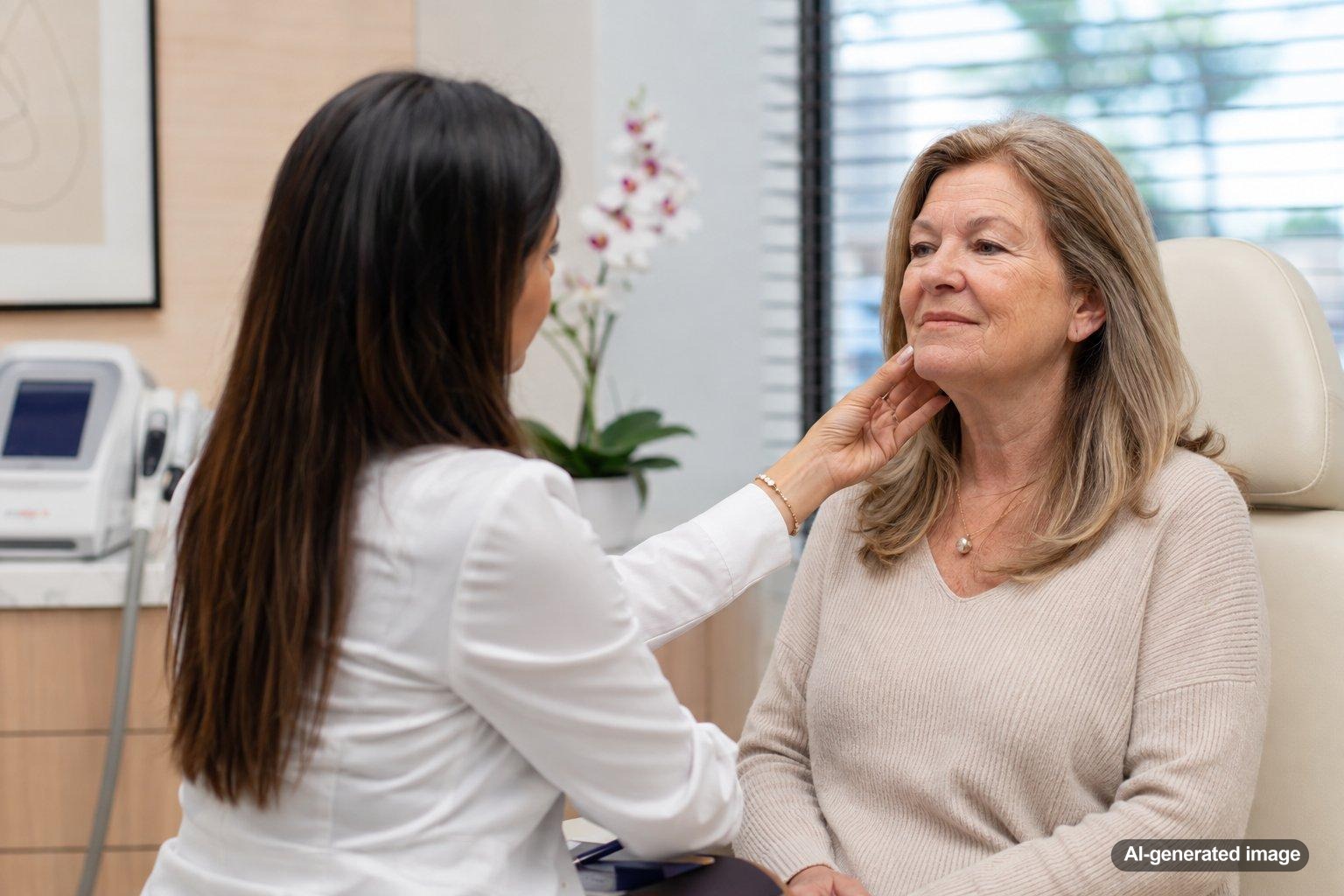
PCOS-related hirsutism can make unwanted facial or body hair an ongoing concern, especially when hair returns quickly after shaving, waxing, or plucking. Laser hair removal with Excel HR may help reduce suitable pigmented hair, but it is important to understand what the treatment can and cannot address.
Laser treatment targets the hair rather than the hormonal process associated with PCOS. That distinction matters because hormonally influenced areas, particularly the face, may experience new or returning hair over time. A personalized dermatology evaluation can help determine whether laser hair removal fits your skin tone, hair color, treatment area, and overall goals.
Quick answer
- Excel HR is a professional laser platform that can be used for hair reduction.
- Laser hair removal may be useful for coarse, pigmented hair associated with hirsutism.
- It does not treat PCOS or correct the hormonal factors that can contribute to excess hair growth.
- Multiple treatment sessions are commonly needed because individual hairs are not all in the same growth phase at once.
- Hormonal facial hair may require ongoing reassessment or maintenance treatment as new hair develops.
What PCOS-related hirsutism means
Hirsutism describes excessive coarse or dark hair growth in areas where androgen-sensitive hair commonly develops. PCOS can be associated with hirsutism, along with other features such as irregular menstrual cycles or acne. Hair growth patterns vary considerably, so unwanted facial or body hair should not be assumed to be caused by PCOS without an appropriate medical evaluation.
For someone who already has a PCOS diagnosis, treating unwanted hair and managing the underlying condition are separate goals. Laser hair removal is focused on reducing visible hair. Questions about hormonal management, menstrual changes, or prescription therapies should be discussed with the appropriate medical clinician.
How Excel HR approaches unwanted hair
Laser hair removal uses light energy that is preferentially absorbed by pigment within suitable hair. This energy can damage targeted follicles and reduce subsequent hair growth. FDA records identify excel HR as a powered laser surgical instrument associated with the Cutera family of aesthetic lasers, and the related cleared indications include hair reduction applications.
Hair color, thickness, skin tone, treatment location, recent sun exposure, and other individual factors can influence treatment planning. Light blonde, white, gray, and many red hairs contain too little target pigment for conventional laser hair removal to work effectively.
Why PCOS can make treatment planning different
PCOS-related hair growth can remain hormonally influenced even after existing follicles have been treated. This means laser treatment may substantially reduce appropriate hairs without preventing every future hair from developing.
The face is particularly important to discuss during consultation. The American Academy of Dermatology notes that hormonal influences can make laser hair removal less lasting on a woman’s face than on many other body areas. For this reason, expectations should focus on hair reduction and easier long-term management rather than assuming that every treated hair will remain absent indefinitely.
Who may be a reasonable candidate
Laser hair removal generally relies on sufficient pigment within the hair to absorb laser energy. Coarse, dark hair often provides a more practical laser target than very light hair. Skin tone also matters because laser settings need to be selected with the surrounding skin in mind.
A consultation is especially useful for patients with deeper skin tones, recent tanning, a history of pigment changes, sensitive skin, scarring tendencies, or medications that may affect treatment planning. A dermatologist can evaluate these factors before deciding whether a particular laser approach may be appropriate.
What you can do at home
Between professional treatments, simple hair-management and skin-care habits may make the process easier:
- Follow the specific shaving and hair-removal instructions provided by your treatment team.
- Avoid tanning and excessive sun exposure around laser appointments.
- Use broad-spectrum sunscreen on exposed treatment areas as directed.
- Avoid aggressively picking at irritated skin or ingrown hairs.
- Keep track of changes in the amount, location, or speed of unwanted hair growth so you can discuss them during your visit.
If you are using prescription or over-the-counter medications, supplements, retinoids, or other active skin-care products, tell your clinician before treatment rather than stopping them on your own.
Professional options for managing hirsutism
Laser hair removal is one option for reducing unwanted pigmented hair. Electrolysis may be considered for hairs that do not respond well to laser, including some light-colored hairs. Temporary approaches such as shaving or waxing can also remain useful depending on personal preference.
When hirsutism is related to PCOS or another hormonal condition, medical management of the underlying issue may also be discussed with an appropriate healthcare professional. Prescription options require individualized evaluation and are separate from cosmetic laser treatment.
At Waverly DermSpa, we offer Excel HR Laser Hair Removal and can help you understand whether it may be appropriate.
What to expect from a treatment series
Laser hair removal is usually performed as a series rather than a single treatment because hairs cycle through different stages of growth. The appropriate number and spacing of sessions varies by treatment area, hair characteristics, skin type, response, and hormonal influences.
Temporary redness, swelling, or discomfort can occur after laser hair removal. Less common complications can include blistering, pigment changes, infection, or scarring. Careful device selection, appropriate settings, sun precautions, and experienced medical supervision are important parts of minimizing risk.
When to see a dermatologist
A dermatology evaluation is helpful when unwanted hair is new, rapidly changing, difficult to manage, or accompanied by other skin concerns. If increased hair growth occurs along with menstrual changes, acne, or other symptoms that could suggest an underlying hormonal issue, additional medical evaluation may be appropriate.
You should also seek professional guidance before laser treatment if you have a recent tan, a history of unusual scarring or pigment changes, active irritation in the treatment area, or questions about medications that could affect laser safety.
Frequently asked questions
Can Excel HR treat the cause of PCOS-related facial hair?
No. Laser hair removal targets suitable hair follicles rather than the hormonal mechanisms associated with PCOS. Medical management of PCOS is a separate issue that should be discussed with the appropriate healthcare professional.
Can PCOS hair grow back after laser hair removal?
Some hair can return, and hormonally influenced areas may develop new hair over time. Regrowth can vary considerably between individuals, which is why maintenance treatment may sometimes be discussed.
Does laser hair removal work on every hair color?
No. Conventional laser hair removal relies on pigment in the hair. Blonde, white, gray, and many red hairs may not absorb enough laser energy to respond effectively.
Can people with darker skin tones have laser hair removal?
Laser hair removal can be performed across a wide range of skin tones, but appropriate device selection, settings, and operator experience are especially important. A consultation can help assess individual skin and hair characteristics.
Should I wax or pluck between treatments?
Follow the instructions given by your treating clinician. Because waxing and plucking remove hair from the follicle, your laser provider may recommend a different method of managing visible hair during a treatment series.
Is consultation important if I already know I have PCOS?
Yes. A PCOS diagnosis does not by itself determine whether laser hair removal is suitable. Your clinician still needs to consider your skin tone, hair characteristics, treatment area, sun exposure, medications, and treatment goals.
Ready to get help?
Schedule an appointment or send a message and our team will get back to you.
Prefer to call? 954-666-3736
This article is for educational purposes and is not medical advice. For diagnosis and personalized treatment, please book an appointment with a board-certified dermatologist.
Sources & further reading
- U.S. Food and Drug Administration (FDA) – Indications for Use
- American Academy of Dermatology (AAD) – Laser hair removal: Overview
- Cleveland Clinic – Hirsutism: What It Is, Causes, Treatment & Medication
