

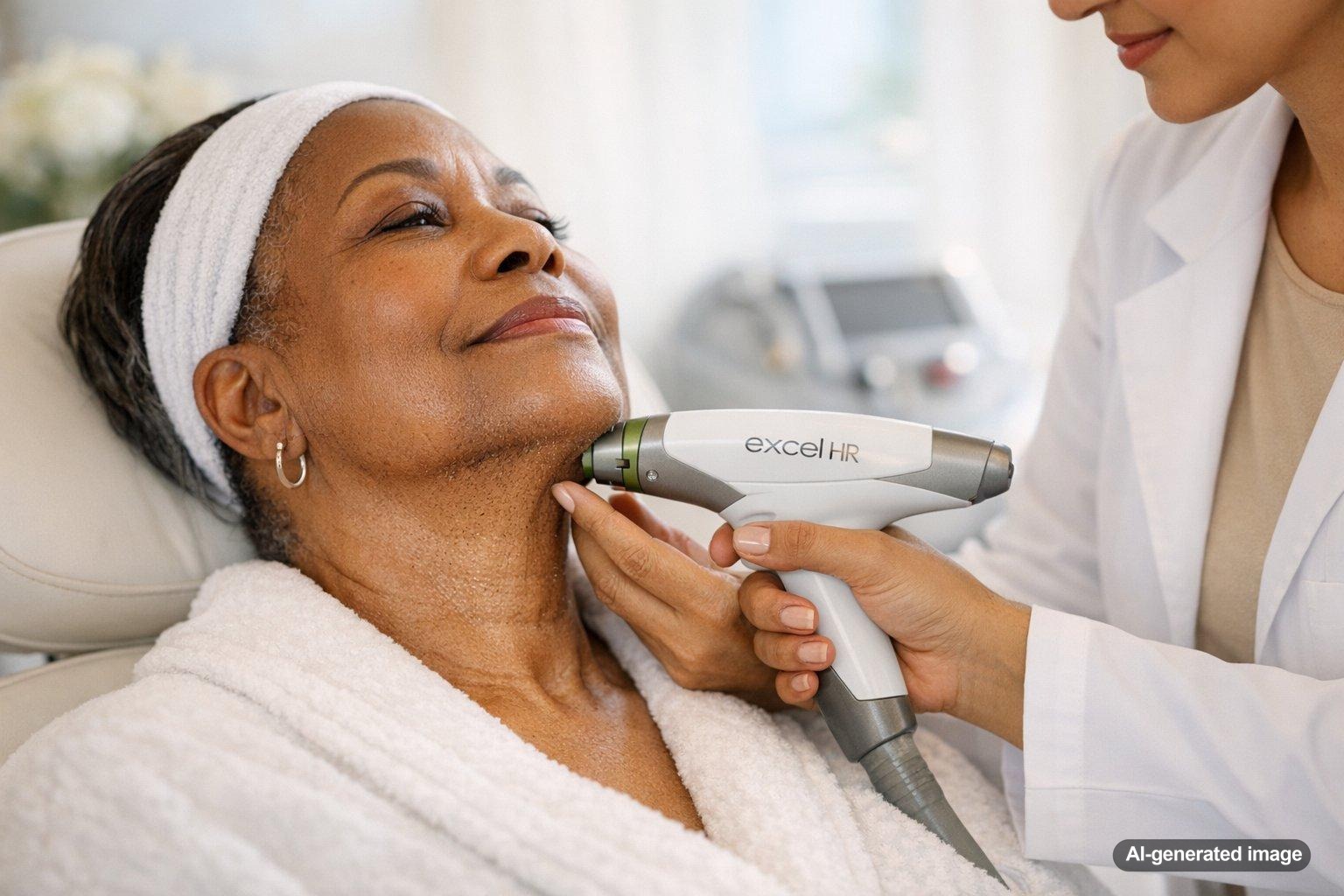
Coarse facial hair can feel especially frustrating when it shows up along the chin, jawline, upper lip, or neck and seems to come back quickly after shaving, tweezing, or waxing. For many women, the pattern feels stubborn, noticeable, and hard to manage, especially in bright South Florida sun and humidity.
Excel HR Laser Hair Removal is one option that may help reduce the cycle of constant upkeep. When facial hair seems hormonally driven, though, the best approach is usually thoughtful rather than rushed. Treatment planning matters, skin tone matters, and the reason the hair is growing can matter too.
Quick answer
- Excel HR may help reduce coarse facial hair by targeting the pigment in actively growing hairs.
- Hormonal facial hair often needs a personalized plan because new hairs can continue to develop over time.
- Results vary, and maintenance can be part of long-term management for some women.
- A dermatologist can help decide whether laser hair removal makes sense and whether an underlying hormonal issue should also be evaluated.
What Excel HR laser hair removal is
Excel HR is a laser hair removal platform designed to treat unwanted hair on different areas of the body, including the face. In plain English, the laser delivers energy toward the pigment in the hair. That energy can affect the follicle’s ability to keep producing thick, visible hair in the same way. Because hair grows in cycles, treatment is usually spaced out over a series of visits rather than done once.
Facial hair can be a little different from hair on the legs or underarms. The skin may be more reactive, the hair pattern may be influenced by hormones, and some areas need a careful, conservative approach. That’s one reason an in-person evaluation can be helpful before starting.
Why hormonal facial hair can be more persistent
- Hormonal shifts can be associated with thicker, darker hair growth on the chin, jawline, neck, or upper lip.
- Some women notice this pattern around adulthood, after medication changes, or as they get older.
- Even when laser helps with existing coarse hairs, hormones may continue to influence new follicles over time.
- That does not mean treatment cannot help. It simply means expectations should be realistic and the plan should be tailored.
If facial hair has changed quickly, become much denser, or is happening along with acne, scalp hair thinning, or irregular cycles, a dermatologist can evaluate whether more medical workup makes sense.
Who may be a good candidate
Many women seeking treatment are tired of daily tweezing, shaving, waxing, or dealing with irritation and shadowing. In general, laser hair removal often works best when the unwanted hair is coarse and has enough pigment for the laser to target. A consultation helps determine whether the hair type, skin tone, treatment area, and history of sensitivity make Excel HR a reasonable option.
Very fine peach fuzz is different from coarse hormonal hair. Treating the wrong kind of facial hair is not always helpful, so it is important to distinguish between soft vellus hair and thicker terminal hair during evaluation.
Common triggers or contributing factors
- Natural hormonal variation
- Family history of facial hair growth
- Age-related hormonal changes
- Certain medications
- Underlying endocrine issues that may need medical evaluation
- Repeated plucking or waxing that makes the area feel like a constant project
What you can do at home while deciding
If you are not ready for treatment yet, keep your routine simple. Gentle shaving is often less irritating than aggressive plucking or frequent waxing for some women. Avoid harsh scrubs or strong active products right after hair removal if your skin tends to sting or stay red. Daily sunscreen is also worth prioritizing, especially if your skin is easily bothered by heat, friction, or post-inflammatory discoloration.
Try not to overdo multiple methods at once. Constant picking, tweezing, and irritation can make the area look more inflamed and can make it harder to judge what is truly helping.
Professional options to discuss
Professional options can include laser hair removal, medical evaluation for possible hormonal contributors, and a skin-sensitive plan for reducing irritation from current hair removal habits. The right path depends on the hair itself, your skin tone, your history of pigmentation or sensitivity, and whether the pattern suggests something worth checking more closely.
For some women, laser hair removal is mainly about reducing density, thickness, and the feeling of constant maintenance. For others, it may be one piece of a broader plan. Your clinician can help you decide what makes sense for your goals.
When to see a dermatologist
- The hair growth is new, suddenly increasing, or noticeably changing.
- You also have acne flares, scalp hair thinning, or changes in your menstrual pattern.
- Your skin gets very irritated, darkened, or inflamed after shaving, waxing, or tweezing.
- You are unsure whether the hair is the kind that is likely to respond well to laser treatment.
- You want a treatment plan that considers both the hair and the skin underneath it.
FAQ
Does laser hair removal help hormonal facial hair?
It may help reduce coarse, pigmented hairs, but hormonally influenced hair can be persistent. Many women notice improvement with a series of treatments, though maintenance may be part of long-term management.
Is coarse chin hair different from peach fuzz?
Yes. Coarse terminal hairs are thicker and darker, while peach fuzz is usually finer and lighter. That distinction matters because laser treatment is generally aimed at pigmented hair.
Will one session be enough?
Usually not. Hair grows in cycles, so treatment is typically done over multiple visits. The exact number and timing can vary from person to person.
Can I keep tweezing between appointments?
Your clinician may guide you on the best approach, but in many cases it is better to avoid methods that pull the hair from the root before laser sessions. Ask for specific instructions during your consultation.
Is it worth getting checked if the hair seems suddenly worse?
Yes. If you are noticing a meaningful change, it is worth getting checked so a dermatologist can evaluate whether there may be a hormonal or medical reason behind it.
At Waverly DermSpa, we offer Excel HR Laser Hair Removal and can help you understand whether it may be appropriate.
Ready to get help?
Schedule an appointment or send a message and our team will get back to you.
Prefer to call? 954-666-3736
Disclaimer
This article is for educational purposes and is not medical advice. For diagnosis and personalized treatment, please book an appointment with a board-certified dermatologist.
