

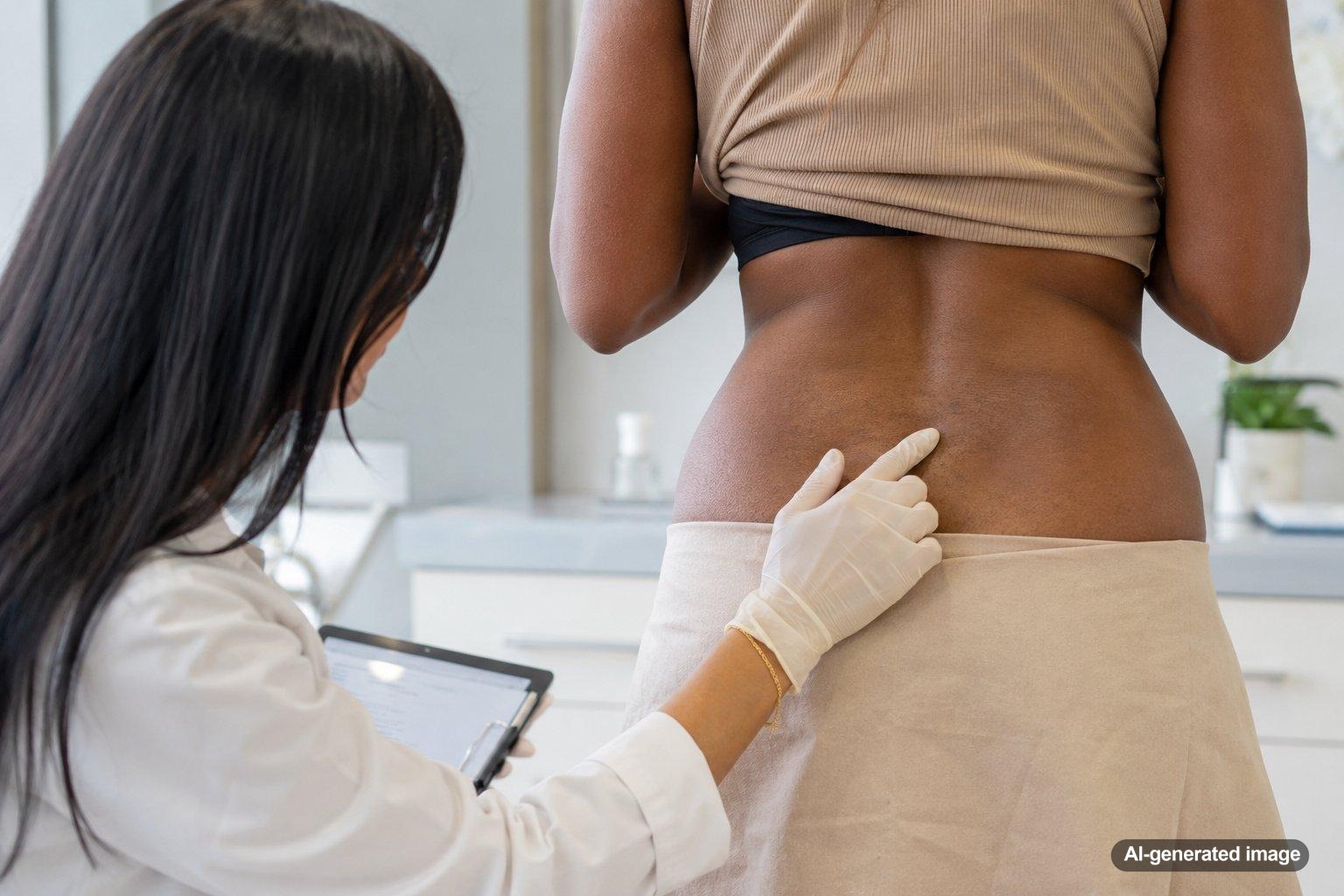
Unwanted hair on the lower back and sacral area can be difficult to manage with shaving, waxing, or depilatory products. The location may be hard to reach, and repeated removal can contribute to irritation, bumps, or inconsistent results. Excel HR laser hair reduction offers a professional option for gradually reducing hair growth in this area.
Treatment is not identical for every person. Hair color, hair thickness, skin tone, medical history, sun exposure, and previous reactions all influence how a dermatologist approaches the area. A consultation helps determine whether treatment may be appropriate and how the settings should be selected.
Quick answer
- Excel HR uses targeted laser energy to treat pigment within active hair follicles.
- The lower back and sacral area can usually be treated during the same appointment when clinically appropriate.
- Multiple sessions are commonly needed because hair grows in cycles.
- Results vary based on hair color, density, skin tone, hormones, and treatment consistency.
- A dermatologist should evaluate the skin first, especially when the area contains moles, scars, active irritation, or other skin concerns.
What is Excel HR hair reduction?
Excel HR is a professional laser platform used for hair reduction. The device directs controlled energy toward pigment in the hair follicle while the clinician adjusts the treatment settings for the person’s skin and hair characteristics.
Laser treatment is designed to reduce future growth rather than simply remove the visible portion of each hair. Hair must be in an active growth stage for the follicle to respond effectively, which is why treatment is generally planned as a series rather than a single visit.
Darker, coarser hair often provides a clearer target for laser energy than very light, gray, white, or red hair. During a consultation, the clinician can examine the hair and explain what level of improvement may be realistic.
Why treat the lower back and sacral area?
The lower back is difficult for many people to shave evenly without assistance. The sacral area, located near the base of the spine and above the buttocks, may also develop concentrated or coarse hair that is hard to maintain with temporary methods.
Common reasons people consider professional hair reduction in this region include:
- Difficulty reaching the area for routine shaving
- Frequent stubble or rapid regrowth
- Skin irritation after shaving or waxing
- Recurring ingrown-looking bumps
- A preference for less frequent hair maintenance
- A desire to create a more even transition between the lower back and surrounding areas
The treatment boundary can be customized. Some people want only a small central patch addressed, while others prefer a broader lower-back treatment zone. Clear communication during the consultation helps the clinician create a natural-looking treatment plan.
What happens during treatment?
Before treatment begins, the area is examined and the planned boundaries are confirmed. The hair is generally trimmed or shaved close to the skin so the laser can target the follicle without wasting energy on long surface hair.
Protective eyewear is used during the procedure. The handpiece is then moved systematically across the selected area. Patients may notice brief warmth, snapping, or prickling sensations as individual sections are treated. Comfort varies based on hair density, sensitivity, device settings, and the size of the treatment area.
An appointment for a limited sacral area may be relatively focused, while a broader lower-back session may require more time. Your clinician can provide a more personalized estimate after seeing the treatment zone.
How many sessions may be needed?
Laser energy is most effective when hair is in an active growth phase, but not every follicle enters that phase at the same time. For this reason, a series of appointments is commonly recommended.
The number and spacing of sessions vary. Hair thickness, density, growth patterns, hormones, skin tone, and previous hair-removal habits may all affect the plan. Some people may also choose occasional maintenance sessions if new growth appears over time.
It is important to keep expectations realistic. The goal is meaningful hair reduction and easier maintenance, but no responsible clinician can predict an identical outcome for every patient.
How to prepare for an appointment
Your clinician will provide instructions based on your skin and medical history. Common preparation guidance may include:
- Avoid waxing, tweezing, or threading the treatment area before the appointment because the follicle needs to remain present.
- Shave the area as instructed, usually close enough that little hair remains above the skin.
- Avoid tanning and significant sun exposure before treatment.
- Do not apply self-tanner to the treatment area.
- Tell the clinician about medications, supplements, topical products, and previous reactions to light-based procedures.
- Arrive with clean skin that is free of lotion, oil, fragrance, or deodorizing products.
Do not use strong exfoliating products or attempt an aggressive close shave if the skin is already irritated. Contact the office for individualized instructions when you are unsure how to prepare.
What to expect afterward
Temporary redness, warmth, mild swelling around follicles, or sensitivity can occur after laser hair treatment. These effects are often limited, but the intensity and duration vary from person to person.
Conservative aftercare may include keeping the area cool, avoiding friction, wearing loose clothing, and using gentle skin care. Because the lower back can rub against waistbands, gym clothing, belts, and upholstered seating, it may help to minimize pressure and heat immediately after treatment.
Follow the clinician’s instructions regarding exercise, hot tubs, saunas, swimming, exfoliation, and sun exposure. Do not pick or scrub treated follicles as hairs begin to shed.
Who may need additional evaluation?
A dermatologist should examine the area before treatment when there are active rashes, open skin, infection, unexplained irritation, recent sunburn, a history of unusual scarring, or changing skin growths. Moles and pigmented lesions may need to be avoided or assessed separately rather than treated directly with a hair-reduction laser.
Also tell your clinician if you take medication that may increase light sensitivity, have recently used prescription skin treatments, are pregnant or nursing, or have experienced pigment changes after previous procedures. This information helps the clinician decide whether treatment should proceed, be modified, or be postponed.
When to contact a dermatologist after treatment
Contact the treating office if you develop significant or worsening pain, blistering, crusting, marked swelling, spreading redness, drainage, or unexpected changes in skin color. Prompt evaluation allows the dermatologist to assess the reaction and recommend appropriate care.
If a mole, lesion, or persistent bump in the treatment area looks new or has changed, it should be evaluated independently. Laser hair reduction is not a substitute for a medical skin examination.
Frequently asked questions
Can the lower back and sacral area be treated together?
They may be treated during the same session when the skin, hair pattern, and treatment plan make that appropriate. The clinician will confirm the boundaries before beginning.
Will I need someone to shave the area for me?
Because the lower back is difficult to reach, some patients need assistance. Ask the office how closely the area should be shaved and whether trimming can be handled during the appointment.
Can treatment help with bumps caused by shaving?
Reducing coarse hair growth may help decrease the need for frequent shaving, which may reduce a common trigger for irritation. Existing bumps should still be evaluated, particularly if they are painful, persistent, or inflamed.
Does treatment work on light-colored hair?
Laser hair reduction generally depends on pigment within the hair. Gray, white, blond, and some red hairs may not respond as predictably. A consultation is the best way to assess whether the hair provides a suitable target.
Can I exercise after a lower-back session?
Your clinician may recommend temporarily avoiding strenuous exercise, heat, sweating, and tight waistbands because these can irritate recently treated skin. Follow the specific aftercare instructions provided at your visit.
Can I expose my lower back to the sun between sessions?
Protecting the treatment area from tanning and strong sun exposure is important. Tell the office about any recent sun exposure before your next appointment so the clinician can determine whether it is appropriate to proceed.
At Waverly DermSpa, we offer Excel HR Laser Hair Removal and can help you understand whether it may be appropriate.
Ready to get help?
Schedule an appointment or send a message and our team will get back to you.
Prefer to call? 954-666-3736
This article is for educational purposes and is not medical advice. For diagnosis and personalized treatment, please book an appointment with a board-certified dermatologist.
Sources & further reading
- American Academy of Dermatology (AAD) – Laser hair removal: Overview
- U.S. Food and Drug Administration (FDA) – Medical Lasers
