

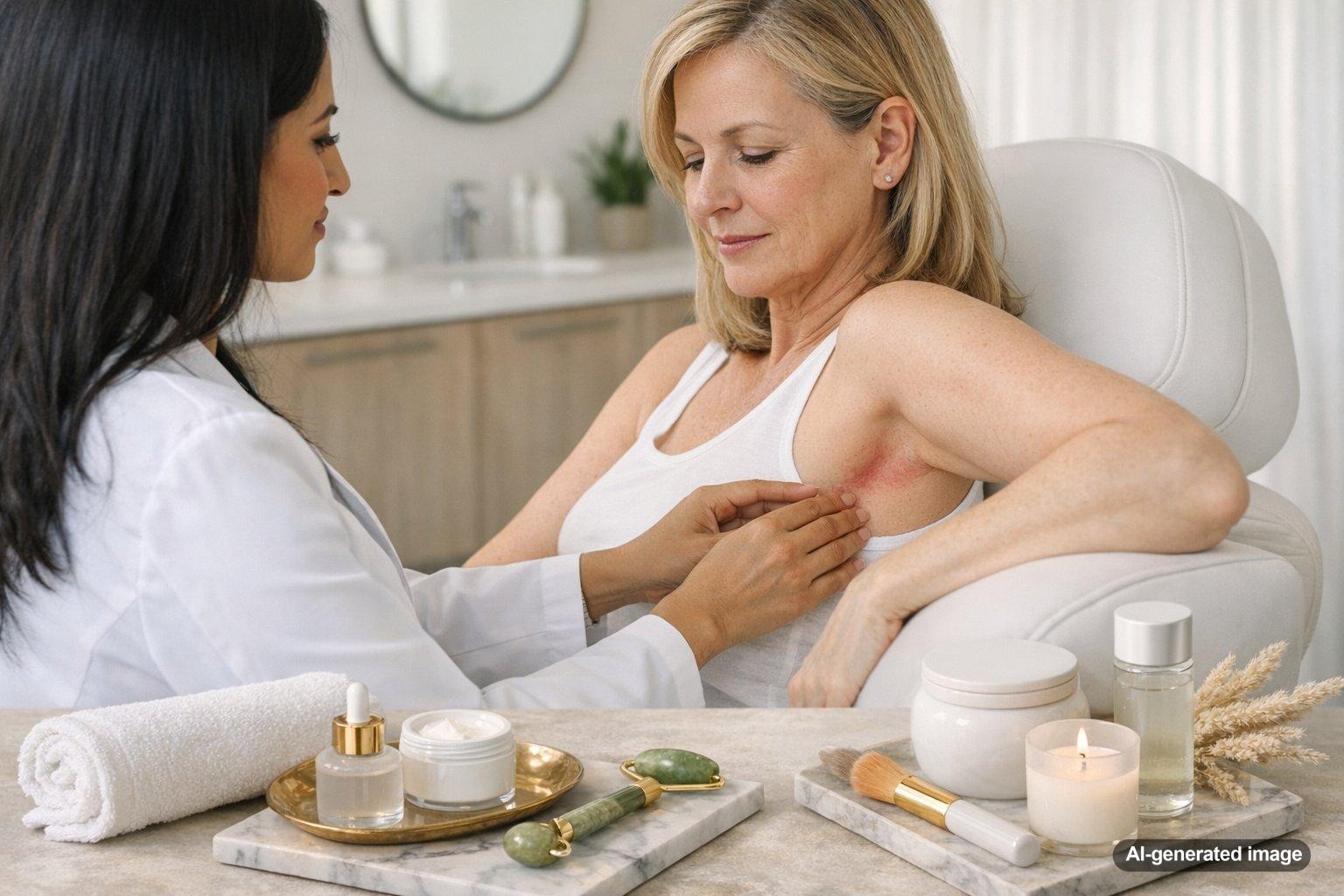
A rash in the skin folds can be frustrating, especially when it looks like fungus but does not seem to behave the way you expect. Erythrasma is one possible reason: a superficial bacterial skin condition that often appears in warm, moist areas such as the groin, underarms, under the breasts, between the toes, or other folds where skin rubs together.
One clue dermatologists may use is a Wood lamp exam, where erythrasma can show a coral-red glow. That glow does not replace a medical evaluation, but it can help distinguish erythrasma from fungal rashes, irritation, eczema, or other look-alike conditions.
Quick answer
- Erythrasma is a superficial bacterial skin condition that commonly affects skin folds.
- It can look reddish-brown, pink-brown, or tan, often with fine scale and well-defined edges.
- It may be mistaken for a fungal rash because it often appears in similar warm, moist areas.
- A dermatologist may use a Wood lamp, skin exam, or other testing to help clarify what is going on.
- Professional options may include topical or oral prescription treatments when appropriate.
What erythrasma is
Erythrasma is associated with Corynebacterium minutissimum, a type of bacteria that can overgrow in skin folds. It is usually described as a superficial infection of the outer skin, which means it tends to stay near the surface rather than behaving like a deeper skin infection.
The rash may look like flat, discolored patches with subtle scaling. In some people, it is itchy or mildly uncomfortable. In others, it is mostly a color or texture change that becomes more noticeable after sweating, friction, travel to a humid climate, or changes in routine.
Why it can mimic fungus
Erythrasma and fungal rashes can both favor areas where skin stays warm and damp. That overlap is why the location alone is not always enough to tell them apart. The groin, inner thighs, underarms, skin under the breasts, belly folds, and toe webs are common places where several different rashes can look similar.
The coral-red fluorescence under a Wood lamp can be a helpful clue for erythrasma, but it is only one part of the evaluation. A dermatologist can consider the appearance, location, symptoms, health history, prior treatments, and whether another condition may be present at the same time.
Common causes or triggers
- Warm, humid weather or travel to a humid environment
- Sweating and moisture that remains in skin folds
- Friction from clothing, activity, or skin-on-skin contact
- Areas that stay occluded, such as groin folds or toe webs
- Diabetes or other factors that may change skin susceptibility
- Repeated irritation from harsh cleansing or over-scrubbing
What you can do at home
While a dermatologist should evaluate a persistent, spreading, painful, or uncertain rash, gentle skin-fold care may help reduce irritation and moisture. Keep the area clean, dry thoroughly after bathing, change out of sweaty clothing, and choose breathable fabrics when possible.
- Avoid aggressive scrubbing, which can irritate already-sensitive skin.
- Do not keep layering multiple over-the-counter products if the rash is not improving.
- Consider whether friction, sweating, tight clothing, or travel may be contributing.
- Seek evaluation before using prescription-strength creams, antibiotics, or steroid creams in sensitive areas.
Professional options
A dermatologist can evaluate whether the rash pattern fits erythrasma or another condition. In the office, this may include a focused skin exam, Wood lamp evaluation, or additional testing if the diagnosis is unclear.
Common professional options can include prescription topical medication, oral medication for more extensive cases, and guidance to reduce recurrence. If there is concern for a fungal rash, eczema, psoriasis, contact dermatitis, or another skin condition, your clinician can help choose a plan that matches the actual cause rather than guessing.
When to see a dermatologist
- The rash is painful, spreading, draining, blistering, or rapidly changing.
- It keeps coming back or has not improved with basic skin care.
- It is in the groin, under the breasts, between the toes, or another sensitive area and you are unsure what it is.
- You have diabetes, immune suppression, or frequent skin infections.
- You have used over-the-counter antifungal creams without clear improvement.
- The area is becoming increasingly red, warm, swollen, or tender.
FAQ
Is erythrasma a fungal infection?
No. Erythrasma is associated with bacteria, not fungus. Because it often appears in warm, moist skin folds, it can look similar to fungal rashes, which is why evaluation can be helpful.
What does coral-red fluorescence mean?
Under a Wood lamp, erythrasma may glow coral-red due to compounds produced by the bacteria. This finding can support the diagnosis, but your dermatologist will consider the full clinical picture.
Can erythrasma happen in the groin?
Yes. The groin is one of the areas where erythrasma may appear, along with the underarms, under-breast folds, toe webs, and other areas where moisture and friction collect.
Should I keep using antifungal cream if it is not improving?
If a rash is not improving or keeps returning, it is worth getting checked. Some rashes that resemble fungus may have a different cause, and using the wrong product for too long may delay the right guidance.
Is erythrasma contagious?
Erythrasma is generally discussed as an overgrowth of bacteria on the skin rather than a highly contagious rash. Still, avoid sharing towels, keep affected areas clean and dry, and seek evaluation if the rash is persistent or spreading.
Ready to get help?
Schedule an appointment or send a message and our team will get back to you.
Prefer to call? 954-666-3736
Disclaimer
This article is for educational purposes and is not medical advice. For diagnosis and personalized treatment, please book an appointment with a board-certified dermatologist.
