

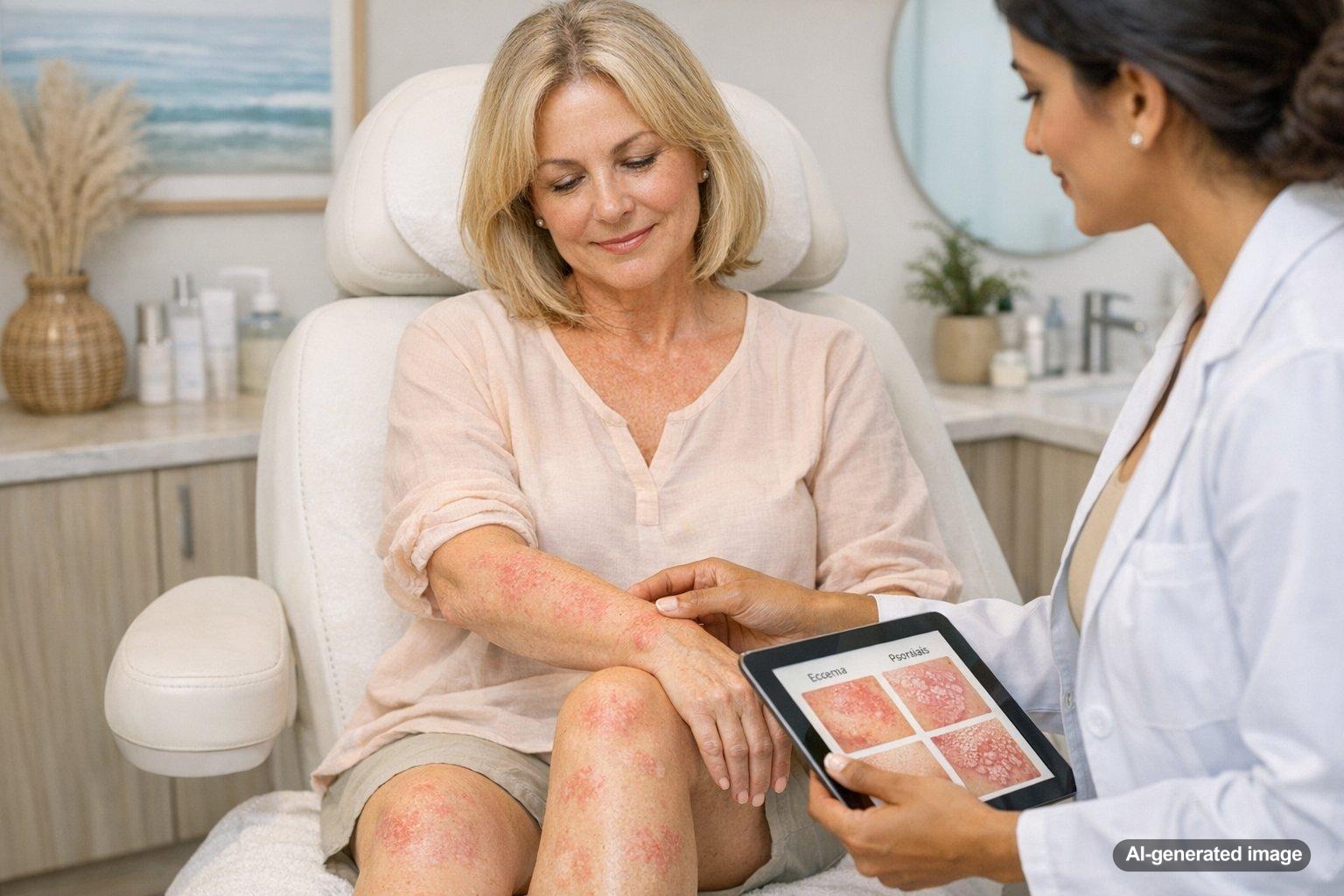
Yes, it is possible for someone to have both eczema and psoriasis, although they are different inflammatory skin conditions and they can also mimic each other. That is why a new, stubborn, painful, or confusing rash is worth having evaluated rather than guessing from photos alone.
Eczema often centers on an impaired skin barrier and intense itch, while psoriasis is more closely tied to immune-driven skin cell turnover that can create thicker, scaly plaques. Some people have features of both, and treatment choices can differ depending on which condition is active and where it appears.
Quick answer
- Yes, eczema and psoriasis can occur in the same person.
- They may appear in different body areas, overlap in the same region, or be mistaken for one another.
- Eczema is often very itchy, dry, and sensitive, while psoriasis more often forms thicker, well-defined, scaly patches.
- A dermatologist can evaluate the pattern, history, and skin findings, and may recommend testing or biopsy in select cases.
- Home care can support the skin barrier, but persistent or worsening symptoms should be checked.
What eczema and psoriasis are
Eczema is a broad term for inflammatory rashes that often involve dryness, itching, irritation, and a vulnerable skin barrier. Atopic dermatitis is one of the most common types of eczema, but contact dermatitis, hand eczema, and other forms may also occur.
Psoriasis is a chronic, immune-mediated inflammatory condition that can cause raised, scaly patches. It commonly affects areas such as the elbows, knees, scalp, and nails, though it can appear in many patterns and on many areas of the body.
How they can look alike, and how they may differ
| Feature | Eczema | Psoriasis |
|---|---|---|
| Common feel | Often very itchy, dry, irritated, or sensitive | May itch, burn, feel sore, or feel tight |
| Common look | Dry patches, redness or discoloration, cracking, weeping, or rough texture | Thicker, more defined plaques with scale, though appearance varies by skin tone and location |
| Common locations | Flexural areas, hands, face, eyelids, neck, or areas exposed to irritants | Scalp, elbows, knees, lower back, nails, or skin folds |
| Why evaluation matters | Triggers, allergies, irritants, and barrier repair may be important | Prescription topicals, light-based options, or systemic medicines may be discussed when appropriate |
Common causes or triggers
Triggers are personal, and the same person may notice different patterns at different times. Common factors that can aggravate eczema or psoriasis include:
- Dry air, frequent handwashing, harsh soaps, fragrance, or irritating skin products
- Stress, poor sleep, sweating, heat, or friction from clothing
- Infections or illness, which can sometimes affect inflammatory skin conditions
- Skin injury, scratching, or repeated rubbing
- Certain medications or health changes, depending on the individual
- Seasonal shifts, travel, climate changes, or changes in routine
What you can do at home
While home care cannot replace an exam, gentle skin support can make many inflammatory rashes feel more manageable.
- Use a fragrance-free cleanser and avoid scrubbing.
- Apply a bland, fragrance-free moisturizer, especially after bathing or handwashing.
- Keep showers brief and lukewarm rather than hot.
- Avoid picking, scratching, or peeling scale, which can further irritate the skin.
- Track possible triggers, including new skincare, detergents, travel, stress, illness, and seasonal changes.
- Use sunscreen and sun-protective habits, especially in South Florida, because inflamed skin can be more reactive.
Professional options
A dermatologist can look at the distribution, texture, scale, symptoms, medical history, and any nail or scalp changes. When the diagnosis is not clear, your clinician may consider additional evaluation, such as checking for contact allergy or performing a small biopsy.
Common office-guided options may include prescription creams or ointments, barrier-supportive skincare guidance, anti-inflammatory treatments, light-based therapy for select psoriasis cases, or systemic medications when symptoms are more widespread or difficult to manage. The right approach depends on the diagnosis, severity, body area, medical history, and personal preferences.
When to see a dermatologist
It is worth booking a dermatology visit if a rash is new, recurring, spreading, painful, crusting, bleeding, interfering with sleep, affecting the face or genitals, involving the nails or scalp, or not improving with gentle care. You should also seek care promptly if there are signs of infection, such as increasing warmth, swelling, drainage, fever, or rapidly worsening discomfort.
For snowbirds and international visitors in Fort Lauderdale, bringing photos of flares, a list of current medications, and the products you use can make the visit more productive.
FAQ
Can eczema turn into psoriasis?
Eczema does not simply turn into psoriasis, but a person can have both conditions or may have a rash that was difficult to identify at first. A dermatologist can help clarify what is happening.
Can the same cream treat both?
Some prescription anti-inflammatory creams may be used in both conditions, but the strength, location, duration, and overall plan can differ. It is best to use prescription products as directed by your clinician.
Is it possible to have eczema on one area and psoriasis somewhere else?
Yes. For example, someone may have hand eczema related to irritants and psoriasis on the scalp or elbows. The pattern matters.
Can stress make both conditions worse?
Stress can be associated with flares for many inflammatory skin conditions, but it is usually one part of a larger picture. Skin care, sleep, irritant avoidance, and medical treatment may all matter.
Should I stop all skincare products during a flare?
Not necessarily. Simplifying to gentle, fragrance-free basics may help, but stopping prescribed medication or starting new active ingredients without guidance can be counterproductive. A dermatologist can help you decide what to keep, pause, or adjust.
Ready to get help?
Schedule an appointment or send a message and our team will get back to you.
Prefer to call? 954-666-3736
Disclaimer
This article is for educational purposes and is not medical advice. For diagnosis and personalized treatment, please book an appointment with a board-certified dermatologist.
Sources & further reading
- National Psoriasis Foundation – Psoriasis vs Eczema: What’s The Difference?
- American Academy of Dermatology (AAD) – Eczema Resource Center
- National Institute of Arthritis and Musculoskeletal and Skin Diseases (NIAMS) – Psoriasis Symptoms, Causes, and Risk Factors
- National Eczema Association – Atopic Dermatitis (Eczema): Symptoms, Causes and Treatment
