

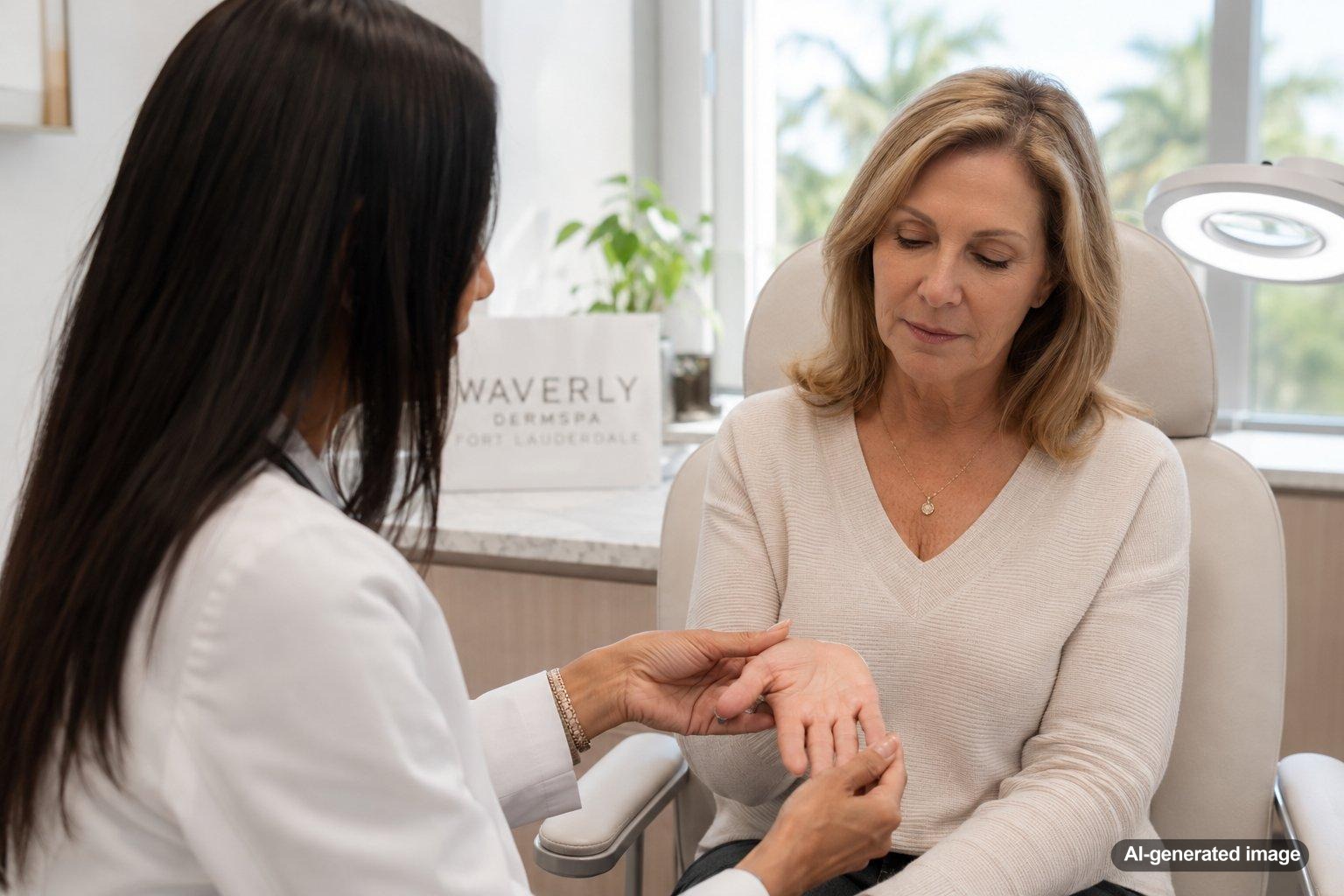
Small, deep, intensely itchy blisters on the palms, fingers, or soles can feel surprisingly disruptive, especially when your hands are constantly in use or your feet are irritated by heat, sweat, or shoes. Dyshidrotic eczema, also called pompholyx, is one possible cause of this pattern, but it is not the only condition that can cause blisters on the hands or feet.
Because the skin on the palms and soles is thicker, these blisters can feel firm or tucked beneath the surface. A dermatologist can evaluate the pattern, review possible triggers, and help separate eczema from look-alike conditions such as infection, allergic contact dermatitis, or other blistering rashes.
Quick answer
- Dyshidrotic eczema commonly affects the palms, sides of the fingers, soles, or toes.
- It may cause small, deep-seated blisters with itching, burning, stinging, or tenderness.
- Flares can be associated with sweating, stress, heat, irritants, allergies, or frequent wet work.
- Gentle skin care, fragrance-free ointment or cream, and avoiding known triggers may help reduce irritation.
- Frequent, painful, spreading, draining, or uncertain blisters should be checked by a dermatologist.
What it is
Dyshidrotic eczema is a type of eczema that tends to appear in small clusters of fluid-filled blisters on the hands, feet, or both. Many people describe the itch as deep or prickly before the blisters become obvious. After a flare settles, the affected skin may peel, crack, or feel tender while the skin barrier recovers.
The condition can come and go. Some people notice only occasional flares, while others have recurring episodes that interfere with work, exercise, sleep, or daily routines. It is not something to self-diagnose from appearance alone, especially if this is a new rash or if the blisters look infected.
Common causes or triggers
Dyshidrotic eczema does not always have one clear trigger. A dermatologist may ask about timing, exposures, hobbies, work tasks, sweating, footwear, handwashing, products, allergies, and whether the rash occurs on one side or both sides.
- Heat and sweating: Warm weather, exercise, occlusive gloves, and tight shoes can aggravate some flares.
- Stress: Emotional stress can be associated with eczema activity in some people.
- Irritants: Frequent handwashing, cleaning products, detergents, solvents, and wet work may weaken the skin barrier.
- Contact allergies: Metals such as nickel or cobalt, fragrances, preservatives, rubber chemicals, and other allergens can contribute for some patients.
- Foot factors: Sweaty footwear, friction, or possible fungal involvement may need evaluation when the feet are involved.
- Underlying eczema tendency: A personal or family history of eczema, sensitive skin, or allergies may make some people more prone to flares.
What you can do at home
At-home care should focus on calming irritation and protecting the skin barrier. Choose fragrance-free cleansers, keep showers or handwashing lukewarm rather than hot, and apply a bland cream or ointment after washing. For hands, a thicker moisturizer before bed can be helpful, especially if peeling or cracking follows a flare.
- Use protective gloves for cleaning or wet work, and consider a cotton liner if sweating inside gloves is a problem.
- Avoid picking or intentionally opening blisters, which may increase irritation or infection risk.
- Switch to fragrance-free hand soaps, laundry products, and moisturizers when possible.
- Keep hands and feet dry after washing, swimming, sweating, or wearing closed shoes.
- Track possible triggers, including products, jewelry, workplace exposures, stress, heat, and footwear.
- Seek care rather than repeatedly using strong over-the-counter products on broken or painful skin.
Professional options
Professional care begins with confirming what is causing the blisters. Depending on the pattern, a dermatologist may consider eczema, contact allergy, fungal infection, bacterial infection, viral causes, or other blistering conditions. Testing is not always needed, but patch testing, fungal testing, or other evaluation may be useful in selected cases.
Common medical options can include prescription anti-inflammatory treatments, short-term strategies for uncomfortable flares, treatment of infection if present, and guidance on barrier repair and trigger reduction. If contact allergy is suspected, identifying and avoiding the allergen can be an important part of long-term management.
When to see a dermatologist
It is worth getting checked if the blisters are new, recurring, painful, spreading, one-sided, draining, crusting, or not improving with gentle care. You should also seek evaluation if you have fever, increasing warmth, significant swelling, red streaking, severe pain, or if the rash interferes with walking, working, sleeping, or caring for yourself.
A board-certified dermatologist can help determine whether the pattern fits dyshidrotic eczema or another condition and can recommend a plan based on your skin, medical history, and exposures. This is especially important before using prescription-strength treatments or if you have frequent flares.
FAQ
Is dyshidrotic eczema contagious?
Dyshidrotic eczema itself is not considered contagious. However, some infections can mimic or complicate blistering rashes, which is one reason new or worsening blisters should be evaluated.
Why are the blisters so itchy?
Eczema involves skin inflammation and barrier disruption, which can create intense itching, burning, or prickling sensations. The thicker skin of the palms and soles can make the blisters feel deep and tense.
Should I pop the blisters?
It is usually better not to pick, scratch, or open blisters on your own. Opening the skin can increase discomfort and may raise the risk of infection.
Can dyshidrotic eczema affect only the feet?
It can involve the soles or toes, but foot blisters have several possible causes. A dermatologist can help distinguish eczema from fungal infection, friction, allergic reactions, and other conditions.
Can skincare products trigger a flare?
They can for some people, especially if a product contains fragrance, harsh surfactants, preservatives, or other irritating ingredients. Fragrance-free, simple products are often a safer starting point for sensitive skin.
Ready to get help?
Schedule an appointment or send a message and our team will get back to you.
Prefer to call? 954-666-3736
Disclaimer
This article is for educational purposes and is not medical advice. For diagnosis and personalized treatment, please book an appointment with a board-certified dermatologist.
Sources & further reading
- American Academy of Dermatology (AAD) – Eczema types: Dyshidrotic eczema signs and symptoms
- American Academy of Dermatology (AAD) – Eczema types: Dyshidrotic eczema diagnosis and treatment
- National Eczema Association – Dyshidrotic Eczema: Symptoms, Causes & Treatment
- DermNet – Dyshidrotic eczema (Pompholyx, Vesicular Hand Eczema)
