

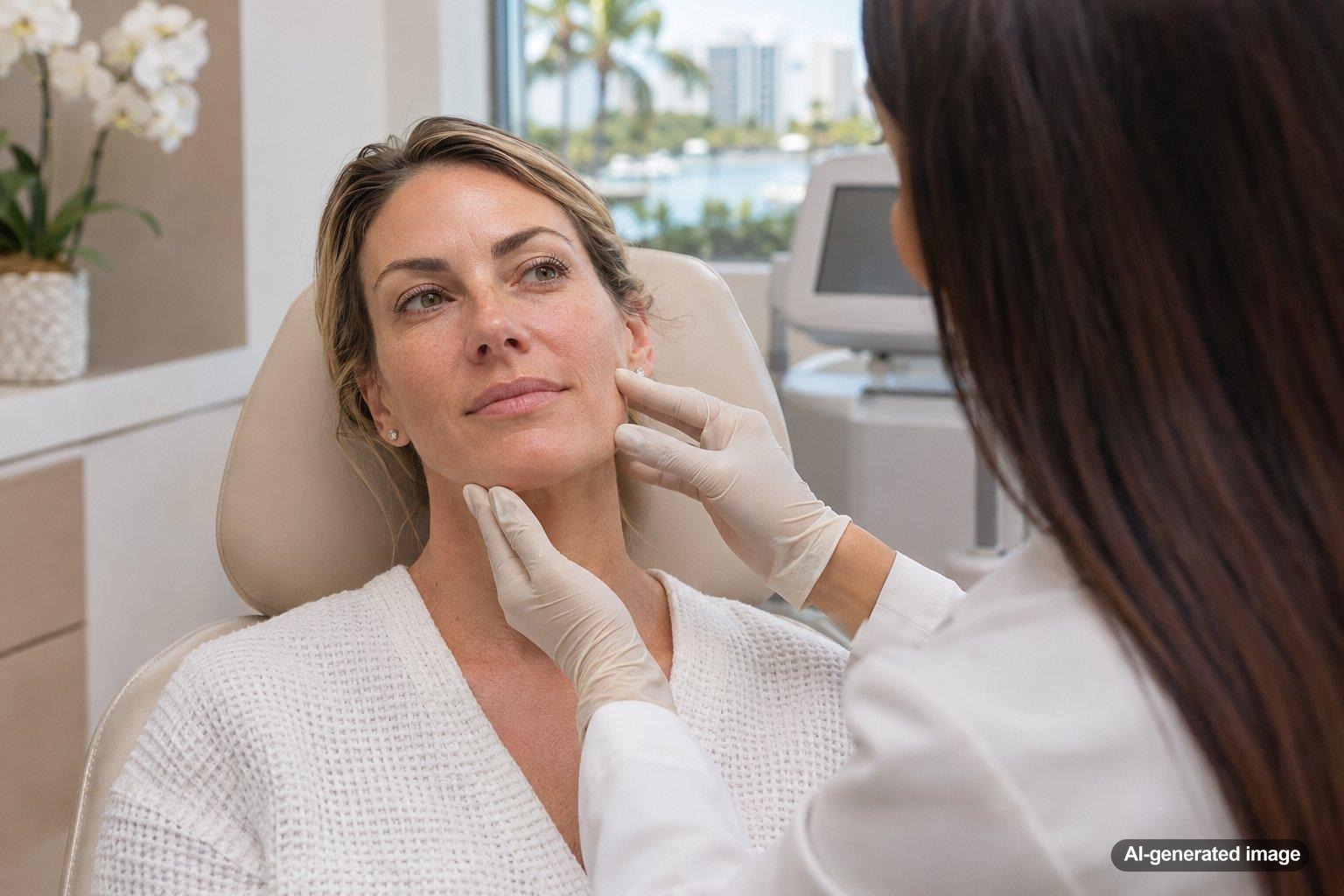
If you’re considering facial skin tightening but feel hesitant about discomfort, you may be wondering whether XERF hurts less than Thermage. XERF is designed with comfort-focused cooling and adjustable energy delivery, and some patients describe it as more tolerable than traditional radiofrequency treatments. However, there is not enough direct comparative research to establish that XERF consistently causes less pain than Thermage.
Both technologies use radiofrequency energy to warm tissue beneath the skin and encourage collagen remodeling. The experience can vary depending on the treatment area, individual sensitivity, device settings, and clinician technique. Understanding these differences can help you approach a consultation with realistic expectations rather than relying on descriptions of either procedure as completely painless.
Quick Answer: Is XERF Less Painful Than Thermage?
- XERF may feel more comfortable for some patients. Its cooling system and adjustable treatment settings are intended to help manage heat-related discomfort.
- Thermage can produce noticeable warmth or brief intense heating sensations. Modern Thermage FLX technology also incorporates cooling and vibration features to improve comfort.
- Neither treatment is necessarily painless. Individual experiences vary, particularly over sensitive or bony facial areas.
- There is no established head-to-head evidence proving one is consistently less painful. Patient testimonials and separate clinical studies cannot reliably determine which device is more comfortable.
- Clinician experience matters. Appropriate patient selection, energy settings, and communication during treatment can influence comfort and safety.
How Do XERF and Thermage Tighten Facial Skin?
XERF and Thermage belong to the same broad category of noninvasive radiofrequency skin-tightening procedures. Unlike treatments that require needles to deliver energy beneath the surface, these systems apply radiofrequency energy through a handpiece positioned against the skin.
The energy generates controlled heating within treated tissue. This heating can stimulate processes involved in collagen remodeling, potentially improving the appearance of mild skin laxity over time. The degree of visible improvement varies, and neither procedure reproduces the lifting or tissue repositioning possible with surgery.
How XERF Works
XERF uses a dual-frequency monopolar radiofrequency system with 6.78 MHz and 2 MHz energy delivery. Its design provides treatment options intended to address different tissue depths. An integrated cooling system helps protect the skin surface and manage treatment sensations.
During treatment, patients may experience alternating warmth and cooling. Some describe a heated massage-like sensation, while others notice occasional sharper bursts of heat, particularly near the jawline or cheekbones. Adjustable parameters allow the clinician to respond to treatment needs and patient tolerance.
How Thermage Works
Thermage FLX uses monopolar radiofrequency energy at 6.78 MHz to heat tissue beneath the skin. Its treatment system combines energy delivery with surface cooling and vibration intended to make the experience more tolerable.
Patients may describe Thermage as a sequence of warming pulses, with brief moments of stronger heat. Some find the sensations manageable, while others experience greater discomfort. Older accounts of Thermage pain do not necessarily reflect the experience with current equipment and individualized treatment protocols.
XERF vs Thermage: Comparing Treatment Comfort
| Comparison | XERF | Thermage FLX |
|---|---|---|
| Energy technology | Dual-frequency monopolar radiofrequency | Single-frequency monopolar radiofrequency |
| Typical sensations | Warmth, cooling, and occasional localized heat | Warming pulses with possible brief intense heat |
| Comfort features | Integrated adjustable cooling | Surface cooling and vibration |
| Pain management | Individualized settings and cooling; numbing needs vary | Individualized settings and comfort features; numbing needs vary |
| Evidence of lower pain | Not established as less painful in direct comparative studies | Not established as less painful in direct comparative studies |
The important distinction is that comfort features describe how a device attempts to manage treatment sensations. They do not establish how every patient will feel. Comparing testimonials from different providers or pain scores from separate studies can be misleading because treatment protocols and patient characteristics may differ substantially.
Why Does Radiofrequency Skin Tightening Sometimes Hurt?
Radiofrequency treatments rely on tissue heating, making some degree of warmth an expected part of the experience. The intensity of that sensation depends on several factors:
- Treatment location: Areas with less cushioning beneath the skin, including portions of the jawline and cheekbones, may feel more sensitive.
- Energy settings: Different treatment parameters can change the intensity of perceived heating.
- Individual sensitivity: Pain tolerance varies considerably between patients.
- Skin and tissue characteristics: Facial anatomy, tissue thickness, and treatment history can influence the experience.
- Cooling and technique: Device-specific cooling, handpiece positioning, and appropriate energy delivery contribute to comfort.
A warm sensation does not automatically indicate a problem, but severe burning pain should not be ignored. Patients should communicate discomfort promptly rather than assuming stronger pain produces better tightening.
What Can You Do Before Treatment to Feel More Comfortable?
Preparation should focus on sharing relevant information with your dermatologist rather than trying to eliminate every possible sensation.
Before your appointment, discuss previous reactions to cosmetic procedures, current medications, recent treatments, sensitive areas, and any history of unusual skin responses. Tell your clinician about implanted electronic devices or other medical implants so the device-specific precautions can be reviewed.
Ask whether topical anesthetic is appropriate. Some XERF protocols are performed without numbing, but this is not a universal requirement or evidence that discomfort cannot occur. The approach should reflect your individual circumstances and your clinician’s assessment.
Avoid independently applying strong numbing products or changing prescribed medications in preparation for treatment. Follow the instructions provided by your treating practice.
Does Less Pain Mean Less Effective Skin Tightening?
Not necessarily. The amount of pain experienced during radiofrequency treatment is not a reliable measure of how much collagen remodeling will occur or how noticeable the final improvement may be.
Comfort and treatment effectiveness are related to more than sensation alone. Energy delivery, treatment technique, patient selection, and individual tissue response can all influence outcomes. A more uncomfortable procedure should not automatically be considered more effective.
Noninvasive radiofrequency treatments generally aim for gradual, modest improvements rather than dramatic facial lifting. Changes may become more apparent over subsequent weeks or months as tissue responds. Some people notice limited improvement, and results are not predictable from discomfort levels.
What Are the Safety Considerations and Possible Side Effects?
Both procedures involve controlled heating, so appropriate clinical evaluation is important. Temporary redness, warmth, tenderness, or mild swelling may occur after radiofrequency skin tightening. Less common but more significant complications can include thermal injury or burns.
Before selecting a device, a dermatologist can assess skin condition, facial anatomy, medical history, previous cosmetic treatments, and relevant device precautions. Particular care may be needed when evaluating patients with implanted devices or other factors identified in the manufacturer’s safety information.
Contact your treating clinician if you experience significant pain, blistering, persistent redness, or unexpected skin changes after treatment. Severe symptoms should receive prompt medical evaluation.
When Should You See a Dermatologist Before Choosing XERF or Thermage?
A consultation is especially useful if you have sensitive or reactive skin, a history of unusual responses to heat-based procedures, previous facial treatments, significant facial volume loss, or uncertainty about whether skin laxity is your primary concern.
The most appropriate treatment is not always the one described as most comfortable. A dermatologist can help distinguish mild laxity from concerns involving volume, skin texture, or more pronounced tissue descent, which may call for different approaches.
At Waverly DermSpa, we offer XERF and can help you understand whether it may be appropriate.
Frequently Asked Questions
Is XERF completely painless?
No. Although XERF includes comfort-focused cooling and some patients report relatively mild sensations, others may experience noticeable discomfort. The intensity depends on treatment settings, facial anatomy, and individual sensitivity.
Does Thermage hurt more around the jawline?
Some patients experience greater sensitivity around bony or less padded facial areas during radiofrequency treatment. This can occur with either device. A clinician can adjust the treatment approach when appropriate.
Do you need numbing cream for XERF?
Not always. Some treatment protocols are performed without topical anesthesia. Whether numbing is appropriate depends on the patient’s needs, the treatment plan, and the clinician’s judgment.
Can XERF tighten skin as effectively as Thermage?
Both technologies aim to improve the appearance of skin laxity through radiofrequency heating. However, available evidence does not establish that one consistently produces better tightening than the other. Individual results vary, and direct comparative research remains limited.
Can you return to normal activities after XERF or Thermage?
Many patients are able to resume routine activities relatively soon after noninvasive radiofrequency treatment. Temporary redness, warmth, or swelling may occur, and individual recovery instructions should come from the treating clinician.
Which treatment should you choose if you have a low pain tolerance?
Discuss your concerns openly with a dermatologist. XERF may be appealing because of its cooling design and adjustable treatment options, but it is not automatically the most comfortable choice for every patient. Your treatment goals, medical history, and individual tolerance should guide the decision.
Ultimately, XERF may offer a comfortable facial skin-tightening experience for some patients, but it would be misleading to promise that it always hurts less than Thermage. A personalized consultation is the most useful way to evaluate comfort, expected improvement, and safety together.
Ready to get help?
Schedule an appointment or send a message and our team will get back to you.
Prefer to call? 954-666-3736
Disclaimer
This article is for educational purposes and is not medical advice. For diagnosis and personalized treatment, please book an appointment with a board-certified dermatologist.
Sources & further reading
- American Academy of Dermatology (AAD) – Many ways to firm sagging skin
- Cleveland Clinic – Radio Frequency (RF) Skin Tightening
