

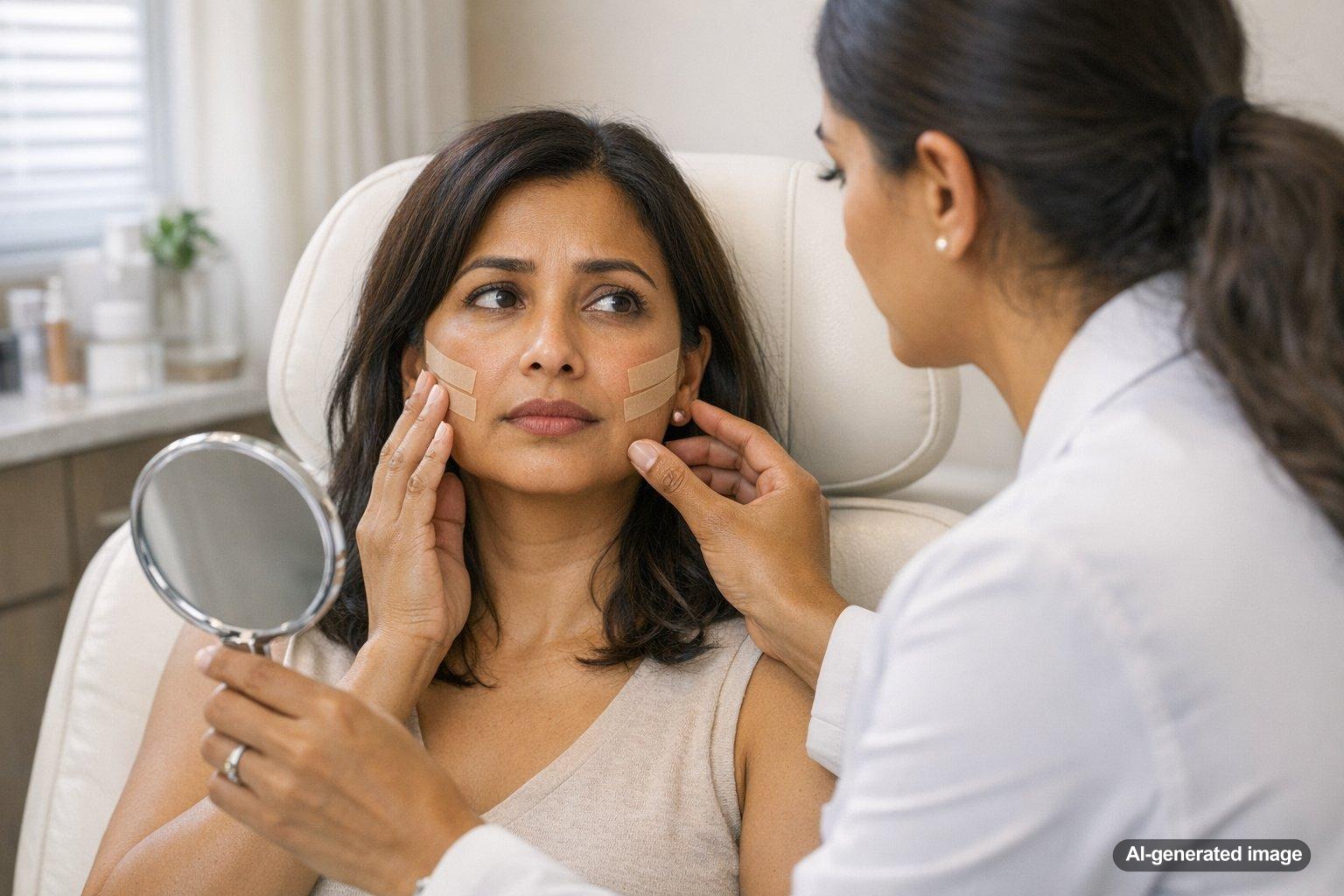
Face taping has become a popular at-home beauty habit for people hoping to smooth expression lines or create a more lifted look overnight. It can seem simple and low effort, but it also raises a fair question: can repeatedly pulling on the skin with tape make sagging worse over time?
The short answer is that face taping is not known to directly cause true facial sagging in the way natural aging, sun exposure, and collagen loss do. That said, it can irritate the skin, stress a sensitive skin barrier, and create temporary changes in how the skin looks, especially if the tape is strong, applied aggressively, or removed roughly.
Quick answer
- Face taping is unlikely to cause true long-term sagging by itself.
- Repeated pulling and rough removal can irritate skin and make it look stressed or creased.
- Strong adhesives may be especially problematic for sensitive or mature skin.
- Temporary puffiness, redness, or dryness can make skin seem looser even when it is not.
- If you are concerned about laxity, a consistent skincare plan and professional evaluation are usually more helpful.
What face taping is
Face taping usually means placing adhesive strips on areas like the forehead, cheeks, jawline, or around the mouth to hold the skin in a smoother position. Some people use it only for a short-term cosmetic effect, while others sleep in it hoping to reduce the look of fine lines. It may temporarily change the appearance of the skin, but it does not rebuild collagen or address the deeper causes of skin laxity.
Why people worry about sagging
When people talk about sagging, they are usually describing changes related to collagen loss, elastin breakdown, gravity, facial volume shifts, and sun damage. Tape does not typically create those underlying structural changes on its own. The bigger concern is that frequent tugging, irritation, or dehydration from adhesive use can leave skin looking tired, crepey, or inflamed, which may be mistaken for new sagging.
- Temporary pulling: Tight taping can briefly distort the skin and make normal movement feel restricted.
- Rough removal: Pulling tape off quickly can irritate the surface and disrupt the skin barrier.
- Dryness and redness: Irritated skin can look thinner, duller, or less smooth for a time.
- Repetitive friction: Daily adhesive use may be more noticeable on delicate or sensitive skin.
What face taping may do instead of causing true sagging
In many cases, the issue is not sagging but irritation. Adhesive products can leave behind redness, tenderness, flaking, or sensitivity. On mature skin, thin skin, or skin already prone to dryness, that irritation can make texture and fine lines stand out more. If the skin looks worse after taping, that does not necessarily mean the tape has permanently stretched it. It may simply mean the skin needs recovery time and gentler care.
What you can do at home
If you enjoy face taping, the safest approach is to be conservative. Use the lightest adhesive possible, avoid aggressive pulling, and stop if your skin becomes red, itchy, or sore. It also helps to focus on the basics that support healthier-looking skin over time.
- Keep your skin well moisturized to support the skin barrier.
- Use daily sunscreen, since sun exposure is a major factor in visible skin aging.
- Avoid taping over irritated, recently treated, or peeling skin.
- Remove tape slowly and gently, ideally with a little water or a skin-safe remover if appropriate.
- Take breaks if your skin starts feeling sensitive or reactive.
Professional options
If your real goal is smoother texture, softer lines, or firmer-looking skin, there are more reliable options than adhesive tape. Common options include skincare with proven active ingredients, in-office treatments that support collagen remodeling, and injectables for selected concerns. A dermatologist can evaluate what is contributing to the look of laxity, whether that is sun damage, volume loss, muscle movement, texture, or a combination of factors.
At Waverly DermSpa, we offer Morpheus8 and can help you understand whether it may be appropriate.
When to see a dermatologist
It is worth getting checked if you notice persistent irritation, recurring rash-like reactions, skin peeling that does not calm down, or a clear change in skin quality that does not improve after stopping the tape. You should also consider an evaluation if what seems like sagging is actually a new or rapid change, because not every skin concern is simply cosmetic aging.
FAQ
Can face taping stretch the skin?
It can temporarily pull on the skin surface, but that is not the same as causing true long-term facial sagging. Repeated rough handling is more likely to cause irritation than structural laxity.
Why does my skin look worse after removing tape?
Many people notice temporary redness, dryness, puffiness, or accentuated texture after removing adhesive. That can make skin look looser or more lined for a short time.
Is face taping safe for sensitive skin?
Not always. Sensitive skin may react more easily to adhesives, friction, and frequent removal. If your skin stings, peels, or stays red, it is best to stop and switch to gentler approaches.
What works better than face taping for long-term improvement?
A consistent routine with sunscreen and appropriate skincare, along with professional treatment options when needed, is generally more helpful for long-term skin quality than temporary mechanical lifting.
Ready to get help?
Schedule an appointment or send a message and our team will get back to you.
Prefer to call? 954-666-3736
This article is for educational purposes and is not medical advice. For diagnosis and personalized treatment, please book an appointment with a board-certified dermatologist.
