

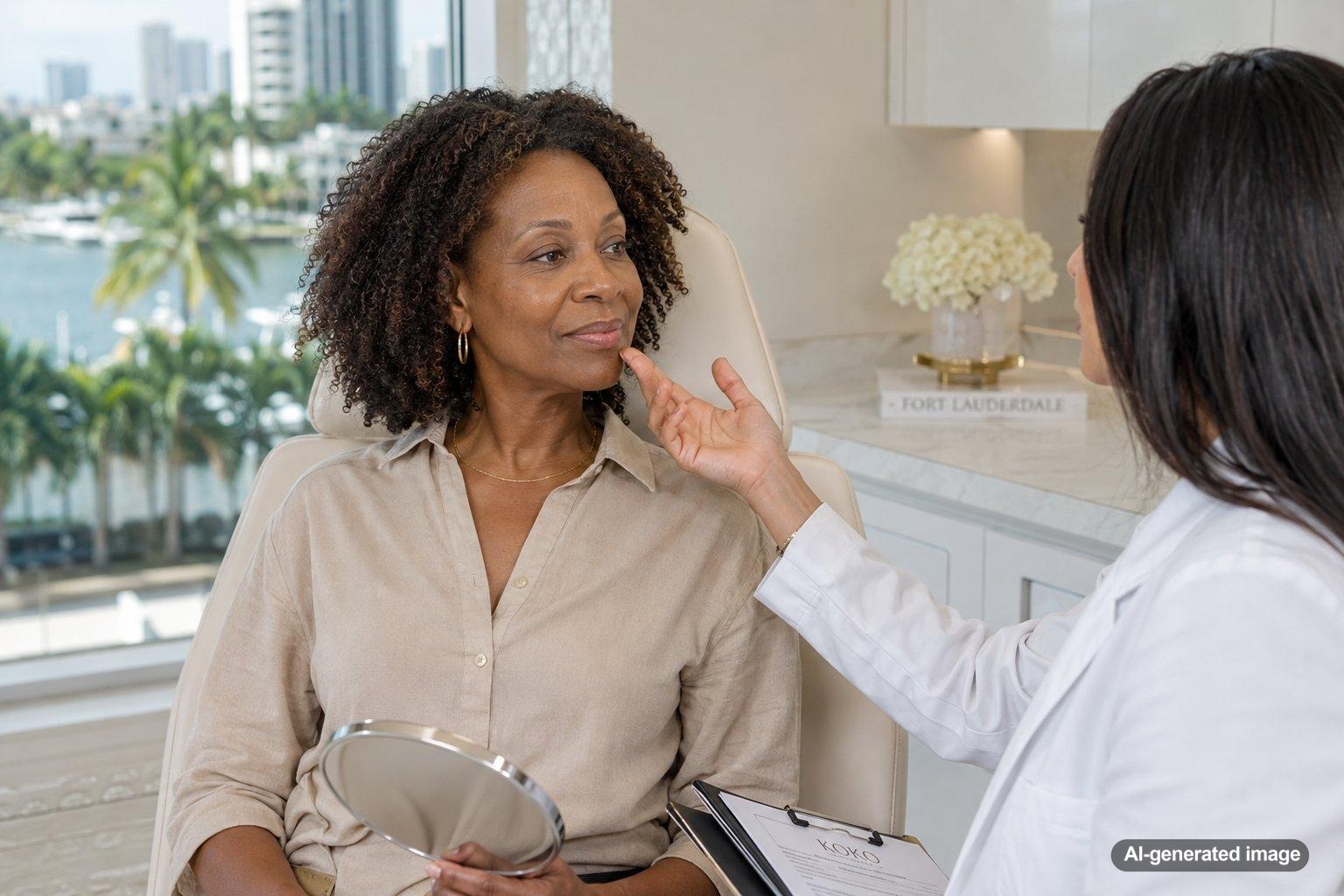
Changes in lip shape are not always about wanting dramatically fuller lips. Over time, some people notice that the border of the lips looks softer, lipstick does not stay within the edges as easily, or the visible pink portion of the lip, called the vermilion, appears less prominent. Dermal fillers may be used strategically to address these details while keeping the overall proportions of the face in mind.
For patients interested in subtle refinement, treatment can focus on definition, symmetry, and restoration rather than simply adding volume. The amount, placement, and type of filler should be selected after an in-person evaluation, since lip anatomy, skin quality, facial proportions, and personal goals vary from person to person.
Quick answer
- Dermal filler may help create a clearer transition between the lip and surrounding skin when the lip border has become less defined.
- Strategic placement may help restore some of the visible height and shape of the vermilion without making the lips look disproportionately large.
- A conservative approach generally focuses on facial balance, natural movement, and the individual’s existing lip anatomy.
- Because lip injections are medical procedures with potential risks, treatment planning should include an evaluation by an appropriately trained clinician.
What it is
Dermal filler treatment for the lips involves placing small amounts of injectable filler into carefully selected areas. Depending on the goal, a clinician may focus on the vermilion border, the body of the lip, specific areas of asymmetry, or a combination of these locations.
The vermilion border is the line where the colored portion of the lip meets the surrounding skin. When this border is crisp, it can help give the lips a naturally defined shape. Vermilion restoration focuses more broadly on supporting the visible pink portion of the lips when it appears thinner, flatter, or less pronounced than it once did.
These goals are related but not identical. Adding noticeable fullness throughout the lips is different from placing a small amount of product to emphasize an edge or restore a subtle contour. During consultation, your clinician can help determine which approach most closely matches the result you have in mind.
Common causes or triggers
Lip shape and definition can change for many reasons, and not every person who notices these changes needs or wants treatment. Factors that may influence the appearance of the lips include:
- Natural aging: Changes in facial soft tissue and skin quality may make the lips appear less defined over time.
- Individual anatomy: Some people naturally have a softer vermilion border, less visible lip height, or differences between the upper and lower lips.
- Changes in surrounding skin: Fine lines and changes in skin texture around the mouth can make the lip edge appear less distinct.
- Facial volume changes: The lips are part of the lower face, so changes in neighboring areas can influence how their size and shape are perceived.
- Previous cosmetic treatment: Existing filler or prior procedures may affect how a clinician approaches future lip treatment.
What you can do at home
Skincare cannot recreate structural lip volume, but a simple routine can help keep the lips and surrounding skin looking comfortable and well cared for. Regular use of a gentle lip moisturizer can help reduce dryness, while sun protection for the lips and surrounding skin can be a useful part of daily care. Try to avoid repeatedly picking or peeling dry lip skin, which can increase irritation.
If your main concern is definition when wearing makeup, a lip liner close to your natural lip color can temporarily emphasize the border without changing the underlying anatomy. These approaches can improve the surface appearance of the lips, but they serve a different purpose from injectable treatment.
Professional options
For someone considering injectable treatment, the first step is usually a consultation focused on anatomy and goals. Dermal fillers can be placed in different patterns depending on whether the priority is border definition, vermilion support, symmetry, overall volume, or a combination of concerns.
A subtle treatment plan may use conservative amounts to support specific areas rather than treating the entire lip uniformly. This can be especially relevant when someone likes the general size of their lips but wants more visible definition at the cupid’s bow, a smoother transition along the lip edge, or restoration of shape that has softened with time.
There is no single placement pattern or amount that is appropriate for every face. Existing lip proportions, dental and facial structure, tissue characteristics, previous filler, and desired degree of change can all influence treatment planning. Your clinician can also discuss expected swelling, aftercare, potential risks, and whether an injectable procedure is appropriate for you.
Patients who travel frequently or spend part of the year in Fort Lauderdale may also want to consider timing. It can be helpful to schedule elective injectable treatment when you have enough flexibility for an in-person assessment and any follow-up your clinician recommends rather than immediately before important travel or events.
When to see a dermatologist
A dermatologist can evaluate your lips and surrounding skin if you are unsure whether a change is cosmetic or related to another skin concern. An evaluation is also appropriate if you have persistent scaling, sores, unexplained discoloration, significant irritation, or another lip change that concerns you.
If you are considering filler, discuss your medical history, previous injectable treatments, medications, allergies, and any history of reactions or recurring lip problems with your clinician. These details can help inform a safer and more individualized treatment discussion.
After an injectable procedure, follow the instructions provided by your treating clinician. Seek prompt medical attention for severe or rapidly worsening pain, unusual skin color changes, significant swelling accompanied by concerning symptoms, or vision-related symptoms following treatment.
At Waverly DermSpa, we offer Dermal Fillers and can help you understand whether it may be appropriate.
FAQ
Can filler define the lip border without making my lips much bigger?
Potentially. Filler placement can be tailored toward border definition rather than generalized volume. The visible degree of change depends on your anatomy, the treatment plan, and how your tissues respond, so an in-person consultation is important.
What is vermilion restoration?
Vermilion restoration refers to improving the visible shape or support of the colored portion of the lip. In cosmetic treatment, the goal may be to restore subtle contour or prominence that has softened with time while maintaining natural proportions.
Is lip border filler different from traditional lip filler?
The same broad category of injectable filler may be used, but the treatment strategy can differ. A lip border-focused approach emphasizes specific edges and contours, while a traditional volumizing approach may place more emphasis on increasing fullness within the body of the lips.
How much filler is needed for lip definition?
The appropriate amount varies. Some people may be seeking a very small adjustment, while others have several concerns that require a different plan. Your clinician can recommend an approach after examining your lips, facial proportions, and any existing filler.
Will my lips still look natural?
Natural-looking treatment depends on individualized planning, conservative placement when appropriate, and respect for your existing anatomy. Tell your clinician what you want to preserve as well as what you would like to change so the treatment discussion reflects your preferences.
Ready to get help?
Schedule an appointment or send a message and our team will get back to you.
Prefer to call? 954-666-3736
This article is for educational purposes and is not medical advice. For diagnosis and personalized treatment, please book an appointment with a board-certified dermatologist.
