

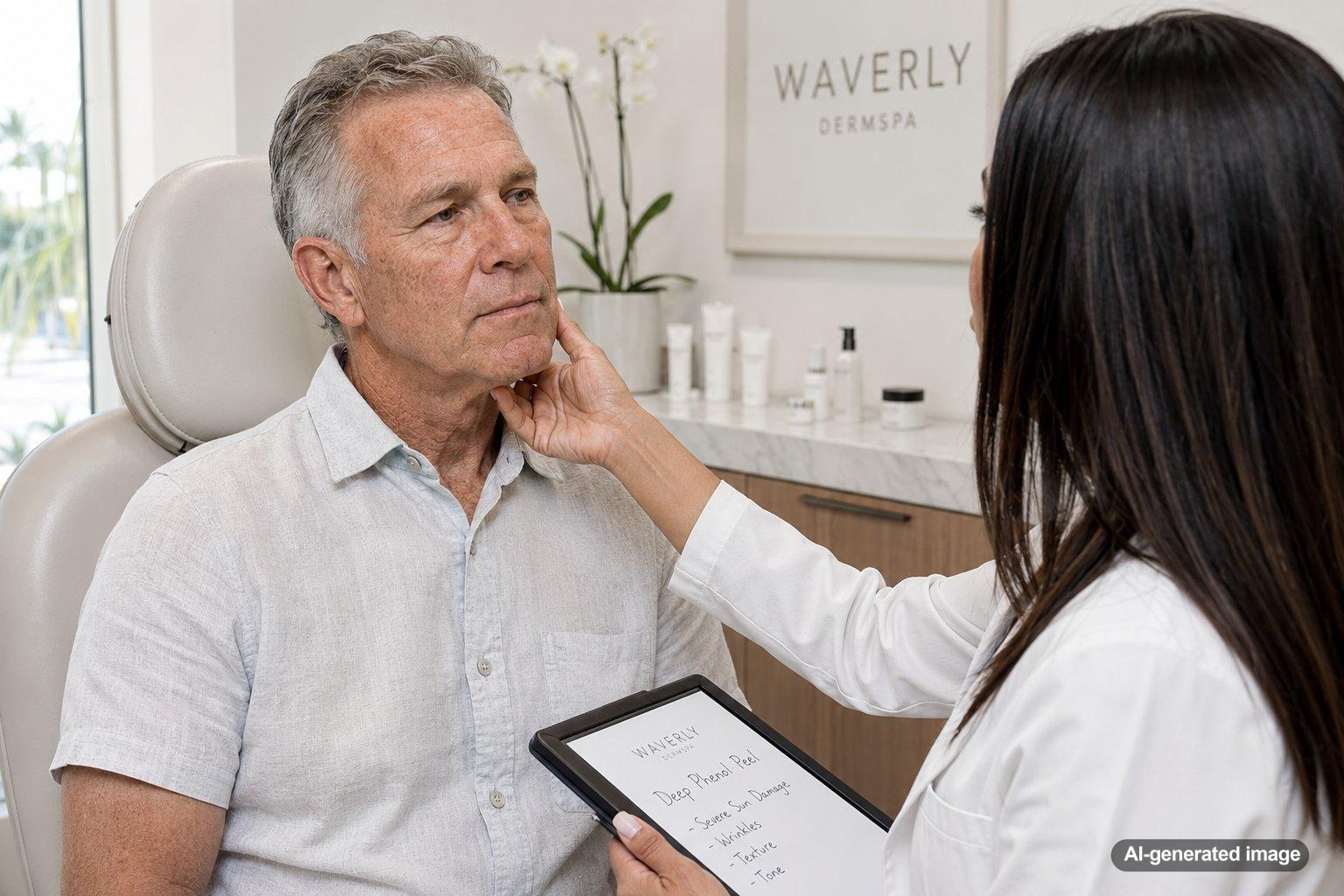
Deep phenol peels are among the most intensive chemical peel approaches used in dermatology and cosmetic skin care. For people in South Florida, where year-round ultraviolet exposure can gradually contribute to deeper wrinkles, uneven tone, leathery texture, and visible sun damage, the idea of a stronger peel can sound appealing. It also deserves a careful, medical conversation.
A deep phenol peel is not a casual skin refresh or a quick lunch-hour treatment. It is a controlled resurfacing procedure that reaches deeper skin layers than light or medium peels, so planning, candidacy, skin cancer screening, aftercare, and risk review matter as much as the peel itself.
Quick answer
- A deep phenol peel may be considered for significant facial sun damage, etched wrinkles, and advanced texture changes, but it is not appropriate for everyone.
- Because it is a deep resurfacing procedure, it should be discussed with a board-certified dermatologist or appropriately trained physician.
- South Florida sun exposure makes pre-treatment skin evaluation and strict post-treatment sun protection especially important.
- Suspicious, changing, bleeding, or non-healing spots should be evaluated before cosmetic resurfacing is considered.
- Recovery, pigment risk, scarring risk, medical history, medications, and skin type all influence whether this approach is reasonable.
What a deep phenol peel is
A chemical peel uses a carefully selected solution to create controlled exfoliation or resurfacing of the skin. Superficial peels work closer to the surface. Medium peels go deeper. A deep phenol peel reaches still deeper layers and is typically used for more pronounced facial aging changes, such as deeper wrinkles, severe photodamage, and marked texture irregularity.
Because phenol-based deep peels are stronger than routine cosmetic peels, they require a detailed consultation. Your clinician may review your medical history, skin tone, history of abnormal scarring, tendency toward pigmentation, past procedures, sun exposure, medications, and whether any lesions need medical evaluation first.
Why South Florida sun damage can be more complex
In Fort Lauderdale and across South Florida, UV exposure is not limited to beach days. Daily driving, boating, golf, walking, outdoor dining, and seasonal travel can all add up over time. Chronic sun exposure can contribute to uneven pigmentation, rough patches, broken-looking texture, laxity, and wrinkles.
Sun damage can also overlap with medical skin concerns. Some rough, scaly, persistent, or changing spots may need evaluation for precancerous or cancerous changes before any cosmetic procedure is planned. A peel can improve some visible signs of sun damage, but it is not a substitute for a skin cancer screening.
Common causes or triggers behind severe sun damage
- Long-term UV exposure: Repeated sun exposure over many years can gradually change texture, tone, and firmness.
- Indoor tanning history: Tanning beds expose skin to UV radiation and can add to cumulative damage.
- Inconsistent sunscreen use: Daily protection matters in a sunny climate, even when the weather looks cloudy.
- Outdoor lifestyle: Boating, fishing, tennis, golf, gardening, running, and pool time can increase cumulative exposure.
- Fair or sun-sensitive skin: Some skin types burn more easily and may show photodamage earlier.
- Past blistering sunburns: A history of significant burns can be relevant during a dermatology evaluation.
What you can do at home before considering a deep peel
At-home care cannot replicate a deep phenol peel, but it can support healthier skin and help reduce ongoing UV-related damage. Keep the approach conservative and consistent rather than harsh.
- Use broad-spectrum sunscreen every morning and reapply when outdoors, sweating, or swimming.
- Wear a wide-brimmed hat, sunglasses, and UPF clothing during prolonged outdoor exposure.
- Avoid intentional tanning and tanning beds.
- Use gentle cleansing and moisturizer to support the skin barrier.
- Ask your dermatologist whether ingredients such as retinoids, antioxidants, or pigment-focused topicals may be appropriate for your skin.
- Do not attempt deep chemical peeling at home or with high-strength products bought online.
Professional options to discuss
Professional options for sun damage and wrinkles vary widely. A dermatologist may discuss prescription skin care, lighter chemical peels, medium-depth peels, laser resurfacing, microneedling-based treatments, injectable treatments for facial lines, or a deeper peel depending on the goals and exam findings.
A deep phenol peel may be discussed when wrinkles and photodamage are more pronounced, but it is only one category of treatment. The decision depends on skin type, depth of damage, tolerance for downtime, pigment risk, medical history, and whether any concerning lesions need attention first.
At Waverly DermSpa, we offer Chemical Peels and can help you understand whether they may be appropriate.
Why evaluation matters before a deep phenol peel
A strong peel affects the skin more significantly than a routine facial or light peel. Before treatment, a dermatologist can look for issues that may change the plan, such as active irritation, infection risk, a tendency toward keloids or abnormal scarring, recent isotretinoin use, pigment concerns, cardiac history, or suspicious growths.
For South Florida patients and seasonal visitors, timing also matters. A deep resurfacing procedure usually requires strict sun avoidance during healing and careful long-term photoprotection afterward. Travel plans, outdoor commitments, and the ability to follow aftercare should be discussed before scheduling.
When to see a dermatologist
Book a dermatology visit before considering a deep peel if you have rough, scaly, crusted, bleeding, tender, rapidly changing, or non-healing spots. You should also be evaluated if a mole or lesion looks different from your others, changes in color or shape, or becomes symptomatic.
It is also worth seeing a dermatologist if your skin has significant sun damage and you are unsure whether your concern is cosmetic, medical, or both. A careful exam can help separate texture and pigment concerns from lesions that need diagnosis or treatment.
FAQ
Is a deep phenol peel the strongest type of chemical peel?
Deep phenol peels are among the strongest chemical peel options used for facial resurfacing. They reach deeper than superficial or many medium-depth peels, which is why medical evaluation and careful aftercare are important.
Can a phenol peel help severe wrinkles?
It may help improve the appearance of deeper wrinkles in carefully selected patients. The degree of improvement varies, and your clinician should review realistic expectations, limitations, downtime, and risks before treatment.
Is a deep peel appropriate for all skin tones?
No. Skin tone, pigment history, scarring risk, and prior reactions all matter. Some people may have a higher risk of pigment changes or other complications, so individualized evaluation is essential.
Can I get a deep peel if I live in a very sunny climate?
Living in South Florida does not automatically rule out resurfacing, but it raises the importance of timing, sun avoidance during recovery, and disciplined long-term sun protection. Your outdoor lifestyle should be part of the consultation.
Should I treat rough sun spots with a cosmetic peel first?
Not without evaluation. Rough, persistent, scaly, changing, or bleeding spots should be checked by a dermatologist before cosmetic treatment is considered.
How should I choose between a deep peel, laser, or another treatment?
The right approach depends on your skin exam, goals, downtime tolerance, medical history, and risk profile. A dermatologist can explain the differences and help you decide what is reasonable for your skin.
Ready to get help?
Schedule an appointment or send a message and our team will get back to you.
Prefer to call? 954-666-3736
Disclaimer
This article is for educational purposes and is not medical advice. For diagnosis and personalized treatment, please book an appointment with a board-certified dermatologist.
Sources & further reading
- American Academy of Dermatology (AAD) – Chemical peels: Overview
- American Academy of Dermatology (AAD) – Chemical peels: Preparation
- U.S. Food and Drug Administration (FDA) – FDA warns against purchasing or using chemical peel skin products without professional supervision
- The Skin Cancer Foundation – Actinic Keratosis
