

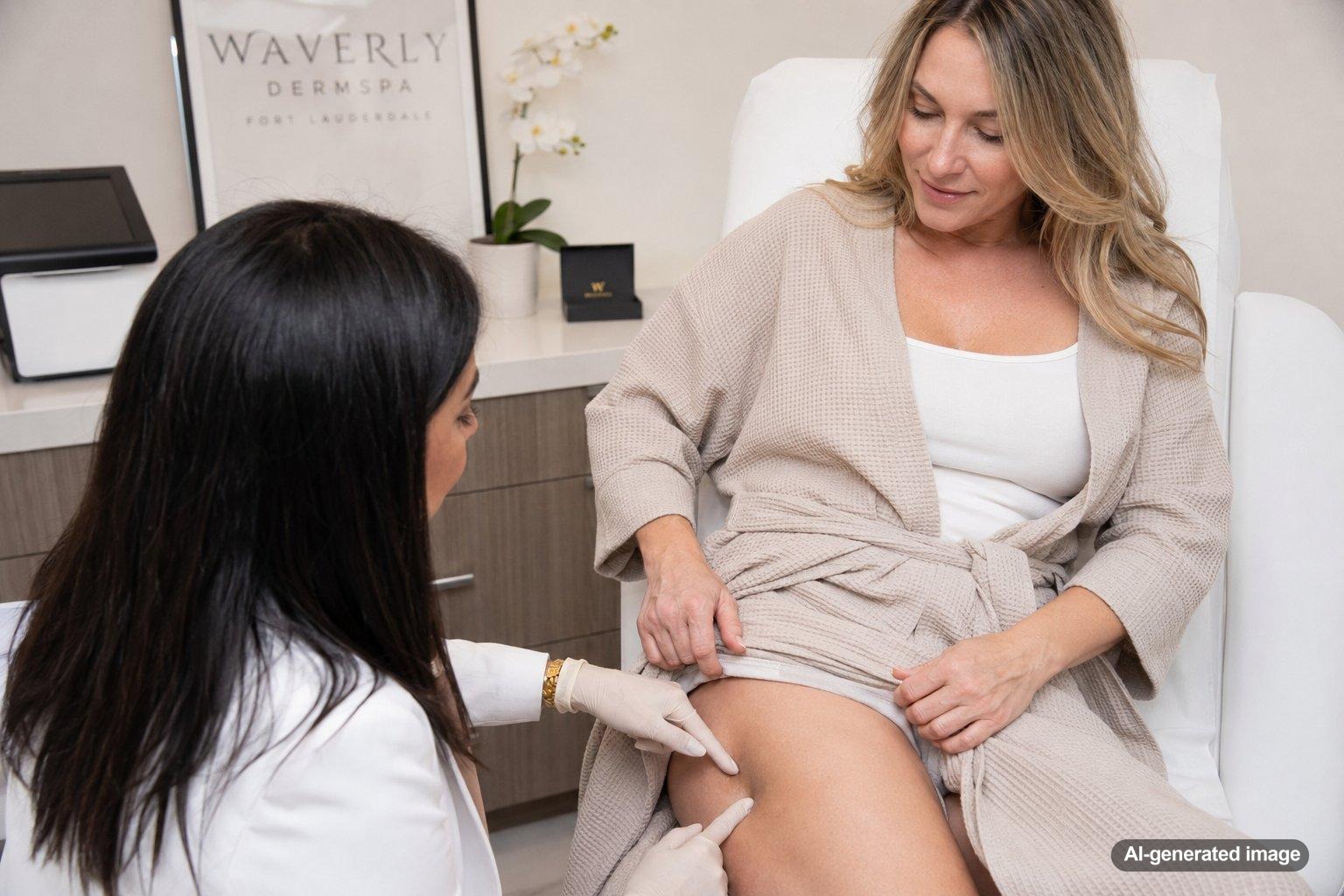
Dark, velvety skin between the thighs can develop for several reasons. Repeated rubbing, moisture, irritation, and inflammation may gradually deepen the skin’s color or change its texture. In some cases, a thicker, soft, velvety appearance may be associated with a condition called acanthosis nigricans, which deserves a professional evaluation rather than guesswork.
The appearance alone cannot confirm the cause. A dermatologist can examine the texture, location, timing, and surrounding skin, then determine whether the change is primarily related to friction or whether an underlying health factor should be considered.
Quick answer
- Friction between the thighs can cause irritation, thickening, and gradual discoloration.
- Previous rashes, shaving irritation, or ingrown hairs may leave post-inflammatory hyperpigmentation.
- Dark, velvety thickening can be associated with acanthosis nigricans.
- New, rapidly changing, widespread, itchy, painful, or otherwise unusual skin changes should be evaluated.
- Gentle skin care may reduce irritation, but persistent texture changes should not be treated as a cosmetic issue alone.
What does dark, velvety skin mean?
The word velvety usually describes skin that feels thicker, softer, or slightly folded compared with the surrounding area. The color may range from light brown to gray-brown or deeper brown, depending on your natural skin tone and the underlying cause.
One possible explanation is acanthosis nigricans. This is a pattern of skin thickening and darkening that commonly appears in body folds, including the inner thighs, groin, neck, or underarms. It can be associated with insulin resistance, certain hormonal conditions, medications, genetics, or other medical factors. Its presence does not establish a diagnosis by itself, and a dermatologist can help determine whether the skin truly has this pattern.
Common causes and contributing factors
Friction and chafing
When the inner thighs rub together during walking, exercise, or hot weather, repeated irritation can disrupt the skin barrier. Over time, the area may become rougher, thicker, or darker. Tight clothing and moisture can make this cycle more noticeable.
Post-inflammatory hyperpigmentation
Skin often produces extra pigment after irritation or inflammation. A prior rash, shaving reaction, ingrown hair, follicle irritation, or episode of chafing may leave discoloration after the original problem has settled. This is especially common in medium to deep skin tones.
Acanthosis nigricans
Acanthosis nigricans may cause dark, thick, velvety patches in skin folds. It can be associated with metabolic or hormonal factors, so a clinician may recommend reviewing your medical history and discussing whether additional evaluation is appropriate.
Heat and moisture
Warm, damp skin folds are more vulnerable to irritation. Sweat, exercise, humid weather, and clothing that traps moisture may contribute to inflammation and make existing discoloration more visible.
Hair removal and product irritation
Shaving too closely, waxing irritated skin, or applying fragranced products may cause repeated inflammation. Strong exfoliating acids, scrubs, bleaching products, and unregulated lightening creams can also worsen sensitivity or create uneven color.
Prior skin conditions
Dermatitis, recurrent irritation, and other inflammatory skin problems can affect both color and texture. Itching, scaling, tenderness, odor, drainage, or a sharply defined rash may suggest that more than simple friction is involved.
What you can do at home
Home care should focus first on reducing irritation rather than trying to remove pigment aggressively.
- Reduce rubbing: Choose breathable, properly fitting clothing and consider soft anti-chafe garments during exercise or long walks.
- Keep the area comfortably dry: Change out of damp clothing promptly and pat the skin dry instead of rubbing it.
- Use a gentle cleanser: Avoid harsh soaps, fragranced washes, and abrasive scrubs on the inner thighs.
- Support the skin barrier: Apply a simple, fragrance-free moisturizer if the area feels dry or irritated.
- Pause irritating hair removal: Allow inflamed skin to settle before shaving or waxing again.
- Avoid aggressive lightening products: Do not apply household remedies, concentrated acids, or unregulated bleaching creams to sensitive skin folds.
These steps may help reduce ongoing irritation, but they may not address a thick, velvety texture or an underlying medical association. Pigment also tends to fade slowly, and improvement varies according to the cause, skin tone, and duration of the discoloration.
How a dermatologist may evaluate the area
A dermatologist may ask when the change began, whether it has spread, and whether similar patches appear on the neck, underarms, groin, or other folds. The evaluation may also include questions about medications, family history, menstrual or hormonal changes, and general health.
The texture and distribution often provide useful clues. When acanthosis nigricans is suspected, your dermatologist may recommend coordinating with your primary care clinician for an appropriate medical assessment. This may include a discussion of blood sugar regulation, hormonal factors, or other possible associations based on your individual history.
Professional treatment options
Treatment depends on the cause. If friction is the primary contributor, reducing rubbing and supporting the skin barrier may be central to the plan. If inflammation is present, a dermatologist may recommend targeted treatment before addressing residual pigment.
For persistent discoloration or thickened texture, professional options may include carefully selected topical ingredients, prescription therapies, or office-based procedures. Sensitive body folds require a conservative approach because excessive exfoliation can cause burns, irritation, or additional pigmentation. Your clinician can help you decide which options may be appropriate for your skin and which should be avoided.
When the appearance is associated with acanthosis nigricans, addressing an underlying factor may be an important part of management. Cosmetic treatment alone may provide limited value if the trigger remains active.
When should you see a dermatologist?
Schedule an evaluation when the skin feels distinctly thick or velvety, the discoloration persists despite gentle care, or you are unsure what caused it. It is also worth getting checked when:
- The change appeared suddenly or is spreading quickly.
- Similar patches are developing on the neck, underarms, groin, or other folds.
- The area is painful, intensely itchy, cracked, draining, or producing an unusual odor.
- You notice a new rash, open skin, sores, or recurrent bumps.
- The change began after starting a medication.
- You have other symptoms or health changes that concern you.
A prompt examination is especially important for a sudden, extensive, or unexplained change. A dermatologist can distinguish common irritation from conditions that warrant additional medical attention.
Frequently asked questions
Does dark inner thigh skin always mean acanthosis nigricans?
No. Friction, previous inflammation, shaving irritation, and other skin conditions can also cause discoloration. A velvety or thickened texture may raise the possibility of acanthosis nigricans, but an examination is needed to assess the pattern accurately.
Can thigh rubbing make the skin darker?
Yes. Repeated friction can irritate the skin and trigger post-inflammatory hyperpigmentation. Continued rubbing may also make the area feel rougher or thicker.
Should I scrub dark skin between my thighs?
Aggressive scrubbing is more likely to worsen irritation than improve the color. Use gentle cleansing and avoid abrasive tools, harsh exfoliants, and strong home remedies.
Can weight changes affect inner thigh discoloration?
Changes in body shape can increase or decrease friction between the thighs. Separately, acanthosis nigricans may be associated with metabolic factors in some people. A dermatologist can help clarify which explanation best fits the skin findings.
Will the discoloration go away?
It may gradually improve when irritation is controlled, but results vary. Long-standing pigment and thickened skin may require professional guidance, and recurrence is possible if the underlying trigger continues.
Can I use facial brightening products on my inner thighs?
Not automatically. Skin folds can be more sensitive and more prone to irritation. Ask a dermatologist before applying strong acids, retinoids, hydroquinone, or combination lightening products to this area.
Ready to get help?
Schedule an appointment or send a message and our team will get back to you.
Prefer to call? 954-666-3736
This article is for educational purposes and is not medical advice. For diagnosis and personalized treatment, please book an appointment with a board-certified dermatologist.
