

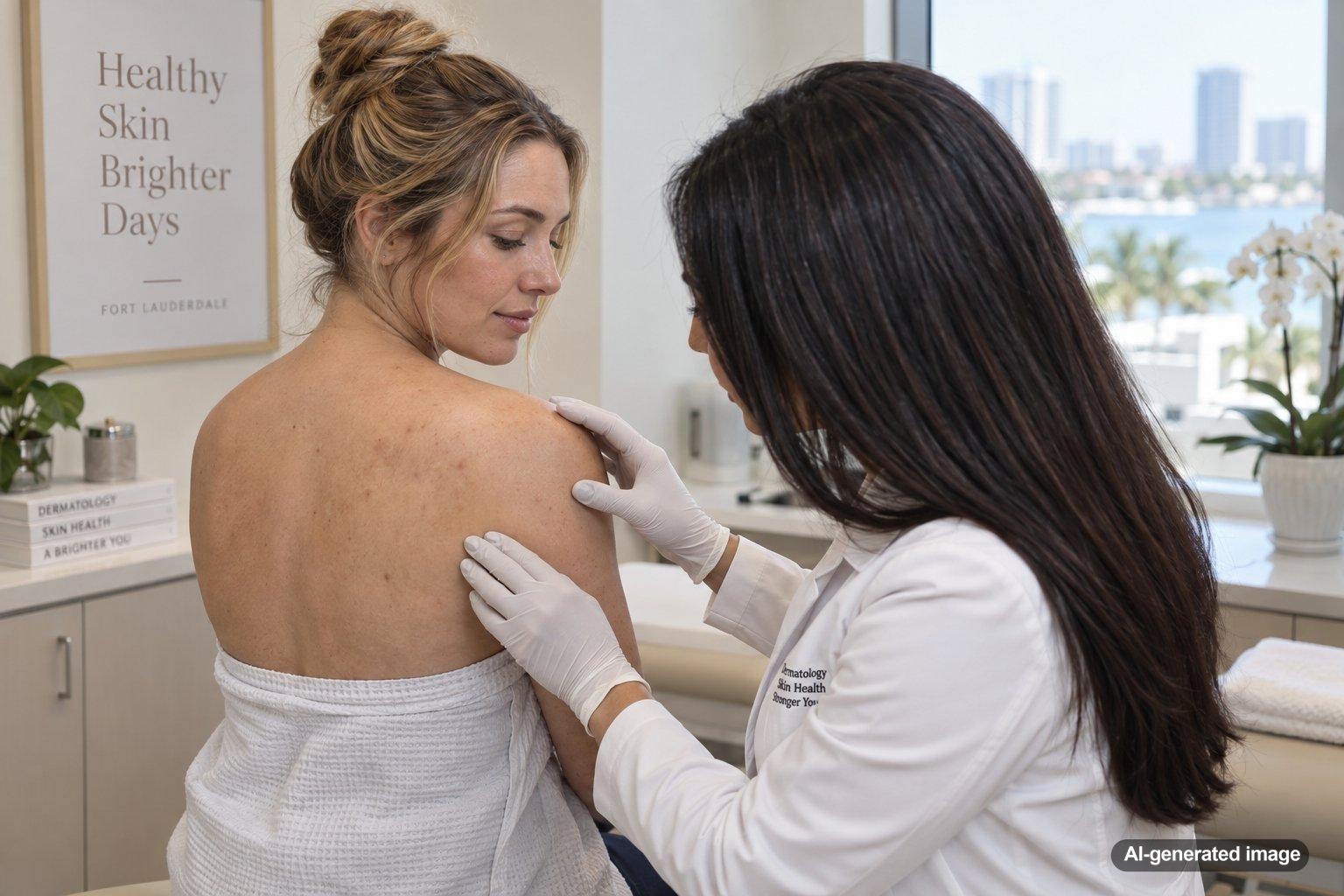
Dark spots that remain after acne heals on your back are commonly related to post-inflammatory pigmentation. When a pimple, cyst, or other inflamed acne lesion settles down, the skin can temporarily produce or retain extra pigment in that area. The result may be a flat brown, tan, gray-brown, or darker mark even though the original breakout is no longer active.
These marks can be especially noticeable on the back because acne there may be deeper, harder to reach, exposed to friction, and more likely to be picked or irritated. The good news is that discoloration and true acne scars are not the same thing, and understanding the difference can help guide what you do next.
Quick answer
- Dark marks after back acne are often a form of post-inflammatory hyperpigmentation.
- Inflammation can stimulate pigment production even after the acne lesion itself has healed.
- Picking, scratching, friction, and repeated breakouts may make discoloration more noticeable.
- Sun exposure can make existing pigment look darker or linger longer.
- Persistent, changing, raised, indented, or otherwise unusual marks are worth having evaluated by a dermatologist.
What are the dark spots left behind by back acne?
After skin becomes inflamed, pigment-producing cells can respond by creating more melanin in the affected area. This can leave a flat area of discoloration known as post-inflammatory hyperpigmentation, often shortened to PIH.
PIH is different from an active pimple. It is also different from a scar that changes the texture of the skin. A dark spot that feels completely flat may be primarily a pigment change, while a mark that is depressed, raised, firm, or uneven may involve acne scarring as well.
The color can vary depending on your natural skin tone, the depth of inflammation, and how the area has healed. Some marks appear light brown, while others may look deep brown or gray-brown.
Why does back acne leave dark marks?
The discoloration is usually a response to inflammation rather than something left inside the pore. Several factors can make it more noticeable.
- Deeper inflammation: Larger or more inflamed acne lesions may trigger a stronger pigment response as the skin heals.
- Picking or squeezing: Manipulating a breakout can add inflammation and skin injury, potentially increasing the chance of a lingering mark.
- Repeated breakouts: New acne developing in the same general area can create overlapping marks in different stages of fading.
- Friction: Tight athletic clothing, backpack straps, sports equipment, or repeated rubbing may irritate acne-prone areas.
- Sun exposure: Ultraviolet exposure can deepen visible pigmentation, particularly when the upper back or shoulders are uncovered.
- Individual skin response: Some skin tones are more prone to noticeable post-inflammatory pigmentation after irritation or inflammation.
Is it a dark spot or an acne scar?
Color and texture are useful clues. Post-inflammatory pigmentation usually changes the color of the skin without changing its surface. When you run your fingers over the area, it may feel similar to the surrounding skin.
Acne scars can change the skin’s texture. Some create depressions, while others become raised or thickened. The back, shoulders, and chest can be areas where raised scars develop after significant inflammation.
It is also possible to have both pigment changes and scarring in the same spot. A dermatologist can examine the area and help distinguish between active acne, residual pigmentation, and different types of scars before discussing treatment options.
What can you do at home?
A gentle approach usually makes more sense than aggressively scrubbing the dark spots. Irritating the skin can create additional inflammation, which may work against your goal.
- Focus on preventing new breakouts. Fewer new inflamed acne lesions generally means fewer opportunities for new marks to form.
- Avoid picking or squeezing. This may reduce additional inflammation and trauma to healing skin.
- Use gentle cleansing. Harsh scrubs, rough brushes, and excessive exfoliation can irritate the back.
- Reduce unnecessary friction. Change out of sweaty clothing when practical and consider whether straps or tight garments repeatedly rub the same acne-prone areas.
- Protect exposed skin from the sun. When your back or shoulders are uncovered, sun protection may help keep existing discoloration from becoming more pronounced.
- Introduce skincare gradually. If you use products aimed at acne or discoloration, adding multiple strong ingredients at once can make it difficult to know what is helping or irritating your skin.
If your back is difficult to reach, simple formats that can be applied evenly may be easier to use consistently than complicated routines.
What professional options may help?
The most appropriate approach depends on whether you are dealing mainly with discoloration, active acne, textural scarring, or a combination of these concerns. That distinction matters because a treatment intended for pigment may not address an indented or raised scar, and treating marks without controlling ongoing acne can lead to a continuing cycle of new discoloration.
A dermatologist may discuss topical skincare, prescription options for active acne when appropriate, chemical exfoliation, or procedure-based treatments for selected pigment and texture concerns. Recommendations can vary significantly according to skin tone, sensitivity, acne activity, scar type, and the depth and color of the marks.
Professional evaluation is especially helpful before using stronger lightening products, aggressive peels, or energy-based procedures on areas with persistent pigmentation. Your clinician can help you decide which approaches make sense for your skin and which may carry a higher risk of irritation or additional pigment changes.
When should you see a dermatologist?
Consider scheduling an evaluation if you continue to develop painful or deep acne, if discoloration keeps accumulating, or if the marks are affecting how comfortable you feel wearing certain clothing. Early attention to recurring back acne may also help reduce the number of new marks that develop.
It is also worth getting checked when a spot does not seem connected to a previous breakout, looks different from your other acne marks, changes noticeably, becomes raised or firm, bleeds, develops persistent scaling, or causes unexplained pain or itching. Not every dark mark on the back is necessarily related to acne.
Frequently asked questions
Why are my acne marks darker than the original pimples?
The inflammatory response from acne can stimulate extra pigment in the skin. Once the redness and swelling settle, the remaining pigmentation may become the most visible part of the original breakout.
Do dark acne spots mean the acne is still active?
Not necessarily. A flat dark mark can remain after the original acne lesion has resolved. If you still feel a tender bump, swelling, drainage, or a new clogged pore in the same area, there may also be ongoing acne activity.
Can scrubbing remove dark marks faster?
Aggressive scrubbing is generally not a good strategy. Excess friction can irritate the skin and increase inflammation. Gentle, consistent skincare is usually a more appropriate approach.
Why do I keep getting new dark spots even while older ones are fading?
If new acne continues to develop, each inflamed lesion can potentially leave another area of discoloration. Managing the active breakouts is therefore an important part of reducing the overall number of marks.
Can the same spot have both pigmentation and a scar?
Yes. Acne can leave both a color change and a texture change in the same location. A dermatologist can evaluate whether a mark is primarily pigmentation, scarring, or a combination of both.
Ready to get help?
Schedule an appointment or send a message and our team will get back to you.
Prefer to call? 954-666-3736
This article is for educational purposes and is not medical advice. For diagnosis and personalized treatment, please book an appointment with a board-certified dermatologist.
