

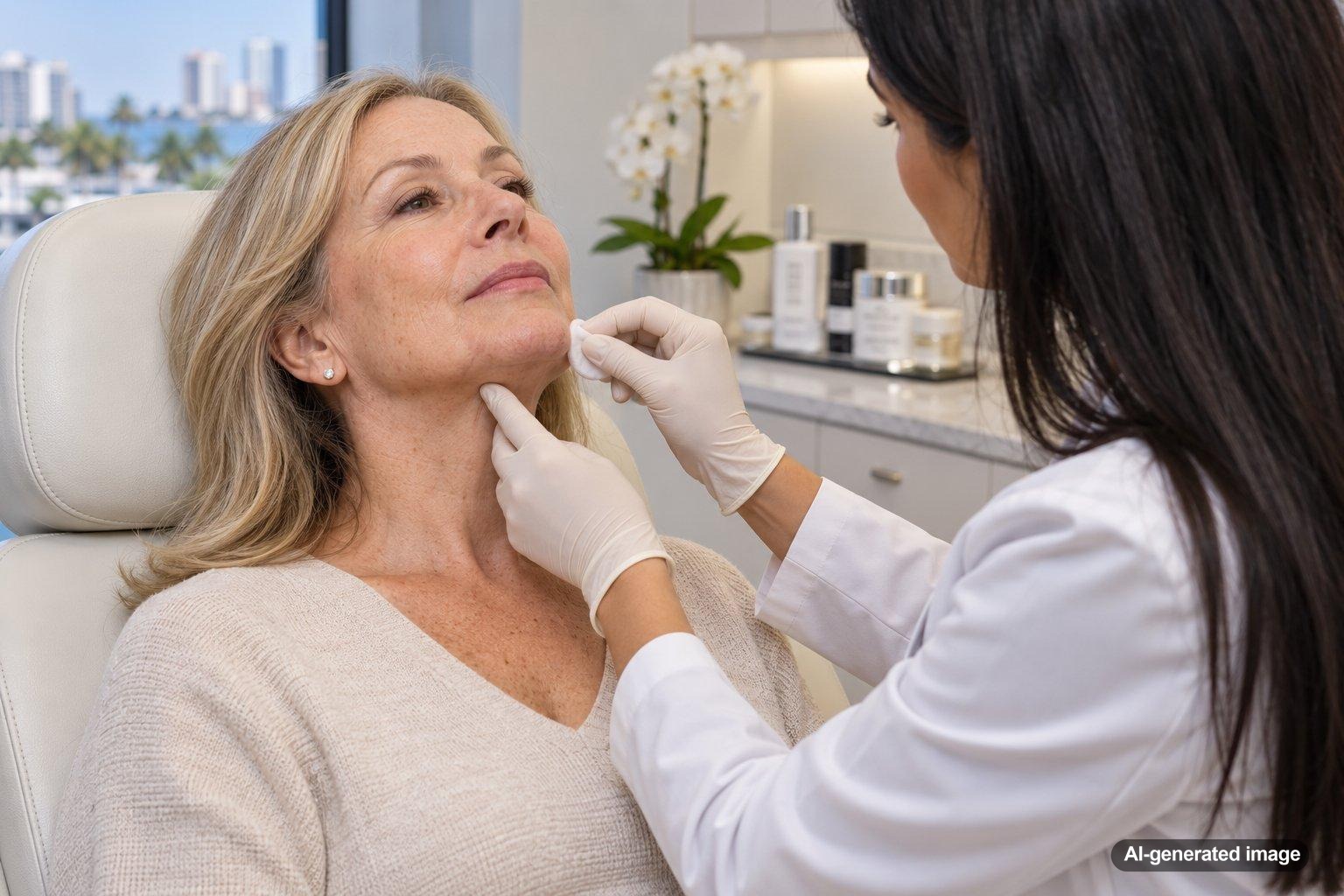
When an ingrown hair or razor bump settles down but leaves a dark mark behind, the lingering color is often related to inflammation rather than an active ingrown hair. This type of discoloration is commonly called post-inflammatory hyperpigmentation. It can appear brown, gray-brown, or deeper than the surrounding skin and may be especially noticeable along the chin and neck.
The mark can remain after tenderness, swelling, and the visible bump have disappeared because pigment changes in the skin often fade more slowly than the original irritation. Repeated shaving, picking, friction, or new ingrown hairs in the same area may also keep the cycle going.
Quick answer
- Inflammation from an ingrown hair can stimulate extra pigment in the skin.
- The resulting dark mark may remain after the bump itself has healed.
- Repeated shaving irritation, picking, and friction can make discoloration more noticeable or persistent.
- Gentle skin care and prevention of new ingrown hairs may help the area gradually look more even.
- A dermatologist can evaluate marks that are persistent, changing, painful, or difficult to distinguish from another skin concern.
Why does a healed ingrown hair leave a dark mark?
An ingrown hair can create localized inflammation when a hair curves back into the skin or becomes trapped beneath the surface. Even after that inflammation settles, pigment-producing cells may remain more active for a period of time. The result can be a flat area of discoloration where the bump used to be.
This is different from a raised scar. Post-inflammatory hyperpigmentation mainly affects color, although repeated inflammation in the same area can sometimes occur alongside changes in skin texture.
Why is the chin especially prone to discoloration?
The underside of the chin is exposed to several common sources of irritation. Hair in this area may grow in different directions, and shaving closely against the grain can increase the chance of hairs becoming trapped. The curved surface of the jaw and neck can also make it easy to pass over the same area several times with a razor.
Friction from collars, repeated touching, and attempts to squeeze or remove an ingrown hair can add more inflammation. If new bumps repeatedly develop before older marks have had time to fade, the area may look continuously darker.
Common triggers that can keep dark marks noticeable
- Very close shaving: Cutting hair extremely close to the skin may make some people more prone to recurrent ingrown hairs.
- Multiple razor passes: Repeatedly shaving the same area can increase irritation.
- Picking or squeezing: Manipulating a bump can create additional inflammation and may worsen discoloration.
- Friction: Tight collars, frequent rubbing, or other repeated contact may irritate sensitive skin under the chin.
- Harsh skin care: Strong scrubs or frequent use of irritating products can disrupt the skin barrier and make the area feel more reactive.
- New ingrown hairs: Repeated bumps can create overlapping marks in different stages of fading.
What can you do at home?
A conservative routine usually starts with reducing unnecessary irritation. Avoid digging at hairs beneath the skin or aggressively scrubbing the area. Use a gentle cleanser, moisturize if the skin feels dry or tight, and give irritated skin time to settle before adding multiple active products.
If shaving seems to trigger the problem, consider adjusting technique. Shaving in the direction of hair growth, avoiding excessive pressure, limiting repeated passes, and using a clean shaving tool may reduce irritation for some people. Leaving the hair slightly longer rather than pursuing an extremely close shave may also be helpful for people who frequently develop ingrown hairs.
Daily sun protection is also relevant to areas of facial and neck hyperpigmentation because ultraviolet exposure can make uneven pigment more noticeable. Choose products that your skin tolerates comfortably rather than layering several aggressive formulas at once.
Can skin care fade the leftover discoloration?
Some topical ingredients used for uneven pigmentation or gentle exfoliation may help gradually improve the appearance of post-inflammatory marks. The right choice depends on your skin sensitivity, current routine, shaving habits, and whether active bumps are still forming.
Using too many exfoliating or brightening products at the same time can backfire by causing additional irritation. If the area burns, stings, peels excessively, or becomes more inflamed, simplifying the routine is often more sensible than adding another active ingredient.
What professional options may be considered?
If discoloration remains bothersome, a dermatologist can first determine whether the marks are consistent with post-inflammatory hyperpigmentation and whether recurrent ingrown hairs are contributing. Depending on the skin and the pattern of discoloration, professional options may include prescription topical therapy, carefully selected chemical exfoliation, procedures aimed at uneven pigment, or strategies for reducing recurrent hair-related irritation.
For people whose dark marks are closely tied to repeated ingrown hairs, addressing both the discoloration and the underlying hair-removal pattern may be more useful than focusing on pigment alone. Treatment selection should be individualized because skin tone, sensitivity, hair characteristics, and prior irritation all matter.
When should you see a dermatologist?
Consider an evaluation if a spot does not behave like your usual post-ingrown-hair marks, if discoloration is getting progressively darker without repeated irritation, or if you notice significant pain, persistent swelling, drainage, bleeding, an enlarging bump, or a substantial change in texture. It is also reasonable to seek help when recurrent ingrown hairs continue despite changes to shaving and skin care.
A dermatologist can distinguish pigment left behind by inflammation from other causes of darkening and help you choose an approach that fits your skin rather than relying on trial and error.
FAQ
Why is the bump gone but the dark spot still there?
The inflammation can resolve before the pigment change does. Extra pigment triggered during the inflammatory process may remain visible after the skin feels smooth again.
Does a dark mark mean the ingrown hair is still trapped?
Not necessarily. A flat dark spot can remain after an ingrown hair has resolved. A persistent raised, tender, or enlarging bump deserves separate evaluation.
Can picking an ingrown hair make the mark darker?
It can. Squeezing, scratching, or digging at the skin may create additional inflammation, which can make post-inflammatory discoloration more noticeable.
Should I scrub the area to fade the discoloration faster?
Aggressive scrubbing can irritate the skin and potentially prolong the cycle of inflammation. Gentle cleansing and a well-tolerated skin care routine are generally more appropriate.
Can shaving technique make a difference?
It may. Using less pressure, reducing repeated passes, shaving with the direction of hair growth, and avoiding an excessively close shave may help some people experience fewer recurring bumps.
When should persistent dark marks be professionally evaluated?
If marks continue to accumulate, remain difficult to manage, develop unusual texture or symptoms, or cannot clearly be connected to prior ingrown hairs, a dermatologist can evaluate the area and discuss appropriate options.
Ready to get help?
Schedule an appointment or send a message and our team will get back to you.
Prefer to call? 954-666-3736
This article is for educational purposes and is not medical advice. For diagnosis and personalized treatment, please book an appointment with a board-certified dermatologist.
