

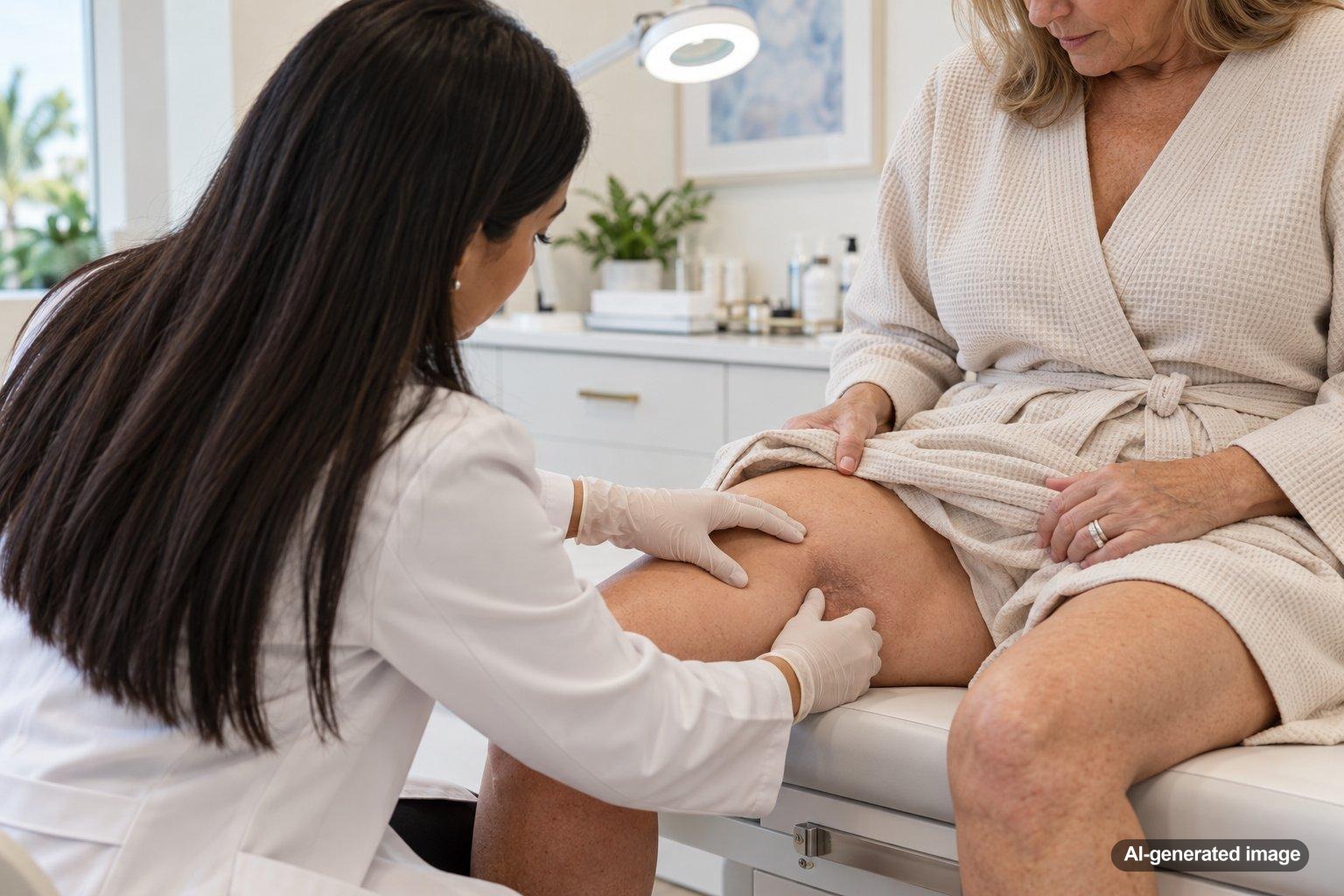
A dark, rough patch where the thigh meets the groin can develop for several different reasons. Friction, moisture, previous irritation, inflammatory rashes, fungal or yeast overgrowth, and a condition called acanthosis nigricans can all affect skin folds. The location and appearance alone are not enough to determine the cause.
If the area is persistent, changing, itchy, painful, spreading, or noticeably thicker than the surrounding skin, a dermatologist can examine it and help distinguish between conditions that can look similar. Avoid aggressive scrubbing or bleaching treatments while you are trying to figure out what is going on, since irritation can make discoloration and texture more noticeable.
Quick answer
- Repeated rubbing and moisture can irritate the inner thigh and groin crease and may leave lingering discoloration.
- Acanthosis nigricans can cause darker, thicker, velvety skin in folds, including the groin.
- Intertrigo and fungal or yeast-related rashes can also occur in warm, moist skin folds.
- Scrubbing harder usually does not solve thickened or pigmented skin and can increase irritation.
- A dermatologist can evaluate a persistent patch, especially when its cause is unclear.
What might a dark, rough groin patch represent?
The groin is an area where skin surfaces rub together and where heat and moisture can collect. That makes the area susceptible to irritation as well as several dermatologic conditions. Some patches mainly involve pigment, while others involve inflammation, scaling, thickening, or changes in skin texture.
One possibility is acanthosis nigricans, which can cause brown or black skin that feels thicker or velvety. The American Academy of Dermatology notes that it commonly develops in skin folds, including the groin. Because acanthosis nigricans can sometimes be associated with an underlying health issue, new or unexplained thickening is worth discussing with a clinician.
Common causes and triggers
- Friction: Repeated rubbing from walking, exercise, clothing, or skin-to-skin contact can irritate the area and contribute to a darker, rougher appearance.
- Moisture and sweating: Warm, damp skin folds can become irritated, particularly in hot and humid weather.
- Post-inflammatory hyperpigmentation: Skin may remain darker after a rash, chafing episode, shaving irritation, or other inflammation has settled.
- Acanthosis nigricans: This can produce darker, thicker, sometimes velvety skin in the groin and other folds.
- Intertrigo: Inflammation where skin surfaces meet may cause irritation, redness, scaling, discomfort, or pigment changes.
- Fungal or yeast-related conditions: Organisms can grow more easily in moist skin folds. These conditions may cause itching, scaling, redness, or a spreading border, although their appearance varies.
- Contact or irritant dermatitis: Fragranced products, detergents, shaving products, tight clothing, or other exposures may irritate sensitive groin skin.
What you can do at home
Until you know what is causing the patch, a gentle approach is usually preferable to aggressive treatment. Consider reducing friction with looser, breathable clothing and changing out of damp exercise clothes promptly. After bathing or sweating, gently dry the skin fold rather than rubbing it.
Avoid harsh scrubs, strong exfoliating acids, fragranced products, and unregulated lightening products on irritated groin skin. If the outer thigh crease feels dry, a simple fragrance-free moisturizer may help support the skin barrier. Products intended for the face or other body areas can be too irritating for sensitive skin folds.
It is also better not to assume that every groin rash is fungal and repeatedly apply different medicated creams without evaluation. Several conditions can resemble one another, and the appropriate approach depends on the cause.
What a dermatologist may consider
A dermatologist can look at the color, texture, borders, scale, distribution, and other features of the patch and ask about itching, pain, sweating, shaving, clothing, products, medications, and how quickly it appeared.
If an infection is suspected, testing may sometimes be used to clarify whether fungus or another organism is involved. If the appearance suggests acanthosis nigricans, your clinician may discuss whether evaluation for associated health factors is appropriate. Treatment recommendations depend on the diagnosis and may include addressing friction or moisture, treating inflammation or infection when present, or selecting pigment and texture treatments that are appropriate for sensitive skin.
When should you see a dermatologist?
Consider scheduling an evaluation if the patch is persistent, keeps returning, or is difficult to identify. An examination is especially important if you notice:
- Rapid or unexplained development of thick, dark skin
- Significant itching, burning, tenderness, or pain
- Cracking, drainage, sores, pustules, or an unpleasant odor
- A rash that is spreading or has a sharply defined, scaly edge
- Similar thickened dark patches developing in other body folds
- Changes that continue despite reducing friction and irritation
If you’re unsure, it’s worth getting checked rather than repeatedly trying products that may further irritate the area.
FAQ
Can friction make the groin darker?
Yes. Repeated rubbing can irritate the skin, and inflammation may be followed by lingering hyperpigmentation. Friction can also make existing texture changes more noticeable.
Can a dark groin patch be acanthosis nigricans?
It can be one possibility. Acanthosis nigricans commonly causes darker, thicker, velvety skin in body folds, including the groin. A dermatologist can help determine whether the appearance is consistent with it and whether further evaluation is appropriate.
Does a rough groin patch mean it is a fungal infection?
Not necessarily. Fungal conditions can affect the groin, but friction, intertrigo, dermatitis, acanthosis nigricans, and other conditions may look similar. An examination can help distinguish among them.
Should I scrub the dark skin to remove it?
No. Vigorous scrubbing can damage the skin barrier and worsen irritation. Acanthosis nigricans, for example, is not discoloration that can simply be washed or scrubbed away.
Can I use a skin-lightening product on my groin?
The groin is sensitive, and strong acids, bleaching products, or other active ingredients can cause irritation. It is preferable to identify the cause of the discoloration first and discuss appropriate options with a dermatologist.
Ready to get help?
Schedule an appointment or send a message and our team will get back to you.
Prefer to call? 954-666-3736
Disclaimer
This article is for educational purposes and is not medical advice. For diagnosis and personalized treatment, please book an appointment with a board-certified dermatologist.
Sources & further reading
- American Academy of Dermatology (AAD) – Acanthosis nigricans: Signs and symptoms
- DermNet – Intertrigo
