

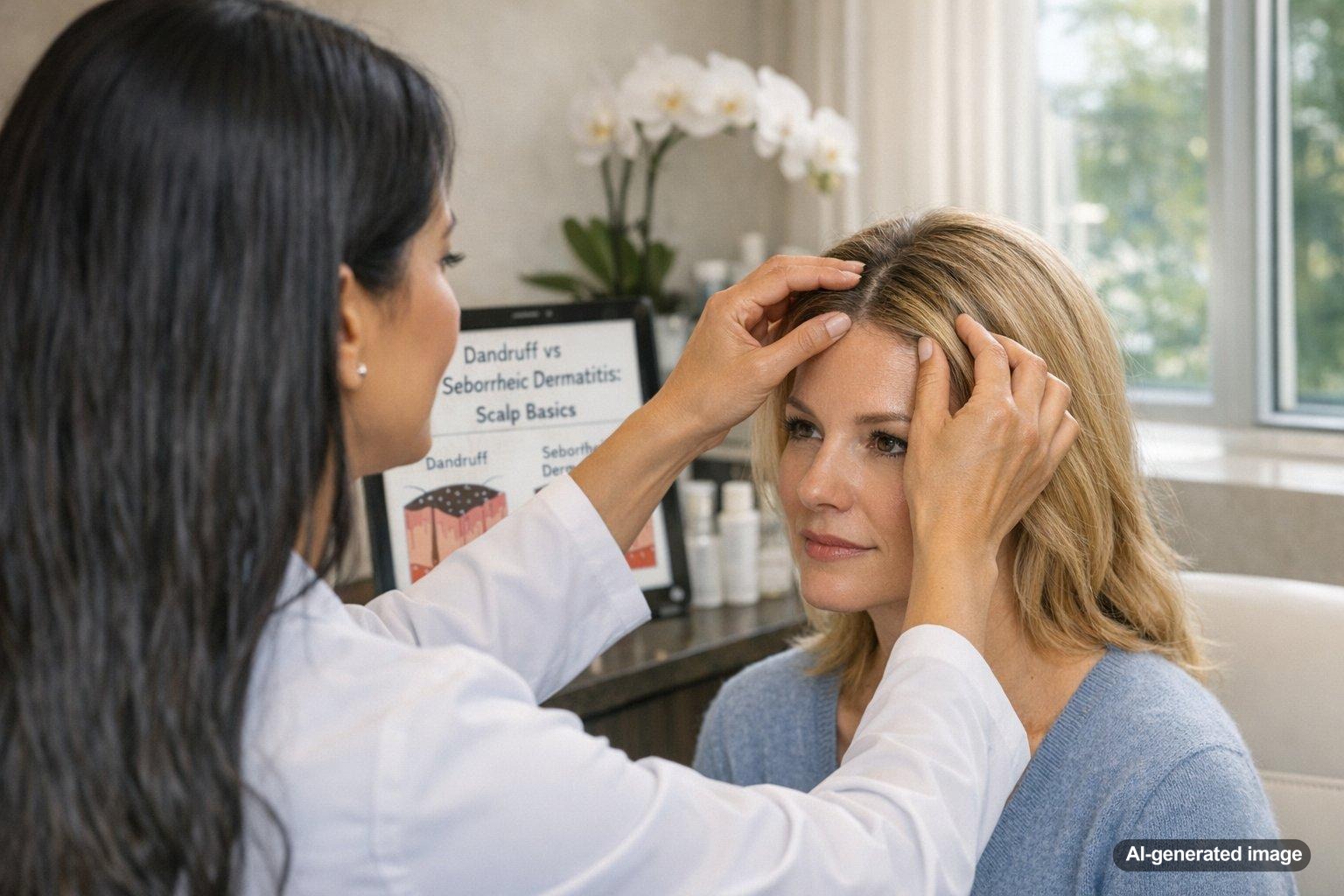
Flaking on the scalp can feel frustrating, especially when it keeps coming back or shows up before a meeting, dinner, or travel plans. Many people use the word dandruff for any visible flakes, but there can be a difference between simple dandruff and seborrheic dermatitis.
The short version: dandruff is usually limited to loose scalp flakes, while seborrheic dermatitis often includes inflammation, redness, itching, greasy scale, or involvement beyond the scalp. Because several scalp conditions can look similar, a dermatologist can help clarify what is going on and guide safe next steps.
Quick answer
- Dandruff usually refers to mild scalp flaking without obvious redness or irritation.
- Seborrheic dermatitis is an inflammatory condition that may cause flaky, itchy, greasy, or red patches on the scalp and other oil-prone areas.
- Both can be associated with scalp oil, yeast that naturally lives on the skin, skin sensitivity, and flare patterns.
- Gentle scalp care and appropriate dandruff shampoos may help some people, but persistent, painful, spreading, or unusual symptoms should be evaluated.
| Feature | Dandruff | Seborrheic dermatitis |
|---|---|---|
| Typical appearance | Loose white or grayish flakes | Flakes plus redness, irritation, or greasy scale |
| Common location | Scalp | Scalp, eyebrows, sides of nose, ears, beard area, chest, or skin folds |
| Inflammation | Often minimal or not obvious | More likely to include visible or felt irritation |
| Pattern | May come and go | May flare, calm down, and recur over time |
How dandruff and seborrheic dermatitis are similar
Dandruff and seborrheic dermatitis are closely related, which is why they are so easy to confuse. Both can cause visible flakes, itching, and scalp sensitivity. Both may also be influenced by oil production, the scalp’s natural microbiome, weather changes, stress, hair-care habits, and individual skin reactivity.
For many people, the distinction is less about a dramatic difference and more about degree. Mild flaking that stays on the scalp may be called dandruff. When the skin looks inflamed, feels irritated, or affects areas beyond the scalp, seborrheic dermatitis becomes more likely.
How they are different
Dandruff is often thought of as a milder scalp-flaking pattern. The flakes may be noticeable on dark clothing or in the hair, but the scalp may not look especially red, sore, or rash-like.
Seborrheic dermatitis is more inflammatory. It can involve pink, red, or darker irritated patches depending on skin tone, with scale that may look dry, oily, yellowish, or white. It can also show up around the eyebrows, eyelids, ears, sides of the nose, beard area, chest, or skin folds. That broader pattern can be an important clue, but it is not a substitute for an exam.
Common causes or triggers
Scalp flaking rarely has one simple cause. Common contributors can include:
- Oilier areas of the scalp and face
- Malassezia, a yeast that naturally lives on the skin
- Skin barrier irritation or sensitivity
- Cold, dry weather or seasonal changes
- Stress, illness, or changes in routine
- Hair products that irritate the scalp or build up over time
- Infrequent or overly aggressive washing, depending on the person
What you can do at home
For mild flakes, conservative scalp care may help. Try to keep the routine simple and consistent rather than layering several new products at once. Choose gentle hair-care products, rinse thoroughly, and avoid scratching, picking, or harsh scrubs that can irritate the scalp further.
Over-the-counter dandruff shampoos may be useful for some people. Common options include shampoos with ingredients such as zinc pyrithione, selenium sulfide, ketoconazole, salicylic acid, or tar. Follow the product directions, and stop using a product if it seems to irritate your scalp. If you have color-treated hair, sensitive skin, pregnancy considerations, or another medical condition, it is worth asking a clinician what is appropriate for you.
Professional options
When flakes, itching, redness, or irritation do not settle with basic care, a dermatologist can evaluate the scalp and consider whether seborrheic dermatitis, psoriasis, eczema, contact dermatitis, fungal infection, or another condition may be involved. Professional guidance may include a more targeted shampoo plan, prescription topical medication, or changes to the hair-care routine.
The goal is not just to quiet visible flakes. It is also to reduce irritation, protect the skin barrier, and identify patterns that may be making the scalp harder to manage.
When to see a dermatologist
Consider booking an appointment if scalp flaking is persistent, spreading, painful, very itchy, bleeding, crusting, or associated with hair shedding, patchy hair loss, swelling, sores, or signs of infection. You should also get checked if flakes involve the face, ears, chest, or skin folds, or if the diagnosis is unclear.
In Fort Lauderdale, frequent sun exposure, travel, humidity, product buildup, and seasonal changes can all complicate scalp routines. A board-certified dermatologist can help you sort through what is likely contributing and what kind of plan may fit your skin and lifestyle.
FAQ
Is dandruff the same as seborrheic dermatitis?
They are related, but not always described the same way. Dandruff is often used for mild scalp flaking, while seborrheic dermatitis usually refers to a more inflamed pattern that may include redness, itching, greasy scale, or involvement beyond the scalp.
Can seborrheic dermatitis spread to the face?
Seborrheic dermatitis can appear in oil-prone areas such as the eyebrows, sides of the nose, ears, beard area, and chest. That does not mean every facial rash is seborrheic dermatitis, so an exam can be helpful if symptoms persist.
Should I wash my hair more often if I have flakes?
It depends on your scalp, hair type, styling routine, and the products you use. Some people notice improvement with more consistent washing or a medicated shampoo schedule, while others need a gentler approach. A dermatologist can help personalize this.
Can dandruff shampoo irritate the scalp?
Yes, it can for some people. If burning, stinging, dryness, or worsening irritation occurs, stop the product and consider getting guidance before trying another active ingredient.
When is scalp flaking more than a cosmetic issue?
It is worth getting checked when flaking is persistent, uncomfortable, inflamed, associated with sores or hair changes, or not improving with reasonable at-home care.
Ready to get help?
Schedule an appointment or send a message and our team will get back to you.
Prefer to call? 954-666-3736
Disclaimer
This article is for educational purposes and is not medical advice. For diagnosis and personalized treatment, please book an appointment with a board-certified dermatologist.
Sources & further reading
- American Academy of Dermatology (AAD) – Seborrheic dermatitis: Overview
- Cleveland Clinic – Seborrheic Dermatitis: Symptoms, Causes & Treatment
- DermNet – Seborrheic dermatitis: Causes and treatment
