

A new skincare product can feel exciting until your skin starts to sting, itch, burn, or look red and uneven. When a rash appears after a cleanser, serum, mask, sunscreen, peel pad, or moisturizer, the safest next step is usually to pause the new product and simplify your routine while you watch how your skin responds.
A contact rash after new skincare may be related to irritation, an allergy, a flare of sensitive skin, or another skin condition that only looks product-related. Because the face, eyelids, neck, and hands can react quickly and visibly, a calm, step-by-step approach can help protect the skin barrier while you decide whether it is time to see a dermatologist.
Quick answer
- Stop using the new product for now, especially if the rash started soon after you added it.
- Keep your routine simple with a gentle cleanser, bland moisturizer, and sun protection your skin already tolerates.
- Avoid scrubs, exfoliating acids, retinoids, fragrance-heavy products, and at-home peels while the skin feels reactive.
- Seek dermatology care promptly if the rash is spreading, blistering, painful, near the eyes, oozing, or not improving.
- Bring the product or ingredient list to your visit so your dermatologist can evaluate possible triggers.
What it may be
A skincare-related rash is often described broadly as contact dermatitis, which means the skin has become inflamed after contact with something. It can be irritant contact dermatitis, where a product disrupts or stresses the skin barrier, or allergic contact dermatitis, where the immune system reacts to a specific ingredient.
Those two patterns can look similar at home. Both may involve redness, itching, burning, dryness, swelling, flaking, bumps, or small blisters. A dermatologist can evaluate whether the reaction fits contact dermatitis, another type of eczema, rosacea, acne irritation, infection, or a different concern.
Common causes or triggers
New skincare can bother the skin for several reasons, especially when more than one active product is added at the same time. Common possibilities include:
- Fragrance or botanical extracts: even natural-sounding ingredients can be irritating or allergenic for some people.
- Exfoliating acids: glycolic, lactic, salicylic, and other acids may be too much when used too often or layered with other actives.
- Retinoids: retinol, retinal, and prescription-strength retinoids can be associated with dryness, peeling, burning, and irritation, especially during adjustment.
- Vitamin C formulas: some forms and low-pH products can sting or irritate sensitive skin.
- Preservatives and sunscreen filters: these are important for product safety and performance, but certain ingredients may trigger reactions in some people.
- Over-layering: using multiple new products together can make it harder to identify the trigger and can overwhelm the skin barrier.
What you can do at home
While you are waiting to see how the skin settles, focus on reducing friction, heat, and product complexity. These conservative steps may help support the barrier without trying to self-diagnose the rash:
- Stop the suspected product and avoid re-testing it on irritated skin.
- Wash with a mild, non-scrubbing cleanser or rinse with lukewarm water if cleansing stings.
- Apply a simple moisturizer that you already know your skin tolerates.
- Use cool compresses for comfort if the area feels warm or itchy.
- Protect the area from sun exposure, because irritated skin can be more sensitive.
- Avoid picking, scratching, exfoliating, or using masks until the skin is calmer.
If the reaction is on the eyelids, lips, or a large area of the face, it is especially reasonable to contact a dermatologist rather than trying multiple over-the-counter products. Sensitive areas can become more irritated when too many treatments are layered on top of a rash.
Professional options
During a dermatology visit, your clinician may review the product timeline, your routine, ingredient lists, medical history, and the pattern of the rash. Common options may include barrier repair guidance, short-term anti-inflammatory treatment when appropriate, medication review, or patch testing if allergic contact dermatitis is suspected.
Patch testing is different from simply placing a product on your own skin. It is a structured evaluation that can help identify specific allergens in some patients. Your dermatologist can help decide whether this is useful based on the location, timing, recurrence, and appearance of the rash.
When to see a dermatologist
Consider booking a dermatology appointment if the rash is not clearly improving, keeps returning with the same product type, or affects areas that are difficult to manage at home. Seek prompt care if you notice any of the following:
- Swelling around the eyes, lips, or face
- Blistering, open skin, crusting, pus, or increasing tenderness
- Rash spreading quickly or covering a large area
- Severe pain, fever, or feeling unwell
- A reaction after a prescription product or post-procedure skincare plan
- Uncertainty about whether the rash is irritation, allergy, infection, or another condition
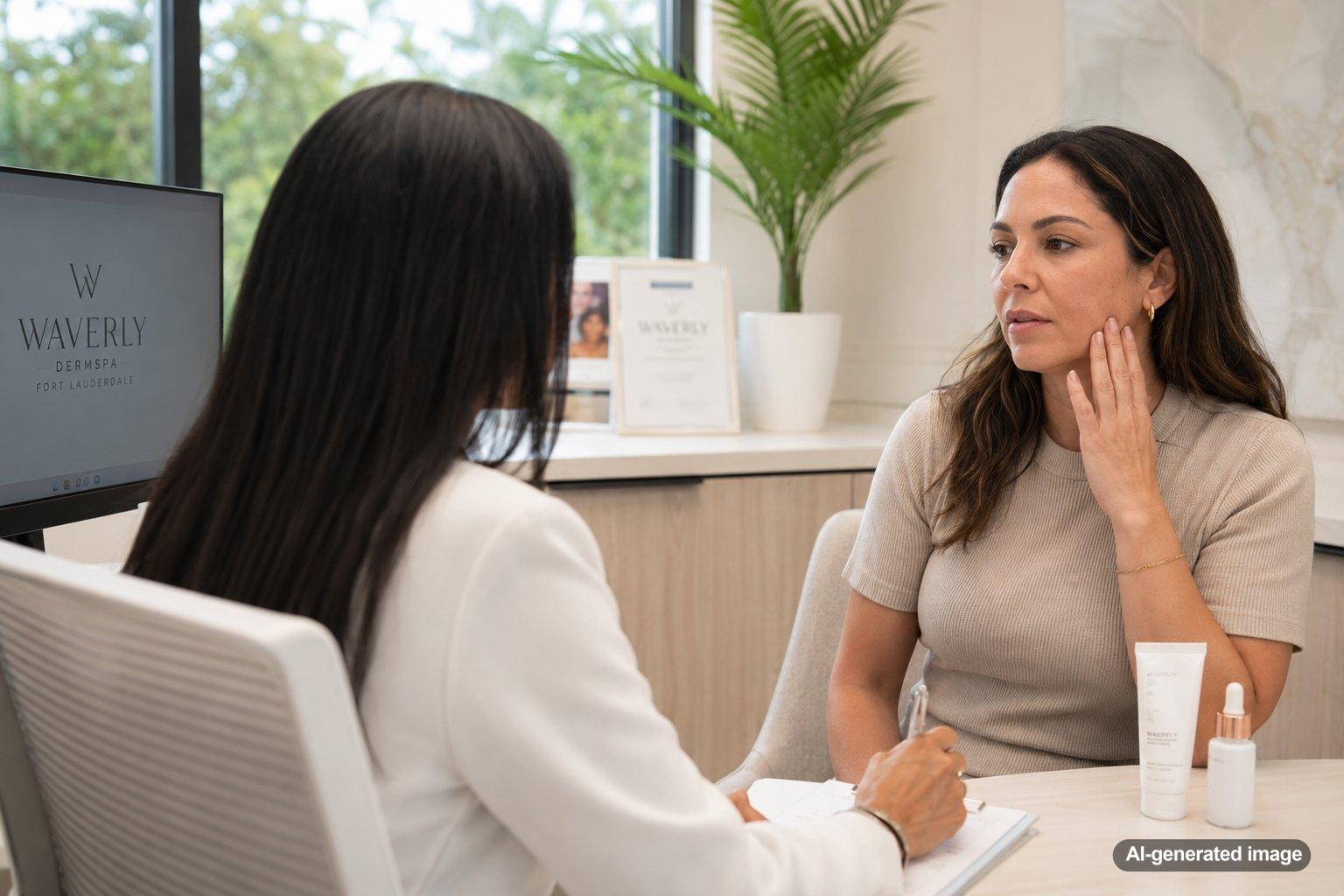
At Waverly DermSpa, a dermatologist can evaluate your rash, review your skincare routine, and help you understand which next steps may be appropriate for your skin.
FAQ
Should I keep using the product to see if my skin adjusts?
If a product causes a new rash, burning, swelling, or significant discomfort, it is usually safer to pause it and let the skin calm down. Some actives can cause mild dryness during adjustment, but a true rash deserves more caution.
Can I use a steroid cream from the drugstore?
Over-the-counter creams are not right for every rash or every location, especially on the face, eyelids, or around the mouth. A dermatologist can help you choose an option that fits the area and the likely cause.
How do I know which ingredient caused the reaction?
It can be difficult to know from the label alone. Keeping the product, taking photos of the rash, and writing down when you started and stopped each product can make your appointment more useful.
Can I restart my skincare routine after the rash calms?
Many people can return to a routine gradually, but it is best to reintroduce products slowly and one at a time. If the rash was significant or keeps recurring, ask a dermatologist before restarting strong actives.
Is a product rash contagious?
Contact dermatitis itself is not considered contagious. However, some infections can look rash-like, so it is worth getting checked if the area is painful, oozing, crusting, spreading, or not improving.
Ready to get help?
Schedule an appointment or send a message and our team will get back to you.
Prefer to call? 954-666-3736
Disclaimer
This article is for educational purposes and is not medical advice. For diagnosis and personalized treatment, please book an appointment with a board-certified dermatologist.
Sources & further reading
- American Academy of Dermatology (AAD) – Eczema types: Contact dermatitis overview
- DermNet – Contact dermatitis
- Mayo Clinic – Contact dermatitis – Symptoms and causes
