

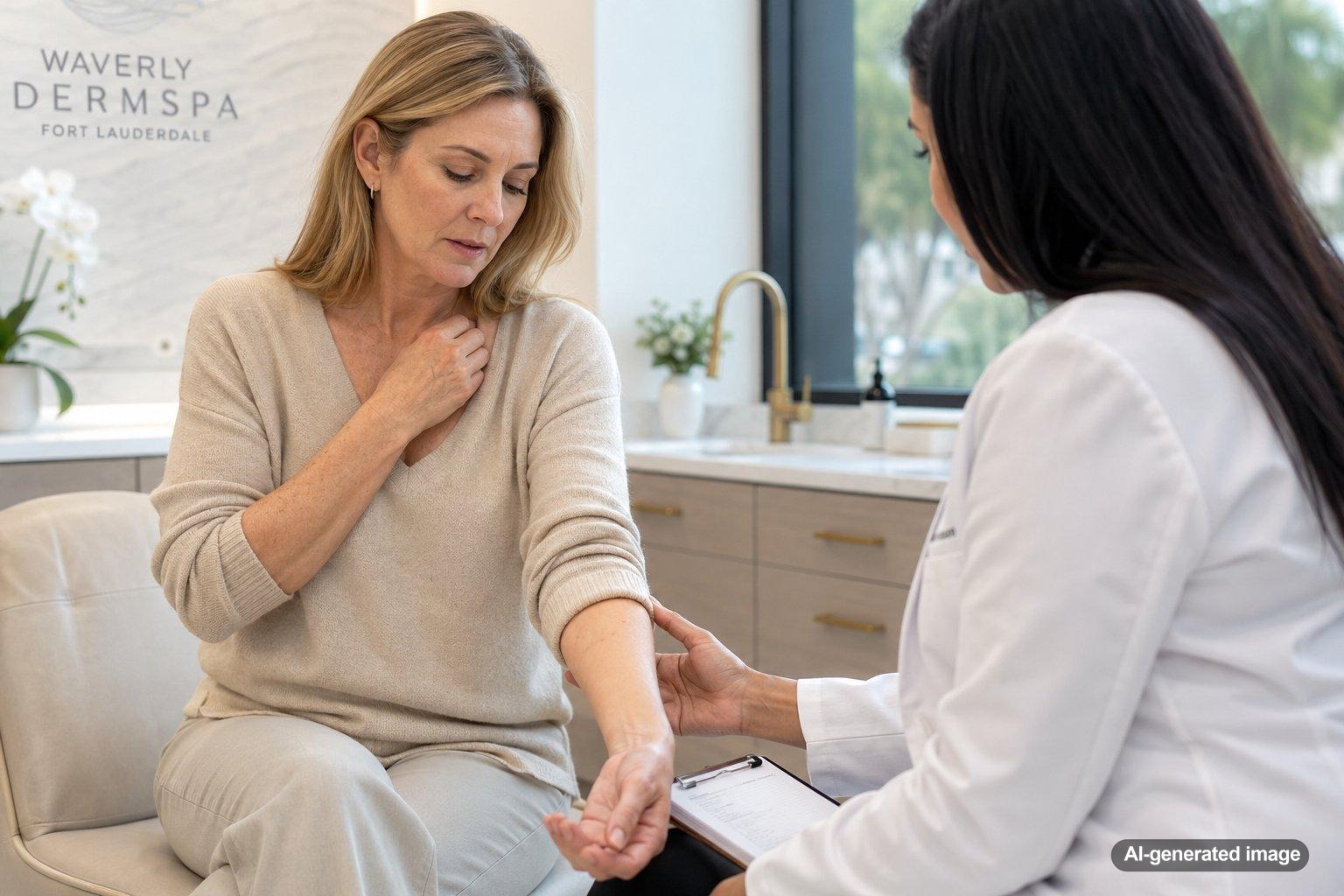
When a soft shirt, bedsheet, waistband, or light brush against the skin feels painful, the sensation can be unsettling. One possible explanation is allodynia, a pain response to touch that would not ordinarily hurt. The discomfort is real, even when the skin looks completely normal.
Allodynia usually reflects heightened pain signaling rather than damage caused by the clothing itself. However, fabric friction, a disrupted skin barrier, contact irritation, or an active skin condition can feel similar. A careful evaluation can help distinguish a surface-level skin problem from sensitivity involving the nerves or the way the nervous system processes touch.
Quick answer
- Light clothing may feel painful when the nervous system interprets ordinary touch as a pain signal.
- This type of touch sensitivity is often called tactile or mechanical allodynia.
- Visible redness, scaling, bumps, blisters, or raw skin may point toward irritation or a dermatologic condition instead.
- Loose, smooth clothing and gentle skin care may reduce avoidable friction while you arrange an evaluation.
- New, severe, persistent, or worsening skin pain deserves medical attention, especially when it occurs with other symptoms.
What is allodynia?
Allodynia describes pain caused by a stimulus that is normally not painful. With tactile allodynia, a light touch may feel burning, stinging, sharp, bruised, sunburned, or intensely tender. Clothing, a towel, bedding, hair moving across the skin, or a gentle hand can become difficult to tolerate.
The skin may look normal because the altered response can occur within pain-processing pathways rather than at the skin’s surface. This is different from hyperalgesia, in which something that is already painful feels more painful than expected. The distinction is useful clinically, but you do not need to label the sensation on your own. Describing exactly what triggers it, how it feels, and where it occurs is more helpful.
Why can ordinary fabric feel painful?
The body uses specialized nerves to carry information about pressure, temperature, injury, and pain. When these pathways become unusually sensitive, signals from harmless contact can be amplified or interpreted as painful. Allodynia can be associated with migraine, nerve irritation or injury, peripheral nerve disorders, fibromyalgia, and other pain-processing conditions. It can also appear after an illness or alongside other neurologic symptoms. The pattern and context matter, so a clinician should evaluate the cause rather than assuming that every case has the same explanation.
Not every painful reaction to clothing is allodynia. A dermatologist may also consider more direct skin causes, including friction, chafing, an impaired skin barrier, allergic or irritant contact dermatitis, eczema-like inflammation, heat rash, or a reaction around hair follicles. These problems are more likely to cause visible changes or discomfort linked to a particular fabric, dye, detergent, product, pressure point, or sweaty area, although appearances can vary.
Common patterns and triggers
- Light touch: A sleeve, bedsheet, or strand of hair hurts despite little or no pressure.
- Repeated friction: Seams, waistbands, bra straps, or fitted athletic wear become difficult to tolerate.
- Temperature shifts: Warm or cool fabric against the skin contributes to discomfort.
- Localized sensitivity: Pain stays in one small area, follows a band-like pattern, or affects one side more than the other.
- Widespread sensitivity: Several areas feel tender at once or sensitivity changes during broader pain episodes.
- Visible skin change: Redness, scaling, bumps, blisters, swelling, or broken skin suggests that a surface-level skin process may be contributing.
Details such as whether the pain is constant or intermittent, whether it started suddenly, and whether there is numbness, tingling, weakness, itching, headache, or a rash can help guide the evaluation.
What can you do at home?
While you are monitoring the symptom or waiting for an appointment, focus on reducing unnecessary irritation. Choose loose clothing made from smooth, breathable material. Turn garments inside out if seams are the main trigger, remove scratchy tags, and avoid tight elastic over the sensitive area. A cool room and prompt changes out of damp clothing may also reduce friction from heat and sweat.
Keep skin care simple. Use lukewarm rather than hot water, a mild fragrance-free cleanser where needed, and a plain fragrance-free moisturizer if the skin is dry. Pause new fragranced products, harsh exfoliants, and aggressive scrubbing on the affected area. If a specific garment or laundry product seems connected, set it aside and note whether the pattern changes.
A brief symptom record may be valuable. Write down when the pain began, its location, how it feels, what touches trigger it, how long it lasts, any visible change, and any symptoms that occur at the same time. Avoid repeatedly testing the painful area or applying numbing products without professional guidance, since masking the sensation can make it harder to notice changes that deserve attention.
How a professional evaluation may help
A dermatologist can examine the skin and look for subtle inflammation, barrier damage, contact reactions, or other dermatologic explanations. The visit may include questions about recent illnesses or injuries, headaches, nerve symptoms, medical history, medications, skin products, detergents, and the precise pattern of pain. Testing is not automatically needed; recommendations depend on what the history and examination show.
If the skin appears healthy and the pattern suggests altered nerve signaling, your dermatologist may recommend evaluation by a primary care clinician, neurologist, or pain specialist. Professional options are tailored to the suspected cause and may include treating an underlying skin condition, reducing a contributing trigger, or discussing high-level approaches for nerve-related pain. Your clinician can help you decide which next step fits the overall symptom pattern.
When should you see a dermatologist?
Schedule an evaluation when sensitivity persists, repeatedly returns, interferes with dressing or sleep, spreads, or has no clear explanation. It is also worth getting checked when pain occurs with a new rash, blisters, scaling, swelling, skin warmth, drainage, or a rapidly changing area.
Seek urgent medical care for sudden skin sensitivity accompanied by weakness, facial drooping, trouble speaking, confusion, loss of coordination, a severe unusual headache, chest pain, trouble breathing, or a rapidly worsening reaction. Severe pain after an injury, extensive blistering, fever with a spreading rash, or involvement of the eyes or mouth also warrants prompt assessment. These combinations may require care beyond a routine dermatology appointment.
Frequently asked questions
Can allodynia happen without a rash?
Yes. The skin can look unchanged because allodynia may involve how touch signals are processed. A normal appearance does not make the pain less meaningful, but it also does not identify the cause. An examination can help rule out subtle skin problems.
Is painful clothing sensitivity the same as sensitive skin?
Not necessarily. Sensitive skin often produces burning, stinging, itching, or redness after exposure to a product or environmental trigger. Allodynia is pain from normally harmless stimulation. The experiences can overlap, which is why the visible findings and symptom history are important.
Why does my skin feel sunburned when it looks normal?
A burning or sunburn-like feeling without visible redness may occur with heightened nerve sensitivity, but it can have other explanations. The location, timing, recent exposures, and presence of tingling, numbness, headache, or weakness can help a clinician narrow the possibilities.
Can stress make touch sensitivity feel worse?
Stress can heighten awareness of discomfort and may coincide with symptom flares for some people. That does not mean the pain is imagined. Persistent or unexplained symptoms should still be evaluated instead of attributed to stress alone.
Should I change my laundry detergent?
If discomfort follows a new detergent or comes with itching, redness, or a rash in clothing-covered areas, switching to a fragrance-free, dye-free option and re-washing garments may help reduce a possible irritant. Pain from even the lightest touch without skin changes may need a broader medical evaluation.
Ready to get help?
Schedule an appointment or send a message and our team will get back to you.
Prefer to call? 954-666-3736
This article is for educational purposes and is not medical advice. For diagnosis and personalized treatment, please book an appointment with a board-certified dermatologist.
