

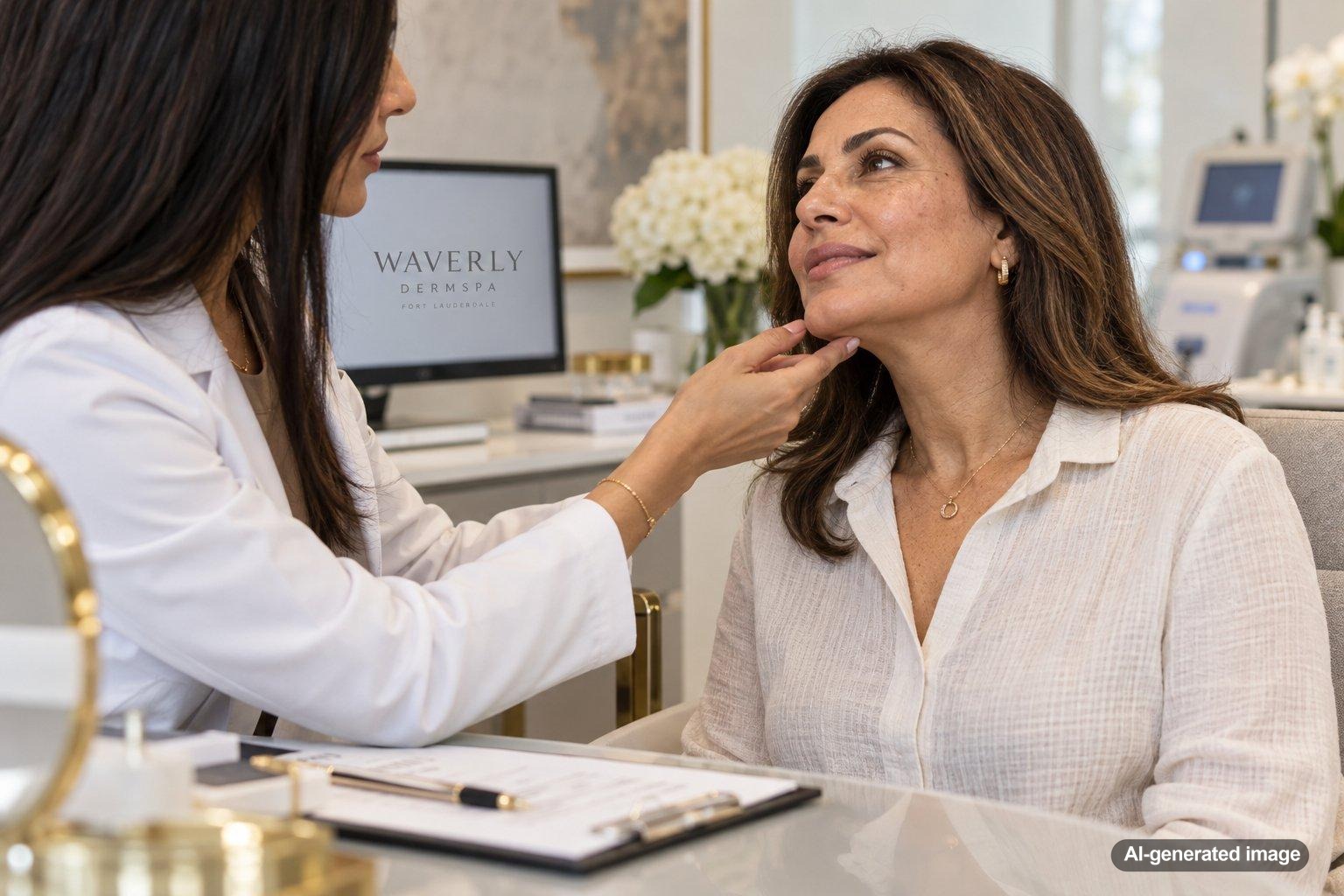
Early sun damage often shows up gradually rather than as one dramatic change. The face and neck may begin to look less even, less bright, or slightly rougher after years of everyday ultraviolet exposure, especially in a sunny climate such as South Florida. Clear + Brilliant Touch is a non-ablative fractional laser treatment that may help improve the appearance of early changes in tone and texture while fitting into a broader plan that includes consistent sun protection and thoughtful skincare.
The important distinction is that cosmetic laser treatment addresses appearance, not the underlying need to monitor the skin for medically concerning changes. A dermatologist can evaluate spots or lesions that are new, changing, symptomatic, or otherwise unusual before cosmetic treatment is considered.
Quick answer
- Clear + Brilliant Touch is a fractional laser treatment used for skin resurfacing and overall skin quality.
- It may be considered for early visible sun-related changes such as uneven tone, dullness, fine texture, and subtle signs of aging.
- The face and neck can have different sensitivity, thickness, and sun exposure patterns, so treatment planning should be individualized.
- Results vary, and more significant pigmentation, redness, wrinkles, or other concerns may call for a different approach.
- Daily broad-spectrum sun protection remains important because laser treatment does not prevent future ultraviolet damage.
What Clear + Brilliant Touch is
Clear + Brilliant Touch is a non-ablative fractional laser treatment. Rather than removing the entire surface of the skin, fractional technology creates many small treatment zones while leaving surrounding areas untreated. The goal is controlled resurfacing that may support smoother-looking texture and a more refreshed appearance.
It is often discussed when someone wants to address relatively early cosmetic changes rather than more advanced skin aging. A consultation helps determine whether the concern is appropriate for this type of treatment or whether another option would better match the skin’s needs.
What early sun damage can look like
Sun exposure can affect skin in several ways, and not every brown, red, rough, or changing area should be assumed to be routine sun damage. From a cosmetic standpoint, early changes people commonly notice can include:
- Uneven-looking skin tone
- A dull or less luminous appearance
- Fine or slightly rough texture
- Subtle mottled discoloration
- Early visible signs of photoaging
- A difference in tone between more exposed and better-protected areas
If a particular spot is new, changing, bleeding, painful, persistently crusted, or simply looks different from the surrounding skin, it is worth having a dermatologist evaluate it instead of treating it as a cosmetic discoloration.
Why the face and neck may need different treatment planning
The face and neck are both highly visible and frequently exposed to sunlight, but they are not identical treatment areas. Skin characteristics, previous sun exposure, sensitivity, skincare products, and the exact concern can vary between them.
Someone may have more uneven pigmentation across the cheeks and forehead while noticing texture or color differences along the neck. Treating both areas does not necessarily mean using the same approach everywhere. A clinician can assess the skin and plan treatment around the specific area rather than assuming one setting or strategy fits the entire face and neck.
What Clear + Brilliant Touch may help address
For appropriately selected patients, Clear + Brilliant Touch may be used as part of a cosmetic plan for concerns involving overall skin quality. These can include early unevenness in tone, mild textural changes, dullness, and subtle signs of aging associated with cumulative environmental exposure.
It is important to keep expectations proportional to the concern. A gentle fractional resurfacing treatment is not interchangeable with every pigment, vascular, resurfacing, injectable, or surgical option. More pronounced discoloration, deeper wrinkles, visible vessels, scars, or significant laxity may require a different treatment category or a combination approach.
What treatment planning usually involves
A good cosmetic plan begins with an assessment of what is actually creating the visible concern. The clinician may review the distribution of discoloration, texture, sensitivity, prior procedures, recent sun exposure, skincare routine, and any areas that should be medically evaluated first.
The treatment itself is performed with a handpiece passed across the planned treatment area. Sensation and post-treatment appearance can vary from person to person. Temporary redness, warmth, dryness, or a rougher-feeling surface can occur after fractional laser procedures, and individual recovery varies. Your clinician should explain what to expect based on the areas being treated and your specific skin characteristics.
What you can do at home
Home care matters because treating existing cosmetic changes does not stop new ultraviolet exposure. Conservative habits that can support a skin-quality plan include:
- Use broad-spectrum sunscreen consistently on the face, neck, ears, and other exposed areas.
- Reapply sun protection as appropriate when spending extended time outdoors.
- Use hats, shade, and other physical protection during strong sun exposure.
- Keep the skincare routine gentle if the skin feels sensitive before or after a procedure.
- Avoid aggressively scrubbing, picking, or layering multiple irritating products onto recently treated skin.
- Follow the specific pre-treatment and post-treatment instructions provided by your clinician.
Professional options for sun-related skin changes
Clear + Brilliant Touch is one of several professional approaches that may be discussed for visible sun-related changes. Depending on what is causing the concern, options may include fractional laser resurfacing, other laser or light-based treatments, chemical peels, topical skincare, or a combination plan.
The appropriate category depends on factors such as the type of pigmentation, degree of texture change, skin sensitivity, treatment goals, and whether a medical skin condition needs to be ruled out first. A dermatologist or qualified aesthetic clinician can help distinguish between concerns that are primarily cosmetic and those that deserve medical evaluation.
When to see a dermatologist before cosmetic laser treatment
Cosmetic treatment should not substitute for evaluation of a concerning skin change. Consider seeing a dermatologist first if you notice a spot or area that is new, changing, bleeding, persistently crusting, painful, not healing, rapidly growing, or noticeably different from your other spots.
It is also helpful to discuss any history of significant skin sensitivity, previous reactions to procedures, current medications, active irritation, recent intense sun exposure, or other skin conditions during the consultation. Your clinician can help determine whether treatment should proceed, be modified, or be postponed.
Frequently asked questions
Is Clear + Brilliant Touch only for people with obvious sun spots?
No. It may also be considered when the main concerns are overall dullness, mild uneven tone, or early textural changes. A consultation is useful because visible discoloration can have different causes and may not always be best addressed with the same treatment.
Can the face and neck be treated during the same visit?
They may be treated as part of the same overall plan when appropriate, but the areas should still be assessed individually. Skin characteristics and treatment needs can differ between the face and neck.
Does Clear + Brilliant Touch prevent future sun damage?
No. Cosmetic resurfacing does not replace sunscreen, protective clothing, shade, or other sun-protection habits. Continued ultraviolet exposure can contribute to additional visible skin changes over time.
Is one treatment enough?
There is no universal treatment number. Some people pursue a single session while others discuss a series or periodic maintenance with their clinician. The appropriate plan depends on the concern, treatment response, skin characteristics, and goals.
Can Clear + Brilliant Touch treat every type of pigmentation?
No. Pigmentation can arise from different causes, and some conditions require a different approach. A dermatologist or qualified clinician can evaluate the pattern before recommending treatment.
What if I have one dark spot that looks different from the others?
Have it evaluated rather than assuming it is routine sun damage. A new or changing lesion should be assessed medically before cosmetic laser treatment is considered.
At Waverly DermSpa, we offer Clear + Brilliant Touch and can help you understand whether it may be appropriate.
Ready to get help?
Schedule an appointment or send a message and our team will get back to you.
Prefer to call? 954-666-3736
This article is for educational purposes and is not medical advice. For diagnosis and personalized treatment, please book an appointment with a board-certified dermatologist.
