

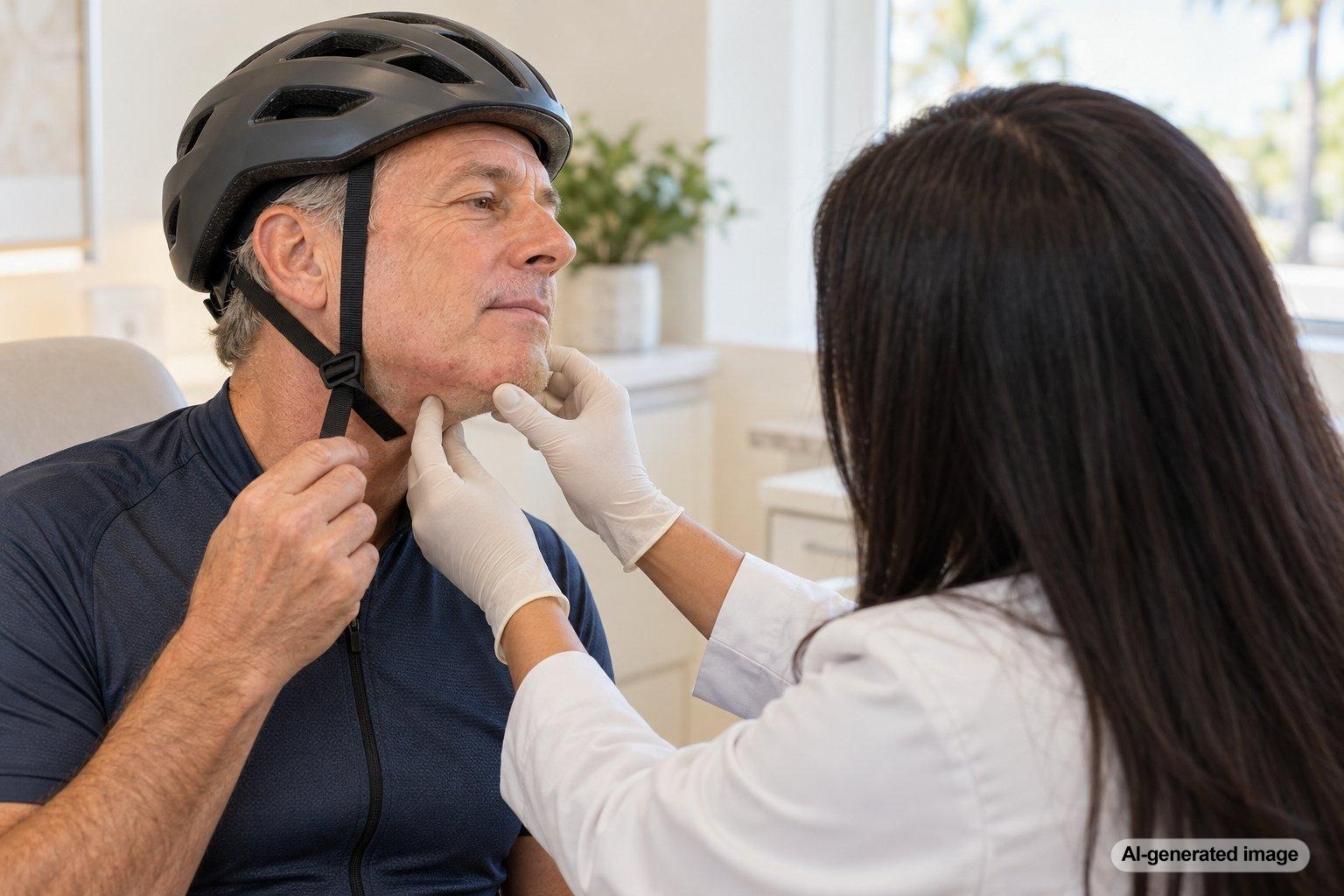
If you finish a bike ride and notice small bumps, redness, or pimples exactly where your helmet strap touches your chin, the placement may not be a coincidence. Repeated friction, pressure, heat, and trapped sweat can contribute to breakouts in areas covered by sports equipment. Dermatologists sometimes describe this pattern as acne mechanica, although not every bump beneath a helmet strap is acne.
For cyclists in Fort Lauderdale, where warm weather and humidity can make even a short ride sweaty, the combination can be especially noticeable. The encouraging part is that small changes to strap hygiene, helmet fit, and your skincare routine may reduce irritation without interfering with the protective purpose of your helmet. Understanding what the bumps look and feel like is the first step toward finding an appropriate approach.
Quick Answer: Why Does a Bike Helmet Strap Cause Chin Breakouts?
- Friction: Repeated rubbing against the same area can irritate skin and contribute to acne-like bumps.
- Heat and sweat: Moisture trapped beneath a strap can make the skin more susceptible to irritation.
- Pressure: A strap that presses unnecessarily hard against the chin may aggravate existing breakouts.
- Product and material sensitivity: Strap fabric, detergents, sunscreen, and skincare products may contribute to irritation in some people.
- Other skin conditions: Contact dermatitis and other causes of localized bumps can resemble acne, so the appearance alone does not establish a diagnosis.
What Is Acne Mechanica?
Acne mechanica is a form of acne associated with repeated friction, pressure, heat, and occlusion from clothing or equipment. It commonly affects areas where helmets, chin straps, protective pads, backpacks, or athletic clothing repeatedly contact the skin.
Unlike breakouts that seem to appear randomly across the face, acne mechanica often follows the shape or location of the equipment involved. A narrow cluster of bumps along the underside of the chin, for example, may correspond to the area where a bicycle helmet strap repeatedly rubs.
Early changes can include tiny, rough-feeling bumps that are easier to feel than see. Continued irritation may contribute to more noticeable pimples. Existing acne may also become more inflamed when equipment repeatedly contacts the affected skin.
However, a localized rash beneath a chin strap is not automatically acne mechanica. Skin irritation, contact reactions, and other conditions can produce a similar pattern. A dermatologist can evaluate persistent or unusual symptoms and help distinguish between these possibilities.
Why Helmet Straps Can Trigger Breakouts
Repeated Rubbing Against the Chin
Every time you turn your head, look over your shoulder, or adjust your position on the bike, your helmet strap may move slightly against your skin. These small movements can add up during a longer ride.
When the same area experiences repeated friction, it can become irritated. For someone already prone to acne, that irritation may contribute to clogged-looking bumps or inflamed pimples.
Trapped Sweat and Heat
Helmet straps sit close to the skin, creating an area where perspiration and warmth may accumulate. Sweat itself is not the same as acne, but prolonged moisture combined with friction can aggravate the skin.
During a humid South Florida ride, a strap may remain damp for much of the outing. The combination of moisture and movement can make an already sensitive area more reactive.
Pressure From an Improperly Adjusted Strap
A bicycle helmet needs to fit securely to perform its protective function. However, unnecessary pressure from a poorly positioned or excessively tight strap can increase discomfort and rubbing.
Some cyclists repeatedly tighten their straps in an effort to stop helmet movement when the underlying problem is actually helmet size or positioning. A properly fitted helmet should remain secure without creating avoidable pressure points.
Residue on the Strap
Helmet straps can accumulate sweat, sunscreen, skin oils, and other residue through regular use. Repeated exposure to these substances may contribute to irritation, particularly when the strap remains damp or is not cleaned according to the manufacturer’s instructions.
This does not mean that a strap must look dirty to cause problems. Even a clean strap can irritate sensitive skin through friction alone.
Skin Products and Material Sensitivity
Sunscreen, facial moisturizers, shaving products, fragrances, and laundry products can all interact with the skin beneath a strap. Some individuals may also react to components of the strap material.
When the skin becomes itchy, dry, scaly, or sharply red rather than developing recognizable pimples, a contact reaction may be worth considering. A dermatologist can help determine whether the symptoms are more consistent with acne or another skin condition.
How Can You Tell Whether It Is Acne or Strap Irritation?
The pattern and accompanying symptoms may offer useful clues, but they cannot confirm a diagnosis on their own.
- Acne-like bumps: Small flesh-colored bumps, whiteheads, or inflamed pimples concentrated along the strap line may be consistent with acne mechanica.
- Friction irritation: Tenderness, superficial redness, or a rubbing sensation that becomes more noticeable during a ride may suggest mechanical irritation.
- Contact dermatitis: Itching, dryness, scaling, or a broader patch of redness may suggest a reaction to a material or product.
- Other follicle-related bumps: Similar-looking bumps can sometimes have causes other than acne and may require a different approach.
The relationship to cycling is also informative. If symptoms repeatedly appear or worsen after rides and remain concentrated beneath the strap, it is reasonable to discuss that pattern with a dermatologist.
What You Can Do at Home to Reduce Helmet Strap Breakouts
Clean the Strap According to the Helmet Manufacturer’s Instructions
Regular strap maintenance can help reduce the buildup of sweat and product residue. Follow the helmet manufacturer’s cleaning guidance, since some cleaning agents can damage materials used in protective equipment.
Allow the strap to dry thoroughly between rides when possible. Avoid harsh disinfectants, strong fragrances, or unapproved chemicals that could irritate the skin or compromise helmet components.
Review Your Helmet Fit
Check that the helmet is the correct size, sits in its intended position, and has straps adjusted according to the manufacturer’s guidance.
Do not loosen the chin strap simply to keep it from touching irritated skin. A loose or incorrectly positioned helmet may not provide its intended protection. If discomfort continues despite proper adjustment, consider having the fit assessed by a knowledgeable bicycle helmet retailer.
A different helmet design or an approved replacement strap system may be more comfortable, provided it meets the manufacturer’s fit and safety requirements. Avoid inserting homemade padding or making modifications that could interfere with helmet performance.
Wash Your Face Gently After Cycling
After a sweaty ride, cleansing with a mild, nonabrasive facial cleanser may help remove perspiration, sunscreen, and accumulated residue.
Use lukewarm water and avoid aggressively scrubbing beneath the chin. Vigorous exfoliation can increase irritation in an area already exposed to repeated rubbing.
Pat the skin dry with a clean towel rather than rubbing it.
Keep Your Skincare Routine Simple
A gentle, fragrance-free moisturizer may help support the skin barrier if the area feels dry or irritated. Look for products labeled noncomedogenic when acne is a concern.
If your skin is already uncomfortable, introducing multiple exfoliating acids, scrubs, or strong acne products at once can make it harder to identify what is contributing to the problem.
For persistent acne-like bumps, a dermatologist can help determine whether an acne treatment is appropriate and how to balance treatment with the need to protect irritated skin.
Pay Attention to Sunscreen and Shaving Products
Sun protection remains important for outdoor cycling. If a particular sunscreen seems to worsen congestion beneath the chin strap, consider a different noncomedogenic formulation suitable for your skin.
Do not skip sun protection solely because the strap area breaks out. Instead, consider whether product texture, fragrance, or other ingredients may be contributing to irritation.
If you shave your chin or neck, notice whether close shaving shortly before cycling makes the area more sensitive. A gentler shaving routine may reduce additional friction.
Avoid Picking at the Bumps
Squeezing or scratching bumps can increase irritation and may contribute to lingering discoloration or marks. This is especially frustrating when the area is repeatedly touched by a helmet strap.
Giving irritated skin a break from unnecessary manipulation may help it recover more comfortably.
Should You Stop Cycling Until the Breakouts Clear?
Not necessarily. Many people can continue cycling while making practical adjustments to their equipment care and skincare habits.
The goal is to reduce avoidable friction and moisture while maintaining appropriate helmet protection. Cycling without a helmet or wearing one with an insecure strap is not an appropriate solution to a skin problem.
If symptoms are severe, painful, or associated with broken skin, it is worth seeking medical guidance rather than repeatedly exposing the affected area to discomfort.
For cyclists who ride frequently, keeping a brief record of when breakouts appear, which products were used, and how the helmet felt may help identify patterns. This information can also be useful during a dermatology appointment.
Professional Options for Persistent Chin Breakouts
When the same area continues to break out despite careful cleaning and fit adjustments, a professional skin evaluation can help clarify what is happening.
A dermatologist may assess whether the bumps are consistent with acne mechanica, contact dermatitis, or another condition. Depending on the findings, professional recommendations may include:
- Personalized skincare guidance: Adjusting cleansing and moisturizing habits to reduce unnecessary irritation.
- Acne treatment: Considering appropriate topical or prescription options when acne is confirmed.
- Evaluation of possible contact reactions: Reviewing strap materials, cleansers, and other products that repeatedly contact the affected area.
- Skin barrier support: Addressing dryness or irritation before introducing potentially irritating treatments.
- Management of lingering marks: Discussing suitable options if previous breakouts have left discoloration or texture changes.
In some circumstances, an aesthetician may help with gentle skincare maintenance once active irritation has been evaluated. However, persistent inflammatory bumps, unusual rashes, and treatment decisions involving prescription products belong with a qualified medical professional.
Procedures are not automatically necessary for helmet-related breakouts. The most appropriate plan depends on identifying the cause rather than treating every bump as ordinary acne.
When Should You See a Dermatologist?
Consider scheduling a dermatology evaluation if:
- The bumps repeatedly return despite reasonable changes to helmet care and skincare.
- You develop deep, painful, or persistent lesions.
- The affected area becomes increasingly red, swollen, warm, or tender.
- You notice drainage, crusting, broken skin, or rapidly worsening symptoms.
- The skin develops significant itching, scaling, or a rash that does not resemble your usual acne.
- You notice persistent dark marks or early scarring.
- You are uncertain whether the bumps are acne or another skin condition.
Seek prompt medical attention for rapidly spreading redness, severe pain, fever, or other concerning symptoms. These findings should not simply be attributed to helmet friction.
A dermatologist can evaluate the appearance, distribution, and history of your symptoms and recommend an individualized approach.
Frequently Asked Questions
Can a bike helmet strap really cause acne?
Yes. Repeated friction, pressure, heat, and trapped sweat from sports equipment can contribute to a type of acne known as acne mechanica. However, not every bump beneath a helmet strap is acne, and a professional evaluation may be needed when the cause is unclear.
Why do I only break out on one side of my chin?
One side may experience more friction because of strap positioning, the way the helmet fits, or differences in how the equipment contacts your skin. An uneven breakout pattern can be informative, but it does not establish the cause by itself.
Will cleaning my helmet strap stop the breakouts?
Cleaning may help reduce sweat and product residue, but it may not eliminate breakouts caused primarily by friction or pressure. Proper fit, gentle skincare, and an evaluation of persistent symptoms can also matter.
Should I put acne medication directly under my helmet strap?
Some acne treatments may help when acne is the underlying problem, but active ingredients can also irritate skin exposed to rubbing. If the area is dry, tender, or inflamed, a dermatologist can help determine whether medication is appropriate and how it should be used.
Could my sunscreen be causing the bumps?
Some skincare products may contribute to clogged pores or irritation, particularly when repeatedly covered and rubbed by equipment. Choosing a noncomedogenic sunscreen and watching for reactions to individual formulations may be useful. Continue practicing appropriate sun protection while cycling.
How long does helmet strap acne take to improve?
Improvement varies depending on the underlying cause, the degree of irritation, and whether friction continues. Some mild irritation may settle after the triggering exposure is reduced, while persistent acne may require a longer-term skincare or medical treatment plan. There is no single reliable timeline for everyone.
Protect Your Skin Without Compromising Helmet Safety
Chin breakouts that trace the path of a bicycle helmet strap are often associated with repeated rubbing, pressure, and moisture, but a contact reaction or another skin condition can sometimes look similar. Gentle cleansing, appropriate strap maintenance, and careful attention to helmet fit are reasonable starting points.
If the bumps persist, become painful, or leave marks, a dermatologist can help identify the cause and guide your next steps. You should not have to choose between protecting your skin and wearing properly fitted cycling equipment.
Ready to get help?
Schedule an appointment or send a message and our team will get back to you.
Prefer to call? 954-666-3736
Disclaimer
This article is for educational purposes and is not medical advice. For diagnosis and personalized treatment, please book an appointment with a board-certified dermatologist.
Sources & Further Reading
- American Academy of Dermatology (AAD) – Is sports equipment causing your acne?
- DermNet – Skin reactions to face masks
- DermNet – Personal protective equipment
