

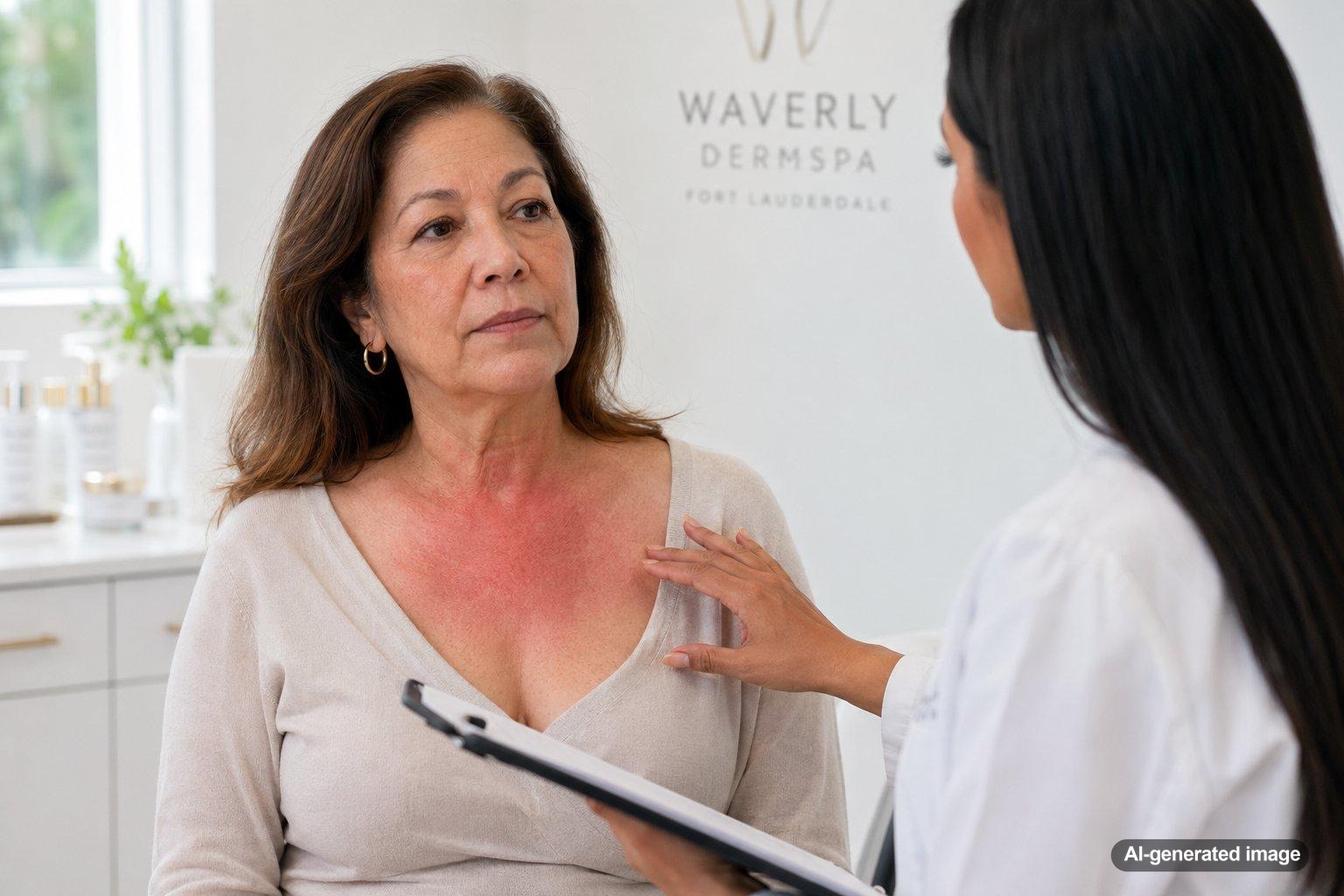
Alcohol can cause the blood vessels near the surface of your skin to widen temporarily, increasing blood flow and making your chest, neck, or face look bright red. This reaction may be a normal form of flushing, especially when it fades as the effects of the drink wear off.
However, frequent, intense, or uncomfortable flushing can also be associated with alcohol intolerance, rosacea, an ingredient in the beverage, certain medications, or another underlying issue. The appearance alone usually isn’t enough to identify the cause, so patterns and accompanying symptoms matter.
Quick answer
- Alcohol can temporarily widen skin blood vessels and create visible redness or warmth.
- Some people process alcohol differently and flush after even a small amount.
- Wine, beer, or mixed drinks may contain ingredients that trigger a reaction.
- Alcohol can aggravate flushing in people who are prone to rosacea.
- Flushing with hives, swelling, breathing trouble, or faintness requires urgent medical attention.
What causes alcohol-related chest flushing?
Flushing happens when small blood vessels in the skin dilate. The increased blood flow can make the upper chest, neck, cheeks, or ears appear red and feel noticeably warm. It may begin within minutes of drinking and can vary depending on the amount consumed, the type of beverage, your environment, and individual sensitivity.
The redness may look dramatic because the skin of the upper chest is relatively thin and has many visible blood vessels. Heat, dancing, exercise, spicy food, emotional stress, or sun exposure can intensify the same response.
Common causes and triggers
- Temporary blood vessel dilation: Alcohol directly affects circulation and may produce short-lived warmth and redness.
- Alcohol intolerance: Differences in the enzymes involved in processing alcohol can allow acetaldehyde to accumulate, potentially causing flushing, nausea, headache, or a rapid heartbeat.
- Rosacea-prone skin: Alcohol is a common flushing trigger for some people with rosacea, although flushing after a drink does not automatically mean someone has rosacea.
- Beverage ingredients: Sulfites, grains, yeast, flavorings, preservatives, or other ingredients may contribute to symptoms in certain people.
- Medication interactions: Some prescription and over-the-counter medications can increase flushing or react poorly with alcohol.
- Combined triggers: A hot room, warm shower, spicy meal, exercise, or sun exposure can make alcohol-related redness more noticeable.
Is flushing the same as an alcohol allergy?
Not necessarily. Simple flushing commonly involves warmth and redness caused by increased blood flow. Alcohol intolerance is related to how the body metabolizes alcohol, while an allergic reaction involves the immune system and may be caused by alcohol or another ingredient in the drink.
Possible allergy-related warning signs include itching, raised welts, facial or throat swelling, wheezing, difficulty breathing, severe abdominal symptoms, dizziness, or faintness. These symptoms should not be dismissed as ordinary flushing.
What you can do at home
- Stop drinking when flushing begins rather than trying to drink through the reaction.
- Keep a simple record of the beverage, amount, timing, food, medications, and other symptoms.
- Notice whether the reaction occurs with every type of alcohol or only certain wines, beers, or mixed drinks.
- Move to a cooler environment and use a cool compress if the skin feels hot.
- Avoid combining alcohol with other known flushing triggers, such as spicy food or excessive heat.
- Do not use antihistamines or other medications to mask a recurring reaction unless a clinician has advised you to do so.
If avoiding alcohol prevents the reaction, that information can be useful when discussing the pattern with your healthcare provider. Repeated exposure isn’t necessary to prove that a beverage is causing symptoms.
How a dermatologist may evaluate recurring redness
A dermatologist can examine the distribution of the redness and look for clues such as persistent background redness, visible blood vessels, bumps, irritation, or other signs of rosacea or a separate skin condition. Your clinician may also ask how quickly the flushing starts, how long it lasts, which beverages trigger it, and whether you experience itching, nausea, palpitations, congestion, diarrhea, or breathing symptoms.
Because alcohol flushing can sometimes involve metabolism, medications, allergies, or non-dermatologic conditions, your dermatologist may recommend coordinating with your primary care clinician or another specialist. Professional options depend on the underlying cause and may include trigger management, gentle skincare, prescription therapy for a diagnosed inflammatory skin condition, or further medical evaluation.
When to see a dermatologist
Consider scheduling an evaluation when the redness is becoming more frequent, occurs after very small amounts of alcohol, lasts well beyond the drinking episode, or is accompanied by persistent facial or chest redness between episodes. It is also worth getting checked if you notice burning, bumps, visible vessels, scaling, or increasing skin sensitivity.
Seek prompt medical care if flushing occurs with a racing heartbeat, repeated vomiting, severe headache, diarrhea, wheezing, or other significant symptoms. Call emergency services for difficulty breathing, throat tightness, facial or tongue swelling, fainting, or signs of a severe allergic reaction.
Frequently asked questions
Why does my chest turn red but not my face?
Flushing can appear wherever surface blood vessels respond most visibly. For some people, the upper chest and neck show the color change more clearly than the cheeks.
Can one glass of wine cause bright redness?
Yes. A small amount may trigger flushing in someone who is sensitive to alcohol, has an alcohol-processing difference, is prone to rosacea, or reacts to an ingredient in that particular beverage.
Does red skin after drinking mean liver damage?
Flushing by itself does not establish liver disease. Because several factors can cause redness after alcohol, a clinician should assess persistent flushing or symptoms that suggest a broader health concern.
Can alcohol suddenly start causing flushing?
Yes. Reactions may change over time because of new medications, hormonal changes, evolving skin sensitivity, a different beverage ingredient, or another health factor. A new or worsening pattern is worth discussing with a clinician.
Can skincare stop alcohol flushing?
Gentle skincare may reduce background irritation, but it cannot reliably prevent the internal blood vessel response to alcohol. Avoiding the trigger and identifying the cause are more important than trying to conceal the redness.
Should I keep drinking to see whether the reaction happens again?
No. You do not need to repeat an uncomfortable reaction deliberately. Record what happened and discuss it with a healthcare professional, particularly if the episode involved symptoms beyond temporary redness and warmth.
Ready to get help?
Schedule an appointment or send a message and our team will get back to you.
Prefer to call? 954-666-3736
This article is for educational purposes and is not medical advice. For diagnosis and personalized treatment, please book an appointment with a board-certified dermatologist.
Sources & further reading
- Cleveland Clinic – Skin Flushing: What It Is, Causes & Treatment
- DermNet – Flushing
- MedlinePlus (NIH) – Skin Blushing/Flushing
