

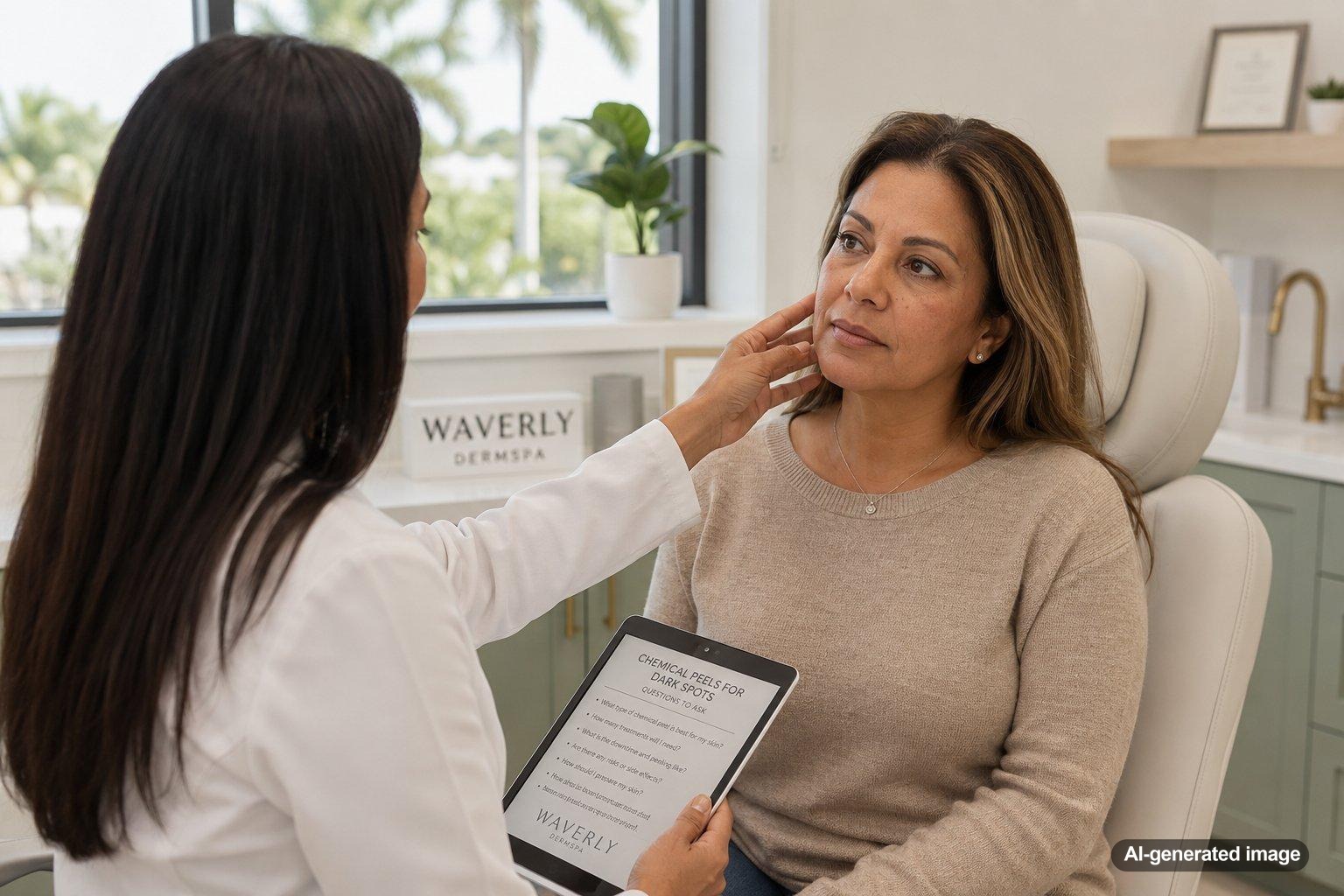
Dark spots can feel frustrating because they often linger long after the original trigger has faded. Sun exposure, acne marks, melasma, irritation, and normal skin changes can all be associated with uneven tone, and chemical peels may be one option to help improve the look of discoloration.
Before scheduling a peel, the most important step is asking the right questions. A thoughtful consultation can help clarify whether a peel is appropriate, what type may be considered, how your skin tone and history affect planning, and what aftercare is needed to support safer healing.
Quick answer
- Ask what type and strength of peel may be appropriate for your specific dark spots.
- Ask whether your pigmentation could be melasma, post-acne discoloration, sun damage, or another concern.
- Ask how your skin tone, tanning history, and sensitivity may affect peel planning.
- Ask what downtime, peeling, redness, and aftercare may look like for you.
- Ask when a dermatologist should evaluate a spot before any cosmetic treatment.
What chemical peels are
A chemical peel is an in-office treatment that uses a carefully selected solution to exfoliate the outer layers of skin. Depending on the peel type and depth, this may help improve the appearance of uneven tone, rough texture, dullness, clogged pores, and some forms of discoloration.
Peels are not one-size-fits-all. A very superficial peel may offer gentle brightening with minimal downtime, while stronger peels require more planning and recovery. For dark spots, the goal is usually gradual improvement rather than a dramatic overnight change.
Common causes or triggers for dark spots
Dark spots are not all the same, which is why a consultation matters. The cause can influence whether a peel is a reasonable option and how cautiously it should be approached.
- Sun exposure: UV exposure can contribute to brown spots and uneven tone over time.
- Post-inflammatory hyperpigmentation: Acne, bug bites, rashes, burns, or irritation can leave temporary discoloration after the skin calms.
- Melasma: This patterned pigmentation can be associated with hormones, heat, sun exposure, and skin type, and it often needs a careful long-term plan.
- Skin irritation: Over-exfoliating, harsh products, or picking at the skin can make discoloration more noticeable.
- Concerning lesions: Some spots should be evaluated medically before cosmetic treatment, especially if they are changing, bleeding, painful, or irregular.
What to ask before a chemical peel for dark spots
What type of dark spot do I have?
Ask your clinician what may be contributing to the discoloration and whether a dermatologist should evaluate it first. A peel plan for post-acne discoloration may differ from a plan for melasma, sun-related spots, or a lesion that needs medical attention.
Which peel type are you considering, and why?
Common peel categories may include alpha hydroxy acid peels, beta hydroxy acid peels, Jessner-style peels, trichloroacetic acid peels, and other customized options. The best question is not simply which peel is strongest, but which peel makes sense for your skin, goals, history, and comfort with downtime.
Is this peel appropriate for my skin tone?
People with more melanin-rich skin can be more prone to post-inflammatory hyperpigmentation after irritation. That does not mean peels are off-limits, but it does mean the plan should be thoughtful. Ask how your clinician adjusts peel selection, preparation, depth, and aftercare based on your skin tone.
How should I prepare my skin?
Your clinician may recommend pausing certain active ingredients, avoiding waxing or aggressive exfoliation, and being consistent with sun protection before treatment. Preparation can vary, so ask what to stop, what to continue, and when to call the office if your skin becomes irritated before the appointment.
What downtime should I expect?
Downtime can vary widely. Some peels create light flaking, while others may involve more visible peeling, dryness, tightness, or temporary redness. Ask what is typical for the specific peel being discussed and how that may affect work, travel, events, exercise, and makeup use.
How many sessions might be considered?
Dark spots often require patience. Many people need a series of treatments or a maintenance plan, but the number of sessions varies. Ask what a realistic approach may look like without expecting a guaranteed result or fixed timeline.
What are the risks for my skin?
Ask about temporary redness, dryness, irritation, breakouts, uneven lightening or darkening, sensitivity, and the possibility that pigmentation may worsen if the skin becomes inflamed. This conversation is especially important if you have a history of melasma, keloids, cold sores, sensitive skin, or recent tanning.
What aftercare do I need?
Aftercare usually centers on gentle cleansing, bland moisturizers, avoiding picking, and careful sun protection. Ask which products are safe to use, which active ingredients to pause, when to restart your routine, and when to contact the office if something does not feel right.
What you can do at home
At-home care can support your treatment plan, but it should be conservative, especially if your skin is easily irritated. A simple routine often matters more than using many brightening products at once.
- Use broad-spectrum sunscreen consistently and reapply when outdoors.
- Avoid picking at acne, scabs, or healing skin.
- Use a gentle cleanser and moisturizer to support the skin barrier.
- Introduce exfoliating or brightening products slowly if your clinician recommends them.
- Avoid mixing multiple strong actives without guidance, especially before or after a peel.
Professional options
Chemical peels are one professional option for uneven tone, but they may not be the only option. Depending on the type of discoloration, your dermatologist may discuss topical medications, skincare adjustments, laser or light-based treatments, microneedling, or a combination plan.
For some patients, the safest next step is not immediate treatment but diagnosis first. If a spot is new, changing, irregular, bleeding, painful, or looks different from your other spots, a dermatologist can evaluate it before cosmetic procedures are considered.
At Waverly DermSpa, we offer Chemical Peels and can help you understand whether it may be appropriate.
When to see a dermatologist
Schedule an evaluation before treating a dark spot cosmetically if you notice a spot that is changing in size, shape, or color, has irregular borders, bleeds, becomes painful, does not heal, or stands out from your other marks. It is also worth getting checked if pigmentation appears suddenly, spreads quickly, or is associated with irritation, rash, pregnancy, new medications, or a history of skin cancer.
FAQ
Can a chemical peel remove dark spots completely?
A peel may help improve the appearance of some dark spots, but outcomes vary. The cause of the pigmentation, peel depth, skin tone, sun habits, and aftercare all matter. It is better to think in terms of gradual improvement rather than a guaranteed endpoint.
Are chemical peels safe for darker skin tones?
They may be appropriate for some people with darker skin tones when selected and performed carefully. The key is a personalized plan that considers the risk of irritation and post-inflammatory hyperpigmentation.
Is melasma treated the same way as sun spots?
Not always. Melasma can be more reactive to heat, sun, irritation, and hormonal influences, so it often needs a cautious, long-term strategy. A dermatologist can help distinguish melasma from other forms of pigmentation.
Should I stop retinol before a peel?
Many clinicians recommend pausing retinoids or other exfoliating ingredients before certain peels, but the timing depends on your skin and the planned treatment. Ask your clinician for instructions before changing your routine.
Can I get a chemical peel before a trip or event?
It is usually wise to avoid scheduling a peel too close to important events or travel, especially if you are unsure how your skin responds. Ask about expected peeling, sun exposure precautions, and when it is safer to plan treatment.
Ready to get help?
Schedule an appointment or send a message and our team will get back to you.
Prefer to call? 954-666-3736
Disclaimer
This article is for educational purposes and is not medical advice. For diagnosis and personalized treatment, please book an appointment with a board-certified dermatologist.
