

Small bumps on the face can be frustrating, especially when they do not respond to acne products or regular exfoliation. Milia and sebaceous hyperplasia can look similar at first glance, but they are different skin concerns and they often need different approaches.
So, can a chemical peel remove milia and sebaceous hyperplasia? Sometimes a peel may help improve texture, congestion, and the look of very superficial bumps, but it is not always the most direct option. Milia may need careful extraction, while sebaceous hyperplasia often responds better to targeted in-office procedures after a dermatologist confirms what the bumps are.
Quick answer
- Chemical peels may help with overall texture and buildup, but they may not fully clear every milium or sebaceous hyperplasia bump.
- Milia are small keratin-filled cysts that may need professional extraction if they persist.
- Sebaceous hyperplasia comes from enlarged oil glands, so it usually needs a different strategy than simple exfoliation.
- Diagnosis matters because several facial bumps can resemble each other.
- A dermatologist can evaluate the bumps and help you choose a safe, appropriate plan.
What milia are
Milia are tiny, firm, white or yellowish bumps that form when keratin becomes trapped under the surface of the skin. They often show up around the eyes, cheeks, nose, or forehead. Unlike whiteheads, milia are not usually inflamed and they do not have the same pore opening that makes acne easier to treat with traditional acne products.
A superficial chemical peel may support smoother skin turnover and help reduce the conditions that contribute to some clogged-looking texture. However, a mature milium can be like a small sealed cyst beneath the surface. In that case, a peel may soften the look of the skin around it, but professional extraction may be more direct.
What sebaceous hyperplasia is
Sebaceous hyperplasia refers to enlarged oil glands that often appear as small, soft, flesh-colored or yellowish bumps, commonly on the forehead, cheeks, or nose. Many have a subtle central indentation. They are common in adults and can be more noticeable in oily or sun-exposed skin.
Because sebaceous hyperplasia involves the structure of the oil gland, chemical peels alone may have limited impact. Peels can improve dullness, uneven tone, and surface texture, but the raised gland itself may remain visible. Dermatology-directed options may include carefully selected topical care or in-office treatments that target the bump more specifically.
Why the right identification matters
Milia, sebaceous hyperplasia, closed comedones, syringomas, skin tags, and other small growths can overlap in appearance. Around the eyes and central face, it is especially helpful to avoid guessing or picking. A dermatologist can examine the area closely and decide whether a cosmetic treatment, extraction, prescription therapy, or a different evaluation is appropriate.
This is also why strong at-home peels are not a gentle shortcut. Overdoing acids can irritate the skin barrier, worsen discoloration risk, and make small bumps look more inflamed. This can be especially important in Fort Lauderdale, where regular sun exposure can make post-treatment sun protection a key part of any peel plan.
Common causes or triggers
- Milia may be associated with trapped keratin, heavier skin products, skin healing after irritation, or slower natural shedding.
- Sebaceous hyperplasia may be associated with enlarged oil glands, age-related skin changes, oily skin tendencies, and cumulative sun exposure.
- Sun exposure can make texture more noticeable and may affect how skin heals after cosmetic treatments.
- Picking or squeezing can irritate the area and may increase the risk of marks or inflammation.
- Using too many active products at once can make the skin barrier more reactive without solving the underlying bump.
What you can do at home
At-home care is best kept conservative. Use a gentle cleanser, a lightweight non-comedogenic moisturizer, and daily broad-spectrum sunscreen. If your skin tolerates exfoliating ingredients, a mild product used carefully may help with roughness, but it should not sting, burn, or leave the skin raw.
Avoid trying to lance, squeeze, or scrape milia or sebaceous hyperplasia at home. The face has delicate areas, and irritation can leave discoloration or texture changes. If bumps are near the eyelids, persistent, spreading, or difficult to identify, it is worth getting checked before adding stronger products.
Professional options
Professional options depend on what the bump actually is. For milia, a dermatologist or trained clinician may discuss gentle extraction when appropriate. For sebaceous hyperplasia, options may include targeted in-office procedures or prescription-strength topical care in select cases. Chemical peels may be part of the plan when the broader goal is smoother texture, improved congestion, or more even tone.
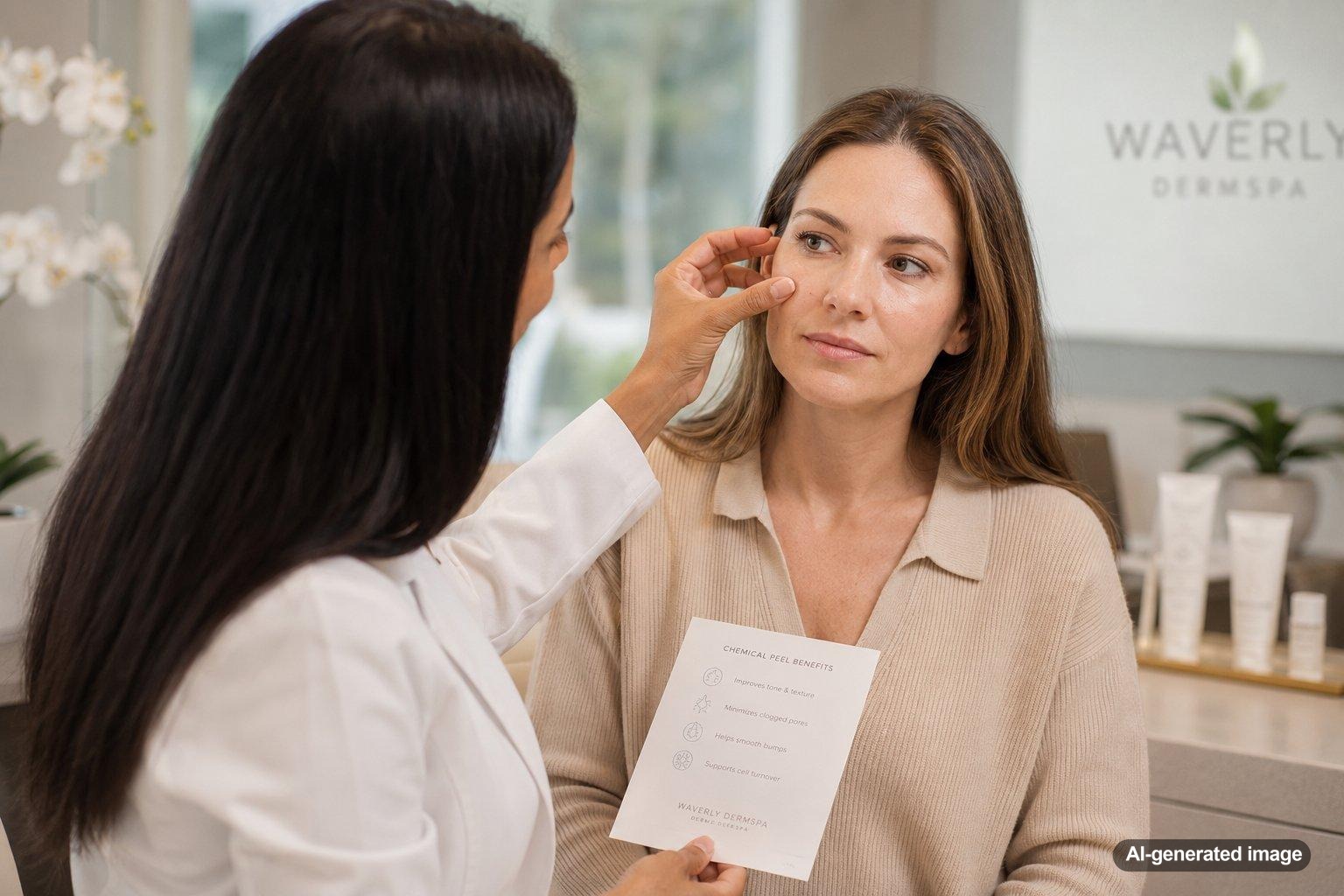
At Waverly DermSpa, we offer Chemical Peels and can help you understand whether it may be appropriate.
When to see a dermatologist
Consider scheduling an evaluation if the bumps are new, changing, bleeding, painful, spreading, near the eyes, or not responding to careful skincare. You should also get guidance before a peel if you have a history of post-inflammatory hyperpigmentation, recent sun exposure, active irritation, or a recent cosmetic procedure.
A dermatologist can help distinguish milia from sebaceous hyperplasia and other look-alike bumps, then recommend an approach that fits your skin type, goals, and comfort level.
FAQ
Can a chemical peel remove milia?
A chemical peel may help with surface buildup and texture, but persistent milia often need professional extraction. Your clinician can help decide whether a peel, extraction, or a combination approach makes sense.
Can a chemical peel remove sebaceous hyperplasia?
A peel may improve the surrounding skin texture, but sebaceous hyperplasia is related to enlarged oil glands. Targeted dermatology treatments may be more helpful for the raised bump itself.
Are milia the same as whiteheads?
No. Milia are small keratin-filled cysts under the skin, while whiteheads are a type of acne lesion within a pore. This difference is one reason acne products may not clear milia.
Should I try to pop sebaceous hyperplasia?
No. Squeezing can irritate the skin and usually does not address the enlarged gland. It is safer to have the area evaluated and treated professionally if it bothers you.
Is a peel safe in sunny climates like Fort Lauderdale?
Peels can be appropriate for many people, but sun protection and timing matter. Your clinician can help you plan around sun exposure, travel, skin tone, and your current skincare routine.
Ready to get help?
Schedule an appointment or send a message and our team will get back to you.
Prefer to call? 954-666-3736
This article is for educational purposes and is not medical advice. For diagnosis and personalized treatment, please book an appointment with a board-certified dermatologist.
Sources & further reading
- DermNet – Milium, milia
- DermNet – Sebaceous hyperplasia
- American Academy of Dermatology (AAD) – Chemical peels: Overview
