

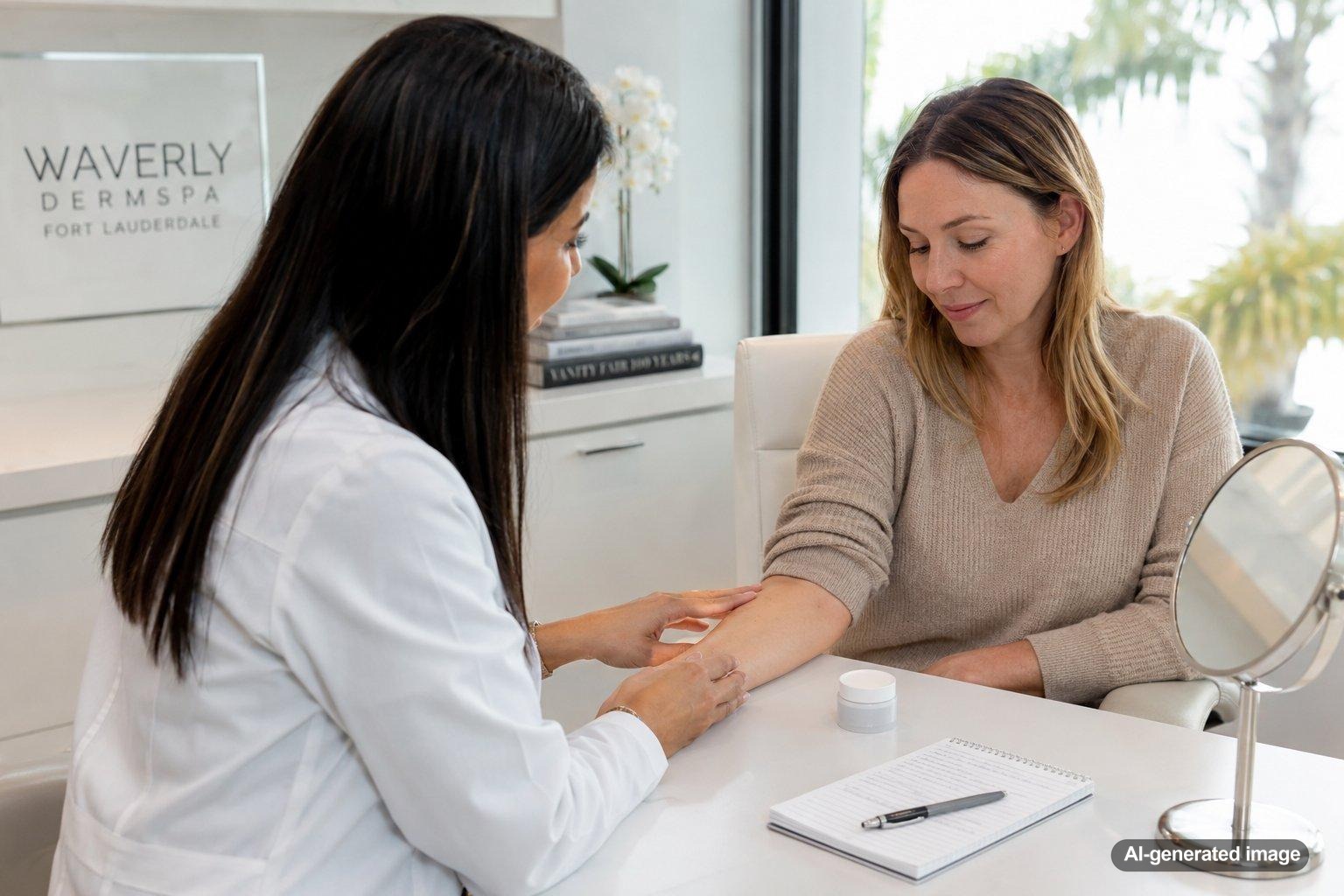
Ceramides matter for eczema-prone skin because they are part of the skin’s natural barrier. When that barrier is dry, fragile, or easily irritated, skin may feel rough, tight, itchy, or more reactive to everyday triggers.
For many people with eczema-prone skin, a calm routine starts with respecting the barrier: gentle cleansing, consistent moisturizing, and choosing products that reduce unnecessary irritation. Ceramides are not a standalone answer for every flare, but they can be a helpful part of a supportive skincare plan.
Quick answer
- Ceramides are lipids naturally found in the outer skin barrier.
- Eczema-prone skin is often associated with a weaker barrier and increased dryness.
- Ceramide moisturizers may help support moisture retention and reduce everyday dryness.
- Look for fragrance-free, gentle formulas, especially if your skin stings or reacts easily.
- If symptoms are persistent, painful, spreading, or affecting sleep, a dermatologist can evaluate the skin and discuss next steps.
What ceramides are
Ceramides are naturally occurring fats, or lipids, found in the outer layer of the skin. A simple way to think about them is as part of the skin’s protective seal. They help the outer layer hold onto water while making it harder for irritants to disturb the skin.
When the skin barrier is working well, skin often feels smoother and more comfortable. When the barrier is disrupted, skin may lose water more easily and become more sensitive to soaps, weather changes, fragrance, sweat, allergens, or friction.
Why they matter for eczema-prone skin
Eczema-prone skin is commonly linked with barrier disruption. That does not mean every dry patch is eczema, and it does not mean a moisturizer can replace a medical evaluation. It does mean that barrier support is a meaningful part of many eczema care routines.
Ceramide-containing moisturizers may help by reinforcing the outer layer of the skin, especially when used consistently and paired with gentle habits. They are often most useful as part of a broader routine rather than as a quick fix during a significant flare.
Common causes or triggers
Eczema-prone skin can react differently from person to person. Common contributors and triggers may include:
- Harsh soaps, scrubs, or exfoliating acids used too often
- Fragrance in skincare, laundry products, or body products
- Hot showers or long baths
- Sweat, heat, or friction from clothing
- Dry indoor air or seasonal weather shifts
- Allergens or irritants in the environment
- Stress, poor sleep, or illness in some people
What you can do at home
At-home care should be gentle, consistent, and simple. For eczema-prone skin, more products are not always better.
- Use a gentle cleanser. Choose a fragrance-free cleanser and avoid scrubbing the skin.
- Moisturize after bathing. Apply moisturizer while skin is still slightly damp to help reduce water loss.
- Choose barrier-supportive formulas. Creams or ointments with ceramides, petrolatum, glycerin, or other supportive ingredients may be better tolerated than lightweight fragranced lotions.
- Patch test new products. Try a small amount on a limited area before applying widely, especially if your skin is reactive.
- Avoid over-exfoliating. Retinoids, acids, scrubs, and peels can be irritating when the barrier is already stressed.
- Keep showers lukewarm. Hot water can leave dry skin feeling tighter and more irritated.
Professional options
If eczema-prone skin is not improving with conservative care, a dermatologist can examine the skin and help clarify what may be happening. Options may include prescription anti-inflammatory medications, barrier-focused skincare guidance, trigger review, allergy-related discussion when appropriate, or treatment for infection if there are signs that the skin is not healing normally.
Because eczema can overlap with other rashes, self-treating for long periods can sometimes delay the right care. A dermatologist can help determine whether your symptoms fit eczema, contact dermatitis, infection, psoriasis, or another condition.
When to see a dermatologist
Consider scheduling an evaluation if your skin is very itchy, painful, cracked, bleeding, weeping, crusting, spreading, recurring often, or interfering with sleep. It is also worth getting checked if over-the-counter products sting, if a rash appears suddenly, or if you are unsure whether a product is helping or making things worse.
For children, pregnant or nursing patients, people with a history of allergies, or anyone using prescription medications, a personalized plan is especially important.
FAQ
Are ceramides good for eczema-prone skin?
Ceramides can be helpful for supporting the skin barrier, especially in moisturizers designed for sensitive or eczema-prone skin. They are not a substitute for diagnosis or treatment when symptoms are persistent or severe.
How often should I use a ceramide moisturizer?
Many people use moisturizer once or twice daily, and after bathing. Your dermatologist can recommend a frequency based on your skin, symptoms, and any prescriptions you may be using.
Can ceramides stop an eczema flare?
Ceramides may support barrier comfort, but an active flare may need more than moisturizer. If skin is inflamed, painful, oozing, or very itchy, a dermatologist can help you decide what is appropriate.
Should I use ceramides on my face?
Many ceramide moisturizers are suitable for the face, but sensitive facial skin can react to fragrance, acids, or heavy formulas. Choose a gentle, non-irritating product and patch test if you are unsure.
What should I avoid if I have eczema-prone skin?
Common irritants include fragrance, harsh cleansers, hot water, scrubs, and too many active ingredients at once. The right routine is usually simple and consistent.
Ready to get help?
Schedule an appointment or send a message and our team will get back to you.
Prefer to call? 954-666-3736
Disclaimer
This article is for educational purposes and is not medical advice. For diagnosis and personalized treatment, please book an appointment with a board-certified dermatologist.
Sources & further reading
- National Eczema Association – Skin Barrier Basics for People With Eczema
- National Eczema Association – The Best Eczema Lotions and Moisturizers
- American Academy of Dermatology (AAD) – How to Reduce Eczema Flares With Moisturizer
- Cleveland Clinic – Eczema: What It Is, Symptoms, Causes, Types and Treatment
