

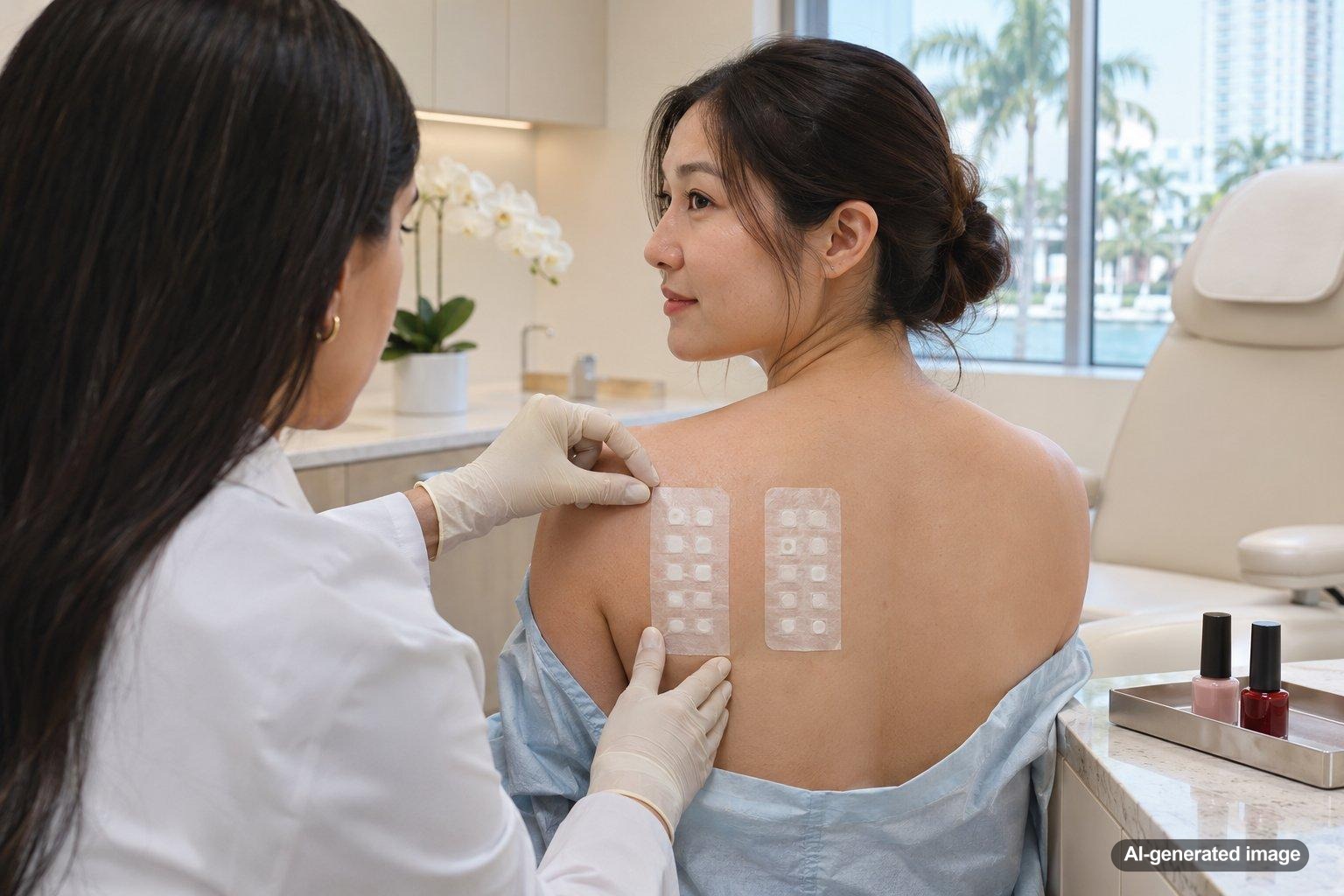
Yes, patch testing can help identify allergies to certain ingredients found in nail products, including gel polish, acrylic nails, adhesives, and traditional nail polish. When itching, redness, peeling, or swelling develops after a manicure, a dermatologist may recommend patch testing to investigate whether allergic contact dermatitis is responsible.
The important distinction is that not every reaction to nail products is an allergy. Some products irritate the skin without triggering an allergic immune response, while other problems may involve nail damage or infection. Patch testing helps clarify these possibilities by identifying specific substances that produce delayed allergic reactions. For people who regularly receive manicures, work in nail salons, or experience recurring fingertip or eyelid irritation, understanding the testing process can make future product decisions more informed.
Quick Answer: Can Patch Testing Identify Nail Product Allergies?
- Yes. Medical patch testing can identify delayed contact allergies to certain nail product ingredients.
- Acrylates and methacrylates are important potential allergens in gel and artificial nail systems.
- Traditional nail polish may contain resins and other ingredients capable of causing allergic reactions.
- Testing requires multiple visits because delayed allergic reactions may develop over several days.
- A negative result does not exclude every possible reaction. Irritation and allergies to substances not included in the testing panel may require further evaluation.
Why Nail Products Can Cause Allergic Reactions
Many nail treatments rely on combinations of resins, solvents, adhesives, pigments, and other chemicals to create a durable finish. Some ingredients can trigger allergic contact dermatitis, a delayed immune reaction that may develop after repeated exposure.
Unlike immediate allergies, allergic contact dermatitis often appears hours or days after contact. A person may tolerate the same manicure products for months or years before developing an allergy.
Gel polish and artificial nail systems deserve particular attention because they may contain reactive acrylate or methacrylate ingredients. These substances participate in the process that allows nail coatings and enhancements to harden. Contact with uncured material can be especially relevant to sensitization and reactions.
Skin irritation is different. Frequent exposure to solvents, acetone, detergents, and aggressive nail preparation can disrupt the skin barrier without producing a true allergy. Because the symptoms can overlap, appearance alone may not establish the cause.
Which Nail Product Ingredients Can Patch Testing Identify?
A dermatologist selects testing substances based on the person’s symptoms, manicure history, occupational exposure, and the products involved. Several ingredient groups may be considered.
Acrylates and Methacrylates
Acrylates and methacrylates are associated with gel nail systems, acrylic enhancements, and certain adhesives. One commonly discussed ingredient is 2-hydroxyethyl methacrylate, often abbreviated HEMA.
Other related chemicals may also be relevant. Depending on the circumstances, a dermatologist may recommend a specialized acrylate testing series rather than relying exclusively on a standard screening panel.
An allergy to one tested chemical does not automatically establish an allergy to every material in the broader acrylate family. Results require individual interpretation.
Nail Polish Resins
Traditional nail polish can contain resins that help the coating adhere to the nail. Tosylamide formaldehyde resin is a recognized nail cosmetic allergen and may be included in testing when the exposure history suggests it.
The presence or absence of this ingredient varies between formulations, so identifying the actual ingredient matters more than assuming all conventional polishes present the same risk.
Nail Glues and Other Cosmetic Ingredients
Artificial nail adhesives, including certain cyanoacrylate-based products, may contribute to contact reactions. Additional ingredients in nail cosmetics can also be relevant depending on the formulation.
Because different nail products contain different substances, bringing product names, ingredient information, and photographs of packaging to an appointment can help guide testing.
What Symptoms Might Suggest a Nail Product Allergy?
Allergic reactions related to nail products are not always limited to the fingers. People frequently touch their faces, which can transfer allergens from the nails or surrounding skin to other areas.
Possible symptoms include:
- Itching, redness, or swelling around the fingertips and cuticles.
- Dry, cracked, peeling, or blistered skin near the nails.
- Recurring eyelid irritation after nail appointments.
- Rashes around the mouth, chin, face, or neck.
- Changes in the appearance or attachment of the nail plate.
- Hand dermatitis that becomes more noticeable after certain nail services.
On darker skin tones, inflammation may appear as discoloration rather than obvious redness. Persistent itching, swelling, or texture changes can still be important clues.
These findings are not specific to an allergy. A dermatologist can examine whether another skin or nail condition may better explain the symptoms.
How Does Patch Testing for Nail Allergies Work?
Patch testing is a supervised medical procedure designed to investigate delayed allergic contact dermatitis. It is different from the skin prick testing commonly used when evaluating certain immediate allergies.
Step 1: Reviewing Your Nail Product History
The dermatologist first reviews your symptoms and the products you use. Questions may address gel manicures, acrylic applications, press-on nails, adhesives, traditional polish, salon work, and how quickly symptoms develop after exposure.
This history helps determine whether a standard allergen panel, a specialized nail cosmetic or acrylate series, or additional testing is appropriate.
Step 2: Applying the Test Patches
Small, standardized amounts of selected allergens are placed in test chambers and secured to the skin, usually on the back. The patches commonly remain in place for approximately 48 hours.
The testing area generally needs to remain dry, and activities that cause excessive sweating or loosen the patches may need to be avoided according to the clinician’s instructions.
Step 3: Reading the Results
After the patches are removed, the clinician examines the testing sites. A later reading is usually performed because delayed reactions may take additional time to become visible.
The evaluation may identify localized inflammation at a particular allergen site. However, a positive test requires interpretation alongside the patient’s actual exposure history.
Step 4: Connecting Results to Real Products
The final step is determining whether a positive allergen is present in the products associated with the symptoms.
A positive patch test establishes sensitivity to a tested substance, but it does not necessarily prove that the substance caused every previous rash. Conversely, a negative result may mean that the relevant ingredient was not tested or that the reaction has another explanation.
Can You Test Gel Polish or Nail Glue Directly on Your Skin?
Applying uncured gel polish, acrylic liquid, or nail glue to the skin as a home allergy test is not recommended. Certain reactive nail ingredients can cause irritation or sensitization when they contact skin directly.
Professional patch testing uses carefully selected allergens in appropriate preparations and concentrations. Not every finished product is suitable for testing without modification, and some products require specialized handling.
A dermatologist can decide whether testing an ingredient, an appropriately prepared product, or a broader allergen panel is reasonable.
What Can You Do While Investigating a Possible Nail Allergy?
While awaiting evaluation, conservative measures may help reduce additional exposure and irritation.
- Consider pausing the nail product or service associated with recurring symptoms.
- Avoid applying uncured gel or acrylic materials directly to the skin.
- Use gentle, fragrance-free skin care products around irritated hands when tolerated.
- Keep a record of manicure dates, products, symptoms, and photographs of visible reactions.
- Save ingredient lists or product packaging when available.
- Avoid repeatedly experimenting with alternative nail adhesives or coatings while the cause remains unclear.
Labels such as hypoallergenic, sensitive, or HEMA-free do not necessarily mean a product is appropriate for every person with a contact allergy. A formulation may contain other ingredients that require consideration.
If patch testing identifies a clinically relevant allergen, the dermatologist can help explain which ingredient names to look for and whether related substances need to be considered.
When Should You See a Dermatologist?
A dermatology evaluation is particularly worthwhile when irritation returns after repeated manicures, affects areas beyond the nails, or persists despite discontinuing suspected products.
Professional assessment is also important for painful swelling, significant nail lifting, persistent drainage, or worsening tenderness. These symptoms may require evaluation for conditions other than allergic contact dermatitis, including infection.
Rapidly spreading redness, severe pain, fever, or significant swelling warrants prompt medical attention. Difficulty breathing or swelling involving the tongue or throat requires emergency care.
For people who perform nail services professionally, recurrent hand symptoms may also justify a closer examination of workplace exposure and protective practices.
In Fort Lauderdale, where residents, seasonal visitors, and nail professionals may use a wide range of salon products, keeping a clear product history can make a dermatology consultation more productive.
Frequently Asked Questions
Can patch testing confirm an allergy to gel nail polish?
Patch testing can help identify contact allergies to specific ingredients found in gel polish, including certain acrylates and methacrylates. A dermatologist interprets the findings alongside your symptoms and product exposure history.
Is HEMA allergy the same as an allergy to all gel nails?
Not necessarily. HEMA is one potential allergen among several chemicals used in nail systems. A positive result may prompt consideration of related ingredients, but it does not automatically determine which products are suitable.
Why would a nail product allergy cause itchy eyelids?
Allergens may transfer from the fingers or nails when someone touches or rubs the face. Eyelid skin is particularly delicate, and contact dermatitis can sometimes appear there even when the fingertips show relatively little irritation.
Can patch testing distinguish allergy from irritation?
Patch testing primarily investigates delayed allergic contact dermatitis. Irritant reactions are assessed through the clinical history and examination because they do not depend on the same immune mechanism. Testing results and symptoms are considered together.
Does a negative patch test mean nail products are safe for me?
No. A negative result does not exclude irritation or sensitivity to ingredients that were not included in the test series. A dermatologist may consider additional allergens or other explanations when symptoms continue.
Can I return to manicures after an allergy is identified?
That depends on the specific allergen, the products involved, and the condition of your skin and nails. Some people may have alternative options, while others need to avoid particular product categories. Your dermatologist can help you make an informed decision.
Understanding Your Results and Next Steps
Patch testing can be valuable when nail-related irritation is persistent, recurring, or difficult to explain. Its greatest benefit is identifying specific contact allergens so that product avoidance can be more targeted rather than relying on guesswork.
A dermatologist can also assess whether the symptoms reflect an allergy, an irritant reaction, or another nail or skin condition. The goal is a clearer explanation and a practical approach to future exposure.
Ready to get help?
Schedule an appointment or send a message and our team will get back to you.
Prefer to call? 954-666-3736
Disclaimer
This article is for educational purposes and is not medical advice. For diagnosis and personalized treatment, please book an appointment with a board-certified dermatologist.
Sources & Further Reading
- DermNet – Nail Cosmetics Allergy
- American Academy of Dermatology (AAD) – Patch Testing Can Find What’s Causing Your Rash
- DermNet – Allergy to Acrylates
- DermNet – Patch Tests
