

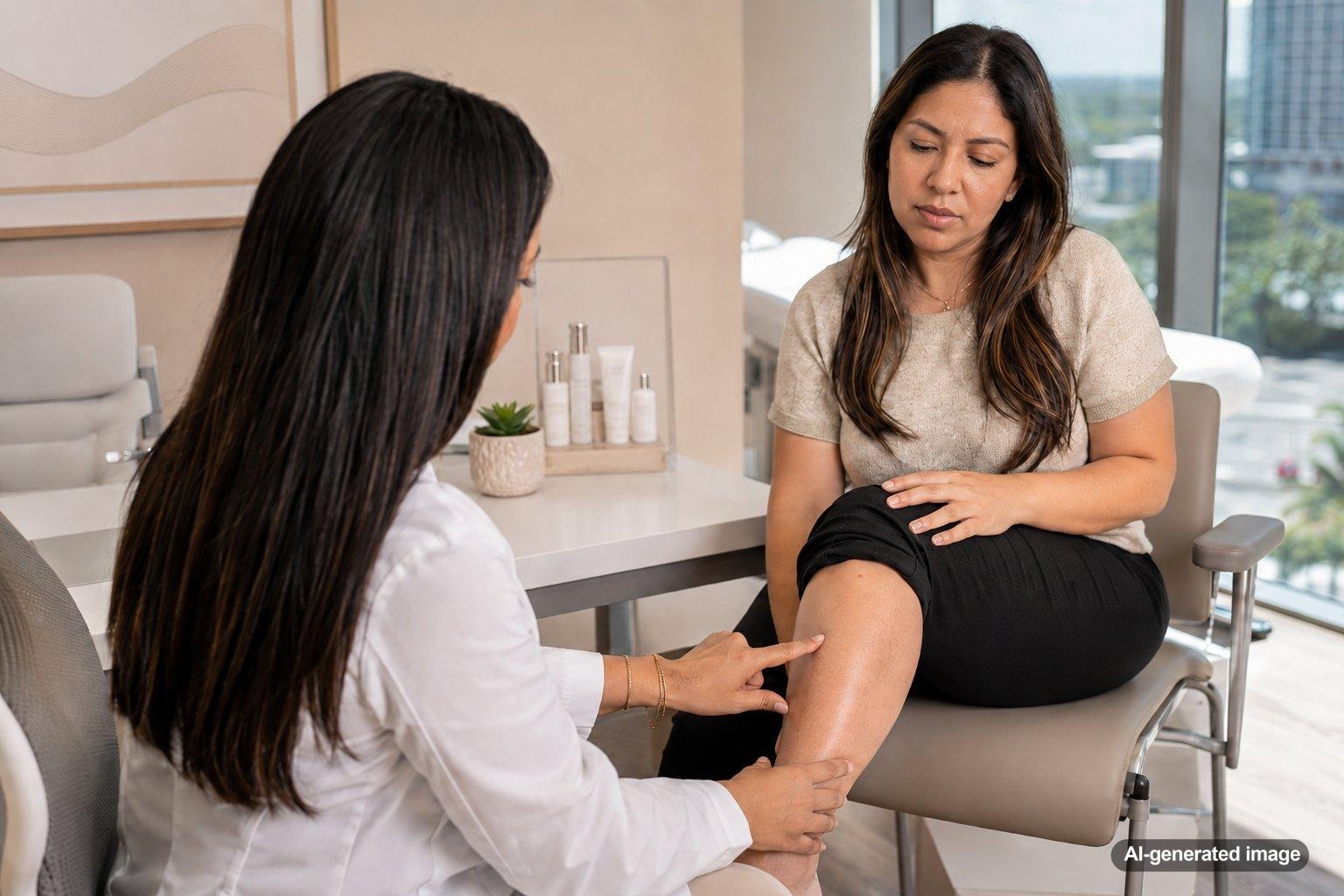
If the hair on your calves seems to be thinning or disappearing, it may be easy to dismiss the change as part of aging, friction from clothing, or a shift in your normal hair growth. Those explanations are possible, but reduced hair growth on the lower legs can also be associated with decreased blood flow from peripheral arterial disease, often called PAD.
Hair loss alone cannot tell you whether PAD is present. The more useful question is whether the change is happening alongside symptoms such as leg discomfort with activity, unusually cool skin, color changes, slow-growing toenails, or wounds that are slow to heal. Those combinations deserve medical evaluation rather than a cosmetic assumption.
Quick answer
- Reduced or disappearing hair on the calves can be associated with decreased circulation in the legs.
- Peripheral arterial disease is one possible cause because narrowed arteries can reduce blood flow to the legs and feet.
- Hair loss by itself does not establish a diagnosis of PAD.
- Leg pain with walking, coolness, skin color changes, slow-healing sores, or other circulation-related symptoms make medical evaluation more important.
- A clinician can assess your circulation and determine whether the hair change is related to PAD or another cause.
Why can peripheral arterial disease affect leg hair?
Peripheral arterial disease occurs when arteries supplying the limbs become narrowed, most often because of atherosclerosis. This can limit the amount of oxygen-rich blood reaching tissues in the legs and feet. Mayo Clinic and MedlinePlus both list reduced hair growth or hair loss on the legs among possible signs of PAD.
Hair follicles depend on an adequate supply of oxygen and nutrients. When circulation is reduced, hair on the lower legs may grow more slowly, become sparse, or appear to disappear over time. This finding is more meaningful when it appears with other changes that suggest impaired circulation.
What other changes can occur with PAD?
Not everyone with PAD has noticeable symptoms, and the way it presents can vary. Possible signs and symptoms can include:
- Leg aching, cramping, heaviness, or discomfort during walking or other activity that improves with rest.
- A foot or lower leg that feels cooler than expected.
- Shiny-looking skin or changes in skin color.
- Slower toenail growth.
- Reduced hair growth on the legs, feet, or toes.
- Sores on the toes, feet, or legs that heal slowly or do not heal normally.
- Numbness, weakness, or discomfort in the legs or feet.
These symptoms are not specific to PAD, so they should be interpreted by a medical professional rather than used for self-diagnosis.
What else can cause hair loss on the calves?
PAD is only one possible explanation for lower-leg hair loss. Friction from socks, boots, pants, or repeated rubbing can make leg hair look thinner. Normal changes in hair density can also occur over time. Certain skin conditions, hair-loss disorders, medications, metabolic conditions, and other health issues may affect body hair as well.
A dermatologist can examine the skin and hair pattern for clues about whether the change appears primarily dermatologic. If the pattern or accompanying symptoms raise concern about circulation, evaluation by a primary care clinician or vascular specialist may also be appropriate.
What can you do at home?
It can help to pay attention to the overall pattern rather than focusing on hair density alone. Notice whether the change affects one leg or both, whether it developed gradually or suddenly, and whether you also experience pain with walking, temperature differences, skin discoloration, numbness, or slow-healing wounds.
Avoid relying on hair-growth products to address unexplained calf hair loss before the cause is understood. If circulation is involved, the underlying blood-flow issue requires medical attention rather than a topical cosmetic approach. If you’re unsure, it’s worth getting checked.
How is suspected peripheral arterial disease evaluated?
A clinician may begin by reviewing your symptoms, health history, medications, and cardiovascular risk factors and examining the legs and feet. Depending on the findings, circulation can be evaluated with blood pressure comparisons between the ankle and arm or with other vascular tests that assess blood flow.
If PAD is identified, management depends on the person’s symptoms, overall health, and severity of reduced circulation. Professional care may include strategies aimed at cardiovascular risk reduction, supervised or structured exercise, medications when appropriate, and vascular procedures for selected patients. Your clinician can help you decide what type of evaluation or treatment is appropriate.
When should you seek medical care?
Make an appointment if unexplained lower-leg hair loss is accompanied by recurring leg pain with walking, a noticeable difference in temperature or color between the legs or feet, numbness, persistent skin changes, or wounds that are slow to heal. These findings can have several causes, but they should not be ignored.
Sudden severe leg or foot pain, marked paleness or coolness, new numbness or weakness, or a rapidly developing change in the appearance of a limb can signal an urgent circulation problem. Seek prompt medical care rather than waiting for a routine dermatology visit when symptoms are sudden or severe.
FAQ
Does losing hair on my calves mean I have peripheral arterial disease?
No. Calf hair loss can be associated with PAD, but it can also occur for other reasons. The presence of additional circulation-related symptoms and a medical evaluation are important for determining the cause.
Can poor circulation make leg hair stop growing?
Reduced arterial blood flow can be associated with slower hair growth or hair loss on the legs. This is one reason clinicians may consider circulation when evaluating otherwise unexplained lower-leg hair changes.
Is calf hair loss more concerning if I have pain when walking?
Hair loss combined with recurring calf discomfort during activity that improves with rest deserves medical attention because that pattern can be associated with reduced arterial circulation. Other conditions can cause similar symptoms, so an evaluation is important.
Should I see a dermatologist or a vascular specialist?
A dermatologist can help assess whether the hair loss appears related to a skin or hair disorder. When symptoms suggest impaired circulation, your primary care clinician may recommend vascular testing or referral to a vascular specialist.
Can the hair grow back if circulation improves?
Hair growth varies from person to person and depends on the underlying cause and the health of the hair follicles. Improving an underlying medical issue does not provide a predictable or guaranteed cosmetic outcome, so treatment should focus on health rather than hair regrowth alone.
Ready to get help?
Schedule an appointment or send a message and our team will get back to you.
Prefer to call? 954-666-3736
This article is for educational purposes and is not medical advice. For diagnosis and personalized treatment, please book an appointment with a board-certified dermatologist.
Sources & further reading
- Mayo Clinic – Peripheral artery disease (PAD) – Symptoms and causes
- MedlinePlus (NIH) – Peripheral Arterial Disease
