

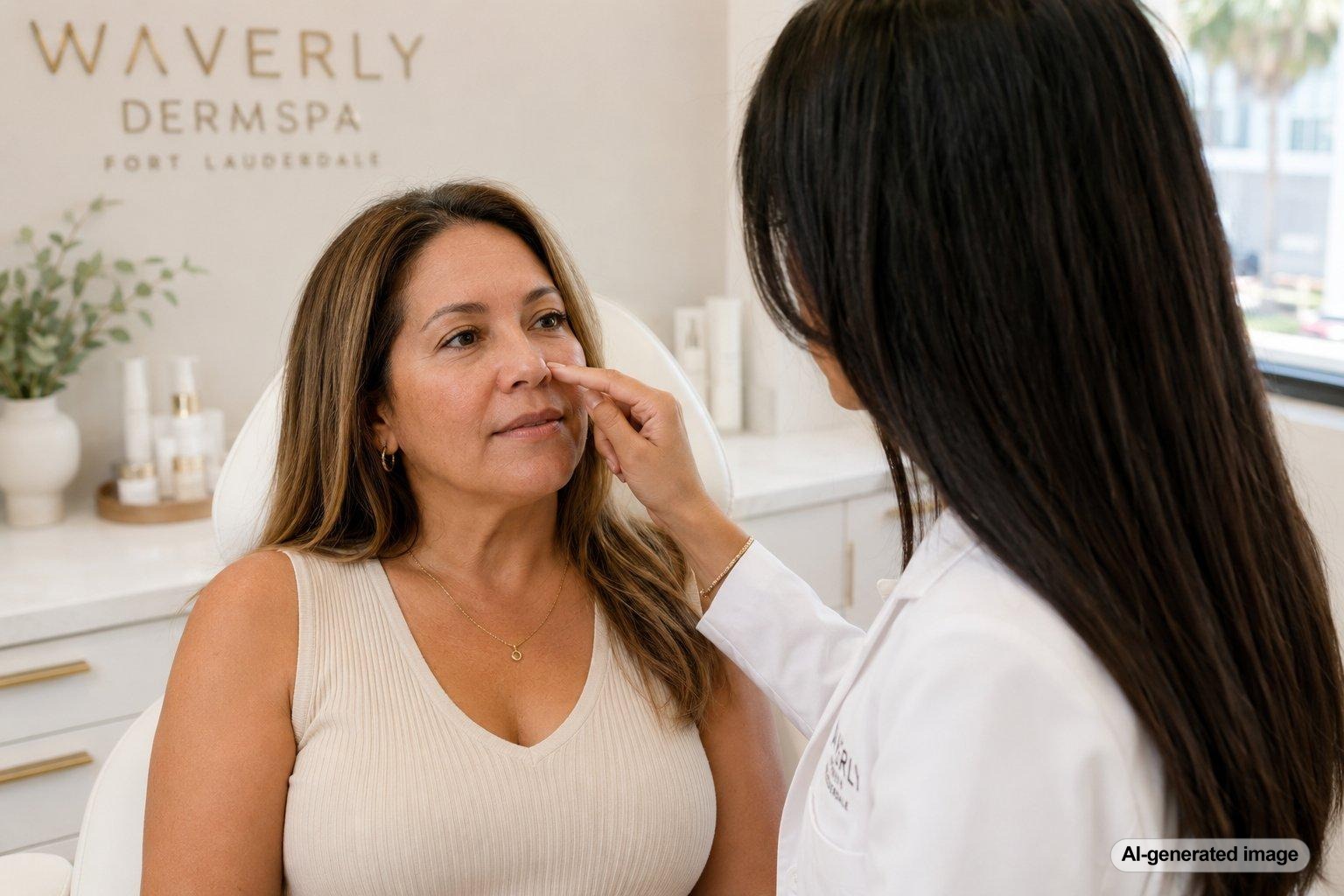
Botox may help soften bunny lines and reduce the appearance of nasal flaring by temporarily relaxing carefully selected muscles around the nose. These concerns often become more noticeable when smiling, laughing, squinting, or speaking, and they can sometimes remain visible even when the rest of the face looks relaxed.
Treatment in this area requires a precise understanding of facial anatomy. The muscles around the nose are small, interconnected, and involved in both expression and movement, so a conservative, individualized approach is important. A dermatologist can evaluate whether Botox is appropriate for your anatomy, facial balance, and goals.
Quick answer
- Botox may soften dynamic bunny lines that appear along the upper sides of the nose.
- It may also reduce excessive nostril widening caused by certain muscle movements.
- Treatment is customized because nasal movement patterns vary from person to person.
- Results are temporary and may develop gradually rather than appearing immediately.
- These uses may be considered off-label, so evaluation by a trained medical professional is essential.
What are bunny lines?
Bunny lines are diagonal or slightly horizontal creases that form along the upper sides of the nose, usually near the bridge. They often appear when a person smiles, laughs, squints, or scrunches the nose.
These lines are commonly associated with repeated contraction of the nasalis muscle and nearby facial muscles. At first, they may only be visible during expression. Over time, repeated folding of the skin can make them easier to notice when the face is resting.
Bunny lines are not medically harmful. Treatment is cosmetic and should be based on personal preference rather than pressure to remove every natural line.
What causes nasal flaring?
Nasal flaring occurs when the nostrils widen during facial expression, breathing, speaking, or smiling. Some people naturally have more active muscles around the nostrils, while others notice flaring because of their nasal structure or the way several facial muscles work together.
Common factors that may influence the appearance of nasal flaring include:
- Strong activity in muscles that widen the nostrils.
- Individual nasal shape and cartilage structure.
- Facial expressions such as smiling or laughing.
- Compensatory movement from neighboring facial muscles.
- Normal differences in facial symmetry.
Botox can only influence muscle activity. It does not change cartilage, bone, nasal airflow, or the structural size and shape of the nose.
How Botox may help
Botox is a prescription neuromodulator that temporarily reduces nerve signals to selected muscles. When a small amount is placed into an appropriate facial muscle, the muscle may contract with less force.
For bunny lines, treatment may reduce the repeated scrunching that creates creases along the nose. For nasal flaring, carefully placed injections may decrease excessive widening caused by muscular movement.
The goal is usually to soften a specific movement while preserving natural expression. Completely eliminating movement is not always desirable and could affect facial balance. Because the treatment area is small, the injection pattern and amount used should be tailored to the individual.
Is this an off-label Botox treatment?
Botox Cosmetic has specific FDA-approved cosmetic indications. Treatment of bunny lines or nasal flaring may be considered an off-label use, meaning a licensed clinician is using an approved medication in a way that is not included among its labeled cosmetic indications.
Off-label use is common in medicine, but it still requires clinical judgment, informed consent, and a careful discussion of potential benefits, limitations, and risks. Your dermatologist can explain why a particular approach may or may not be appropriate for you.
What happens during an appointment?
A consultation should begin with an assessment of your face at rest and during movement. You may be asked to smile, scrunch your nose, speak, or flare your nostrils so the clinician can identify which muscles are contributing to the concern.
The skin is cleaned, and a fine needle is used to place small amounts of product into selected areas. The procedure is generally brief, although the consultation and facial assessment should not feel rushed.
You should share your complete medical history, current medications and supplements, previous facial treatments, allergies, and any history of facial weakness, nerve conditions, swallowing problems, or breathing concerns. Tell your dermatologist if you are pregnant, nursing, or planning a pregnancy.
What can you expect afterward?
Temporary redness, tenderness, swelling, or bruising may occur around the injection sites. Many people return to routine activities soon afterward, but you should follow the specific aftercare instructions provided by your clinician.
The effect typically develops gradually. Timing, degree of improvement, symmetry, and duration vary based on anatomy, muscle strength, dose, placement, metabolism, and prior treatment history. Results are temporary, and repeat treatment may be considered only after the effect has diminished and the area has been reassessed.
Avoid rubbing or pressing firmly on the treated area unless your clinician specifically instructs you to do so.
Possible risks and limitations
Because the muscles around the nose interact with muscles involved in smiling and upper-lip movement, overly aggressive or poorly placed injections could create an unwanted change in expression. Possible concerns include temporary asymmetry, weakness in a neighboring muscle, altered smile movement, bruising, swelling, headache, or an unsatisfactory cosmetic result.
Serious reactions are uncommon, but botulinum toxin products carry important safety warnings. Seek immediate medical attention for difficulty breathing, swallowing, or speaking, widespread weakness, or significant vision changes after treatment.
Receiving authentic prescription product from a licensed, trained medical professional is essential. Avoid injections offered in homes, parties, salons, or other non-medical settings, and do not purchase injectable products online for self-use.
When to see a dermatologist
Schedule a dermatologist consultation if you are considering treatment and want a medical assessment of your anatomy, movement pattern, and suitability. You should also seek evaluation if nasal movement is new, painful, associated with breathing difficulty, or accompanied by weakness or other neurologic symptoms, as those concerns are not simply cosmetic.
A dermatologist can also determine whether the lines are primarily caused by movement or whether skin texture, sun damage, volume changes, or another factor is contributing. Botox may not address every type of line around the nose.
Frequently asked questions
Will Botox make my nose look smaller?
Botox does not change nasal bone or cartilage. It may reduce certain muscle-driven movements, which can subtly change how the nose appears during expression, but it is not a substitute for structural nasal treatment.
Can bunny lines become more noticeable after treating other facial areas?
Some people notice increased nose scrunching after treatment elsewhere because they recruit untreated muscles more strongly during expression. A dermatologist can assess the entire movement pattern rather than treating one line in isolation.
Will I still be able to smile naturally?
The intention is to preserve a natural smile, but results depend heavily on anatomy, dose, and injection placement. Conservative treatment may help reduce the risk of affecting nearby smile muscles.
How long do results last?
Botox effects are temporary. Many cosmetic treatments last several months, but duration varies significantly between individuals and may differ in small, highly active muscles around the nose.
Can nasal flaring be completely stopped?
Complete elimination of nostril movement may not be realistic or desirable. Some flaring is structural or related to normal breathing, and Botox only affects selected muscular activity.
Who should perform this treatment?
A licensed medical professional with detailed knowledge of facial anatomy should perform the injections. A board-certified dermatologist can evaluate risks, explain off-label use, and develop a conservative plan based on your facial movement.
At Waverly DermSpa, we offer Botox and can help you understand whether it may be appropriate.
Ready to get help?
Schedule an appointment or send a message and our team will get back to you.
Prefer to call? 954-666-3736
This article is for educational purposes and is not medical advice. For diagnosis and personalized treatment, please book an appointment with a board-certified dermatologist.
Sources & further reading
- American Academy of Dermatology (AAD) – Botulinum toxin therapy: FAQs
- U.S. Food and Drug Administration (FDA) – Dermal Filler Do’s and Don’ts for Wrinkles, Lips and More
- Cleveland Clinic – Botox (Botulinum Toxin): What It Is, Results and Side Effects
