

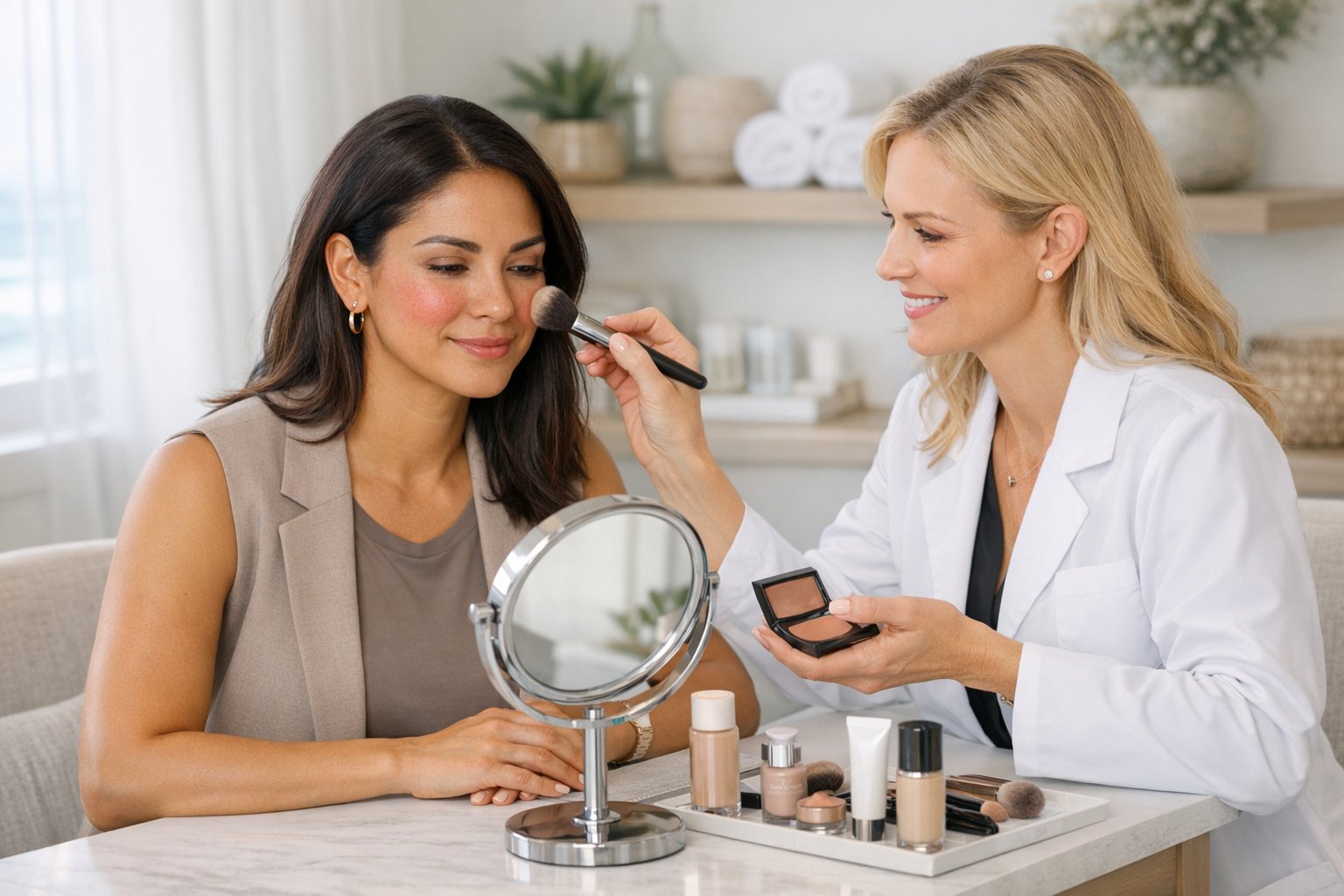
Redness can be unpredictable, and makeup that looks great one day may feel irritating the next. The goal is a calm routine that supports your skin barrier, minimizes visible redness, and stays comfortable on the skin.
Quick answer
- Prep with a simple, fragrance-free moisturizer and let it fully absorb before makeup.
- Use thin layers: color correct only where needed, then apply a gentle base with a light hand.
- Choose products labeled fragrance-free and formulated for sensitive skin; patch test new items.
- Remove makeup gently (no scrubbing) and follow with a bland moisturizer to reset.
What it is
Redness-prone skin is skin that flushes easily or shows persistent pinkness, often because the skin barrier is more reactive or the surface blood vessels are more noticeable. Many people experience this with sensitive skin, after irritation, or with conditions that can be associated with facial redness. Makeup can be helpful, but the wrong textures, pigments, or fragrances can also make redness look worse or feel uncomfortable.
Common causes and triggers
- Barrier disruption from over-cleansing, harsh exfoliants, or frequent scrubbing
- Fragrance, essential oils, and certain preservatives in skincare or makeup
- Heat, humidity, sun exposure, and rapid temperature changes
- Alcohol-based products that sting or leave the skin feeling tight
- Heavy, occlusive layers that trap heat and intensify flushing
- Brushes, sponges, or wipes that create friction
What you can do at home
Start with calm prep. Cleanse with a gentle, non-foaming cleanser and pat dry. Apply a fragrance-free moisturizer and give it 5 to 10 minutes to settle so makeup does not pill or grab onto dry patches.
Use sunscreen that plays well with makeup. If you are using daytime makeup, a mineral sunscreen can be a good option for many redness-prone routines. Choose a formula that does not sting and let it set before foundation.
Color correct only where you need it. A thin green-tinted corrector can neutralize red tones, but too much can turn the complexion dull or gray. Tap a small amount onto the reddest areas (often around the nose, cheeks, and chin), then blend the edges softly.
Pick a base that is comfortable, not heavy. Look for lightweight, buildable formulas. Apply in thin layers and build coverage only where needed. Many people do better with fragrance-free, non-irritating formulas and avoid products that feel tight or drying as they wear.
Be strategic with tools. Fingers can be the gentlest option because they reduce tugging. If you prefer a sponge, use light tapping rather than swiping. Keep tools clean and replace them regularly to reduce irritation.
Avoid common troublemakers. If your skin flares easily, be cautious with strong fragrance, menthol, peppermint, eucalyptus, and heavily alcohol-based setting products. If you love a setting step, consider a very light dusting of a soft, finely milled powder in areas that crease, rather than over-matting the entire face.
Remove makeup like you are caring for a delicate fabric. Choose a gentle remover (for example, a bland cleansing balm or micellar water made for sensitive skin), hold it on the skin briefly to dissolve makeup, then wipe with minimal pressure. Follow with a gentle cleanser if needed, and finish with moisturizer.
Patch test new products. Apply a small amount behind the ear or along the jawline for a few days before using it all over the face. If you notice stinging, burning, or a persistent rash, stop and reassess.
Professional options
If redness is frequent, persistent, or paired with sensitivity that makes product selection frustrating, a professional evaluation can help clarify what is driving it and what routines are most appropriate. Common in-office approaches may include:
- Skin barrier and routine coaching to simplify products and reduce triggers
- Prescription options (when appropriate) for underlying inflammatory conditions that can be associated with facial redness
- Light- and laser-based treatments that may help with visible facial vessels and background redness, depending on skin type and the cause of redness
- Gentle, supportive facial treatments focused on hydration and barrier support rather than aggressive exfoliation
At Waverly DermSpa, your clinician can review your skin goals, sensitivities, and current products, then help you choose a plan that fits your skin and lifestyle.
When to see a dermatologist
- Redness that is persistent, worsening, or accompanied by burning, swelling, or significant discomfort
- Visible broken vessels, frequent flushing, or bumps that look acne-like but do not respond to typical acne routines
- Rashes, scaling, cracking, or oozing that suggest irritation or inflammation beyond simple sensitivity
- Eye irritation (dryness, gritty feeling, lid redness) along with facial redness
- Any reaction that is severe, spreads quickly, or does not improve after stopping a suspected trigger
FAQ
Is green color corrector always necessary?
Not always. If your redness is mild, a tinted moisturizer or light coverage foundation may be enough. Color corrector is most useful when you want to keep foundation very light but still soften concentrated redness.
What finish is best for redness-prone skin: matte or dewy?
Many people find a natural or softly satin finish looks most skin-like and does not emphasize texture. Very matte products can feel drying, while overly dewy layers can trap heat and make redness appear more noticeable. Thin layers are the key.
Do mineral powders help or hurt?
It depends on the formula and how you apply it. A soft, finely milled powder used lightly can reduce shine without irritation. Heavy buffing or gritty powders can create friction and make redness look worse.
How can I stop makeup from stinging?
Stinging often signals barrier stress or an ingredient mismatch. Simplify prep, avoid fragranced products, and choose gentle formulas designed for sensitive skin. If stinging is persistent or intense, it is worth getting evaluated.
Can setting sprays trigger redness?
They can. Some contain high amounts of alcohol or fragrance that may sting. If you use a setting spray, choose a gentle, fragrance-free option and mist lightly rather than saturating the skin.
Ready to get help?
Schedule an appointment or send a message and our team will get back to you.
Prefer to call? 954-666-3736
Disclaimer: This article is for educational purposes and is not medical advice. For diagnosis and personalized treatment, please book an appointment with a board-certified dermatologist.
