

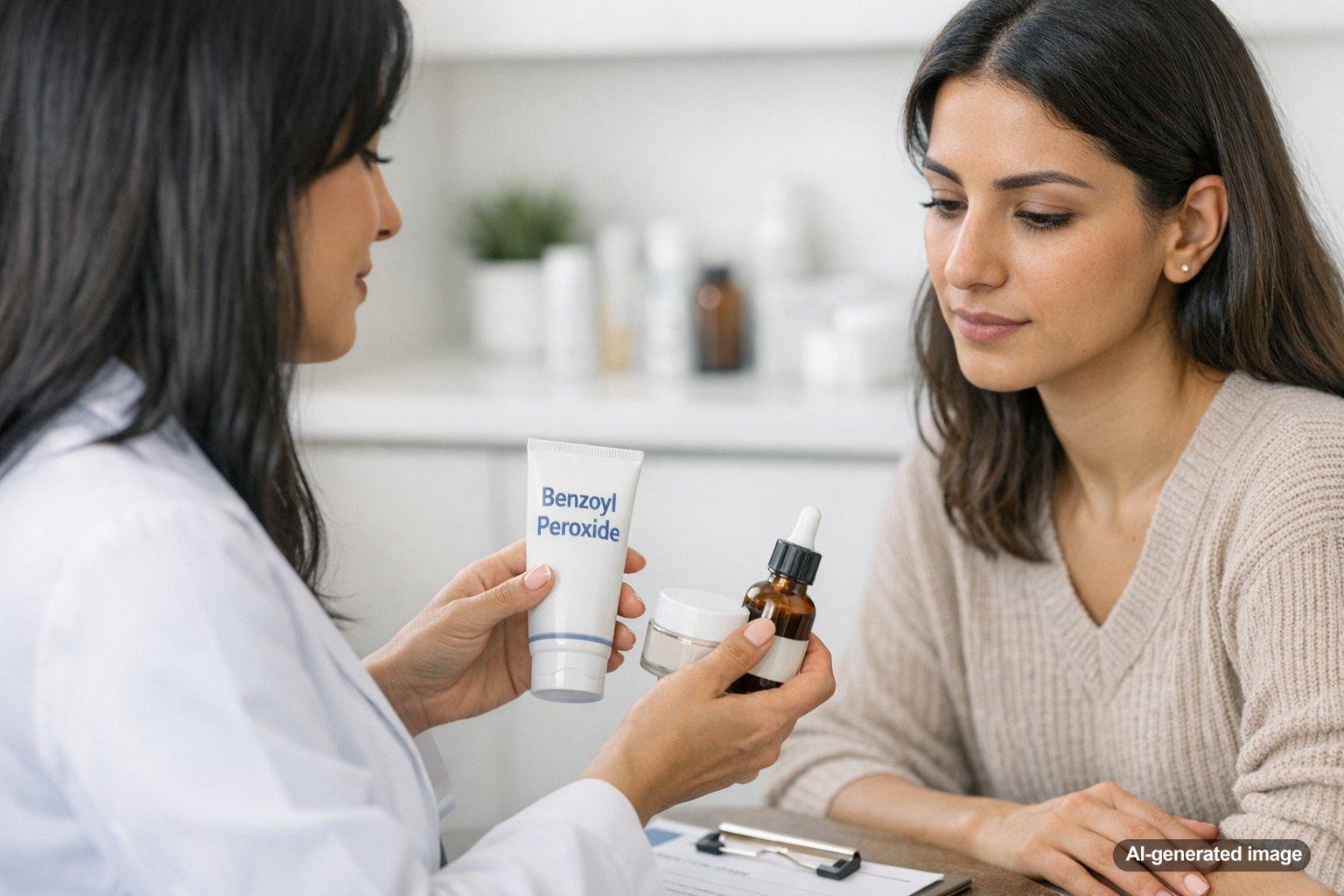
Benzoyl peroxide can be a helpful acne ingredient, but it is also one of the easier actives to overuse. When it is layered with the wrong products, the issue is not always danger; more often, it is irritation, dryness, peeling, and a disrupted skin barrier that can make an acne routine harder to tolerate.
The key is to avoid stacking strong acne and exfoliating ingredients on the same area at the same time unless your dermatologist has specifically designed that plan for you. A calmer routine is often more consistent, and consistency matters.
Quick answer
- Avoid layering benzoyl peroxide at the same time as retinoids unless your clinician tells you how to separate or combine them.
- Be cautious with exfoliating acids, including salicylic, glycolic, and lactic acid, because the combination may increase dryness and stinging.
- Do not pair benzoyl peroxide with topical dapsone unless your dermatologist has reviewed your routine, because it can temporarily discolor skin or facial hair.
- If your skin feels tight, raw, itchy, or unusually sensitive, pause the extra actives and ask a dermatologist for guidance.
1. Retinoids, including retinol, adapalene, tretinoin, and tazarotene
Retinoids and benzoyl peroxide can both be useful in acne care, but layering them without direction can be too much for many skin types. Retinoids help reduce clogged pores and support cell turnover, while benzoyl peroxide helps reduce acne-causing bacteria. That sounds complementary, but together they may also increase dryness, burning, peeling, and sensitivity if your barrier is already stressed.
This does not mean every retinoid and benzoyl peroxide pairing is off limits. Some prescription plans intentionally combine acne ingredients in specific strengths or schedules. The difference is that those routines are selected and monitored with your skin type, acne pattern, tolerance, and other products in mind.
A gentler approach is to avoid applying them at the exact same time unless instructed. Many people are guided to use benzoyl peroxide in the morning and a retinoid at night, or to alternate nights, but the right rhythm depends on your skin and the specific medication.
2. Exfoliating acids, such as salicylic acid, glycolic acid, and lactic acid
Salicylic acid, glycolic acid, and lactic acid can be found in cleansers, toners, pads, serums, masks, and peels. These ingredients may help with clogged pores, texture, and oiliness, but when they are layered with benzoyl peroxide, they can push the skin toward irritation.
This is especially common when someone uses an acne wash, a leave-on benzoyl peroxide treatment, an exfoliating toner, and a strong serum in the same routine. The skin may feel extra clean at first, but that tight, shiny, squeaky feeling can be a sign that the barrier is being over-stripped.
If you use benzoyl peroxide, keep exfoliation simple. Avoid applying multiple acid products on the same area in the same routine. If exfoliation is appropriate for you, your dermatologist can help decide whether it belongs on separate nights, at a lower frequency, or should be paused while the acne plan stabilizes.
3. Topical dapsone
Dapsone is a prescription acne medication, and it should be used exactly as directed by your clinician. One specific reason to avoid casual layering with benzoyl peroxide is that using benzoyl peroxide products with dapsone gel may temporarily turn the skin or facial hair yellow or orange.
This color change is not the same as an allergic reaction, but it can be surprising and frustrating. It is also a reminder that acne medications can interact in practical ways, even when both ingredients are commonly used in dermatology.
If dapsone is part of your plan, bring your full routine to your dermatologist, including cleansers, spot treatments, masks, and over-the-counter acne products. That helps your clinician decide what should stay, what should be separated, and what should be stopped.
How to use benzoyl peroxide more comfortably
- Start with one acne active at a time unless your dermatologist has given you a combination routine.
- Use a gentle cleanser and a non-comedogenic moisturizer to support the skin barrier.
- Apply benzoyl peroxide only as directed, and avoid sensitive areas such as the eyelids, corners of the nose, and lips.
- Introduce new products slowly so you can tell what your skin tolerates.
- Use daily sunscreen, since irritated skin can feel more reactive in the sun.
When to see a dermatologist
It is worth booking a dermatology visit if your acne is painful, scarring, spreading, leaving dark marks, or not improving with a careful over-the-counter routine. You should also get guidance if you are using prescription acne medications, are pregnant or nursing, have very sensitive skin, or are unsure whether your symptoms are irritation, allergy, rosacea, or another skin condition.
At Waverly DermSpa, we offer chemical peels and can help you understand whether they may be appropriate.
FAQ
Can I use benzoyl peroxide every day?
Some people can tolerate daily use, while others do better with less frequent application. Frequency depends on the product strength, your skin type, and the rest of your routine.
Can I use benzoyl peroxide as a spot treatment?
Yes, many benzoyl peroxide products are used on acne-prone areas or as directed on the label. Avoid applying extra layers simply because a breakout feels urgent, since overuse can increase irritation.
Is benzoyl peroxide better than salicylic acid?
They work differently. Benzoyl peroxide helps reduce acne-causing bacteria, while salicylic acid can help loosen clogged pores. A dermatologist can help choose the right option based on your acne pattern and skin sensitivity.
What should I do if my skin is peeling from benzoyl peroxide?
Consider pausing other strong actives, using a bland moisturizer, and reducing frequency while you ask a dermatologist for personalized guidance. If swelling, severe burning, or rash occurs, seek medical advice promptly.
Ready to get help?
Schedule an appointment or send a message and our team will get back to you.
Prefer to call? 954-666-3736
Disclaimer
This article is for educational purposes and is not medical advice. For diagnosis and personalized treatment, please book an appointment with a board-certified dermatologist.
Sources & further reading
- American Academy of Dermatology (AAD) – Acne: Diagnosis and treatment
- MedlinePlus (NIH) – Benzoyl Peroxide Topical
- MedlinePlus (NIH) – Dapsone Topical
- Mayo Clinic – Benzoyl peroxide topical route
