

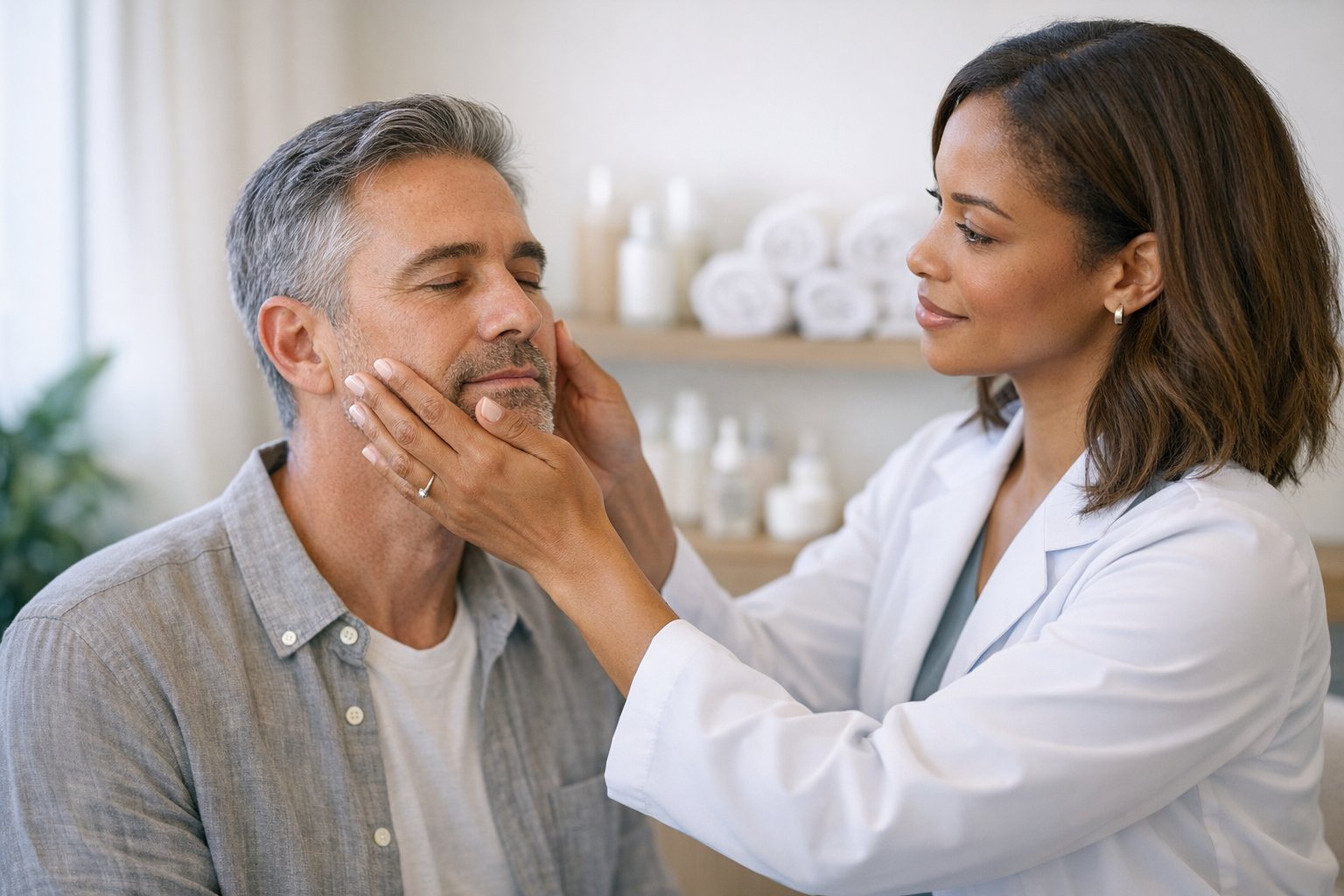
If your skin feels tight, stingy, or unpredictable, it may be asking for less intensity and more support. A barrier repair facial is designed to focus on comfort first, using a calmer approach that helps reinforce the skin’s outer layer and reduce the look of stress on the surface.
- A barrier repair facial focuses on supporting the skin’s protective outer layer (the barrier).
- It typically prioritizes hydration, gentle soothing steps, and barrier-friendly ingredients.
- It may be a helpful reset if your skin has been feeling reactive, dry, or over-exfoliated.
- Results vary, but many people notice skin feels more comfortable and looks less flushed.
What it is (in plain English)
Your skin barrier is the outermost layer that helps keep water in and irritants out. When that layer is strained, skin can look dull, feel dry, or react to products that used to feel fine. A barrier repair facial is a gentler style of facial that aims to support this outer layer with hydration, soothing steps, and a lighter touch, rather than aggressive exfoliation or strong actives.
Think of it as helping the skin return to baseline. The goal is not to chase a dramatic change in a single visit, but to create the conditions for calmer, more resilient skin over time.
Common causes and triggers
Barrier strain can happen for many reasons, and it is not always one single trigger. Common contributors include:
- Over-exfoliating (too many acids, scrubs, or frequent peels)
- Using multiple strong actives at once (retinoids, acids, benzoyl peroxide) without enough support
- Weather shifts, travel, or dry indoor air (common for snowbirds and frequent flyers)
- Saltwater, pool chlorine, or wind exposure
- Harsh cleansers, long hot showers, or over-cleansing
- Fragrance-heavy products or frequent product switching
- Post-procedure sensitivity (after certain lasers, peels, or microneedling, when your clinician recommends a gentle routine)
What you can do at home
At-home barrier support is often about simplifying. These steps are conservative and designed to be broadly skin-friendly, but your clinician can tailor a plan to your skin and goals.
- Pause the push. If skin feels stingy or inflamed, consider taking a short break from strong actives and heavy exfoliation.
- Cleanse gently. Use a mild, non-stripping cleanser and avoid very hot water. Pat dry instead of rubbing.
- Moisturize with intention. Look for barrier-supporting ingredients like ceramides, glycerin, and hyaluronic acid. A simple moisturizer used consistently can be more helpful than rotating products.
- Seal in hydration if needed. For very dry areas, a thin layer of an occlusive (like petrolatum-based ointment) can help reduce water loss.
- Wear sunscreen daily. UV exposure can add stress to the barrier. Choose a formula that feels comfortable on your skin, and reapply when outdoors.
- Introduce new products slowly. Add one change at a time so you can tell what helps and what does not.
If burning, swelling, blistering, or rapidly worsening irritation is happening, it is worth getting checked rather than pushing through.
Professional options
In-office care can be a helpful bridge when your skin needs a calmer reset, especially if you are dealing with ongoing sensitivity or trying to recover from an overactive routine. Professional options may include:
- Barrier-focused facials. Often centered on gentle cleansing, hydrating masks, calming serums, and light massage, with minimal to no harsh exfoliation.
- Hydration-forward treatments. Many practices use multi-step hydration and soothing protocols designed to support comfort and glow without pushing the skin.
- Care planning around active treatments. If you are doing peels, microneedling, or laser treatments, your team can guide supportive skincare so your routine matches your timeline and tolerance.
- Dermatology evaluation when needed. If symptoms suggest a condition like eczema, rosacea, or contact dermatitis, a dermatologist can evaluate and recommend targeted options.
At Waverly DermSpa, we can help you decide what is appropriate for your skin today and what can wait until your barrier is stronger.
When to see a dermatologist
Barrier strain can look similar to other skin concerns. Consider scheduling a dermatology visit if you notice any of the following:
- Rash that is spreading, oozing, crusting, or very painful
- Swelling of the face, eyelids, or lips
- Blistering or hives
- Persistent redness or flushing that does not settle
- Symptoms that keep returning despite simplifying products
- Signs of infection (warmth, tenderness, pus, fever)
- Any concern that feels unusual, severe, or rapidly worsening
FAQ
Is a barrier repair facial the same as a regular facial?
Not always. A barrier repair facial is typically more conservative, with fewer potentially irritating steps. The focus is on comfort, hydration, and supporting the skin’s outer layer rather than deep exfoliation.
Can I do a barrier repair facial if I have acne?
Often, yes, but it depends on your skin’s current sensitivity and your routine. If you are using acne treatments that can be drying, a barrier-supportive approach may help your skin tolerate a plan more comfortably. A clinician can help you choose the right balance.
Should I stop retinoids or acids before a barrier-focused facial?
Many people benefit from pausing strong actives temporarily if skin is feeling reactive, but the right approach varies. If you are unsure, ask your clinician for guidance based on your products and goals.
How do I know if my skin barrier is stressed?
Common signs include tightness, stinging with products, patchy dryness, increased sensitivity, or redness that flares easily. These signs can overlap with other conditions, so an evaluation can be helpful if symptoms persist.
What ingredients are commonly used in barrier support?
Many barrier-friendly routines include ceramides, glycerin, hyaluronic acid, and soothing agents. The best fit depends on your skin type and what you tolerate well.
Ready to get help?
Schedule an appointment or send a message and our team will get back to you.
Prefer to call? 954-666-3736
Disclaimer: This article is for educational purposes and is not medical advice. For diagnosis and personalized treatment, please book an appointment with a board-certified dermatologist.
